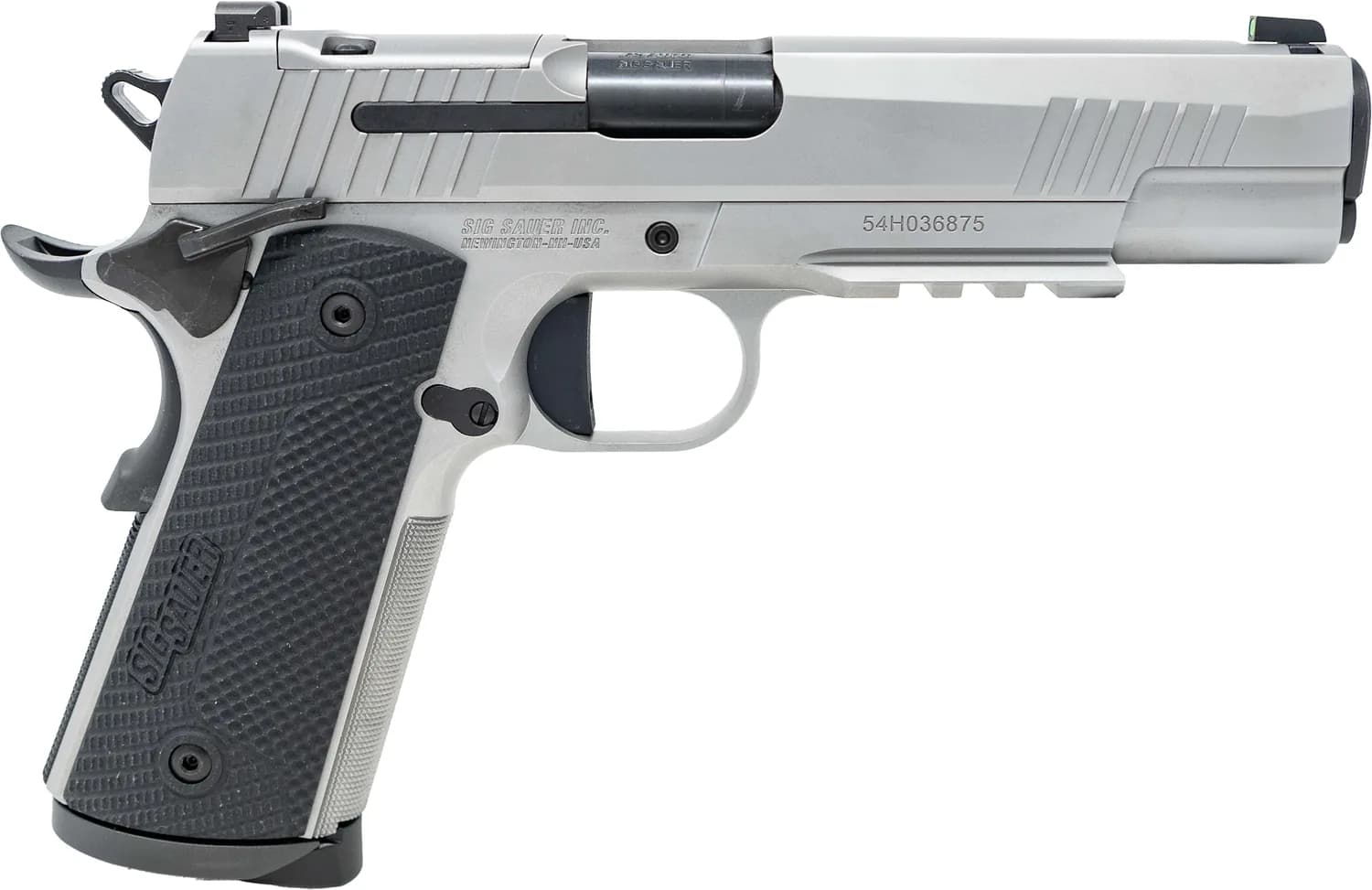
Affiliate disclosure: HandgunCloud may earn a commission if you continue to the retailer and complete a purchase.
Buy from Impact GunsThe Gold Cup name is one of Colt’s longest-lived 1911 lineages, and the Gold Cup Trophy is the modern, competition-focused continuation of that tradition. Colt announced the redesigned Gold Cup Trophy in 2017 as an out‑of‑the‑box competition pistol, developed with input from Team Colt shooters and aimed at action and precision shooters who historically sent government 1911s out for specialist work. The factory intent was to give competitors the match‑grade features many add as aftermarket upgrades—National Match barrel, competition ergonomics, 25 LPI checkering and a custom magwell—straight from the production line.
Within Colt’s catalog the Trophy sits above the base Gold Cup and alongside the National Match pieces as the performance‑oriented Government‑model 1911: a full‑size, single‑action pistol purpose‑built for accuracy and rapid handling rather than concealed carry. Colt’s marketing framed the Trophy as an affordable factory alternative to the common gunsmithing and parts swaps that competitive shooters traditionally perform.
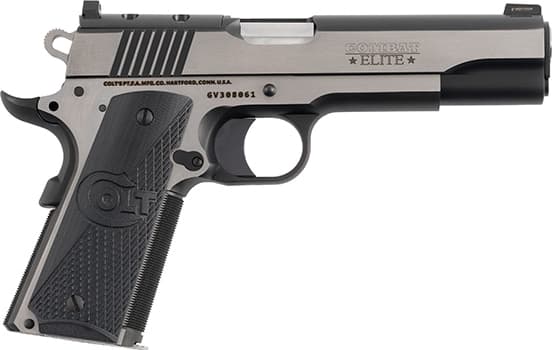
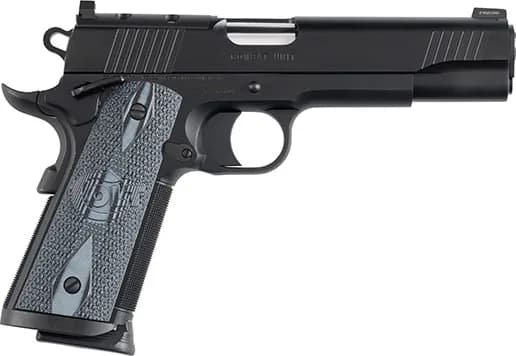
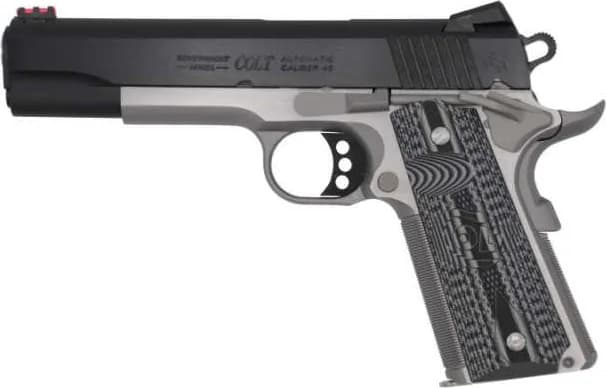
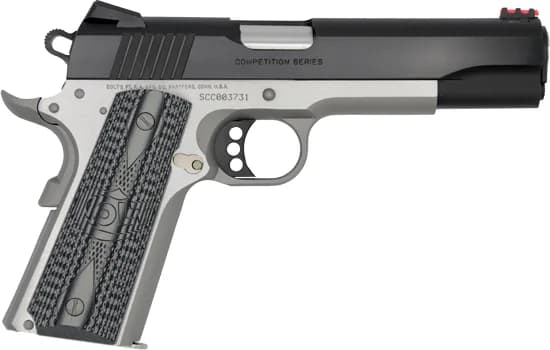
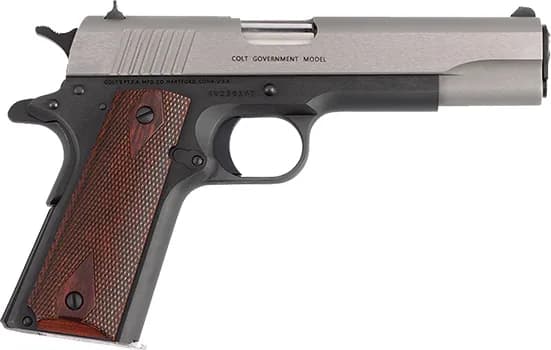
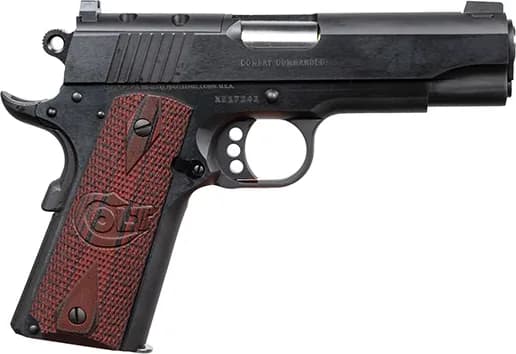
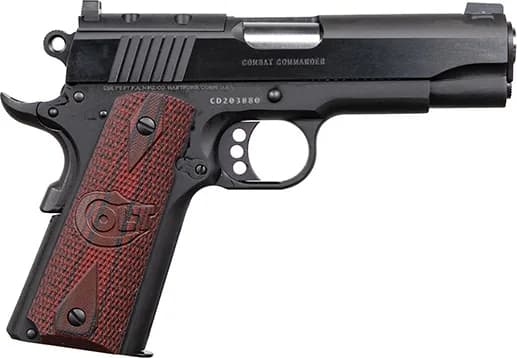
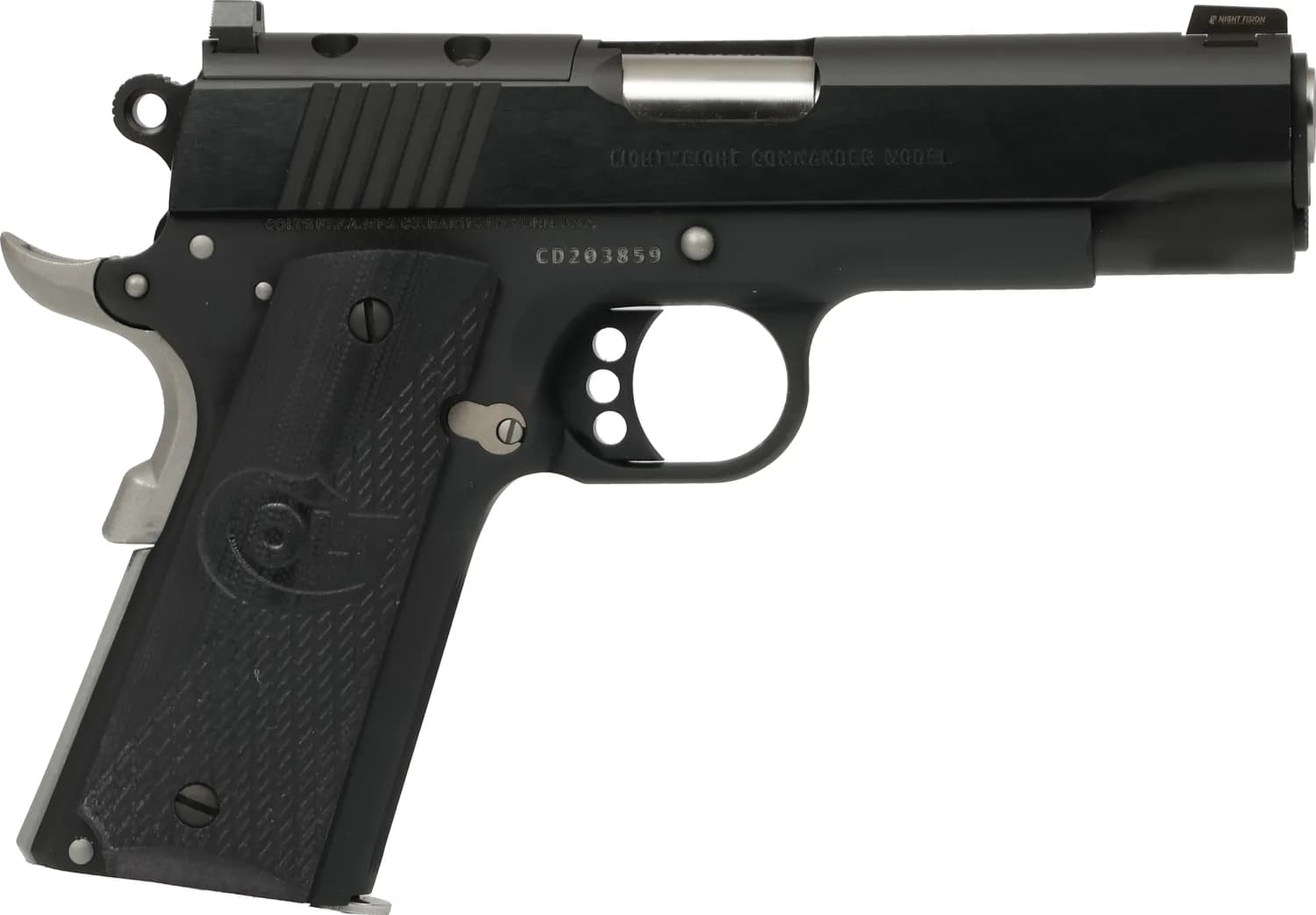
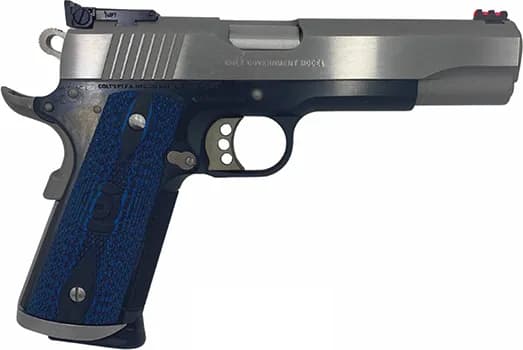
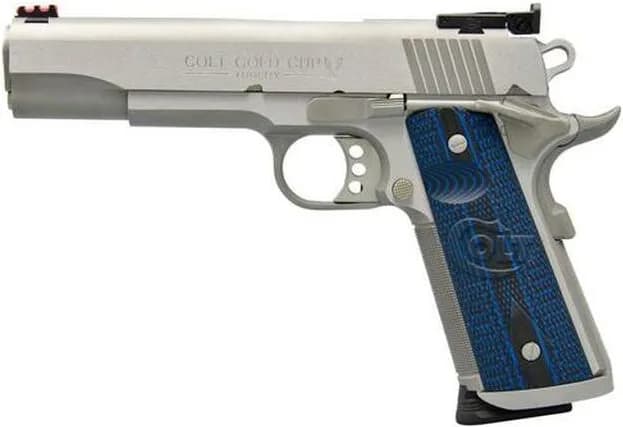
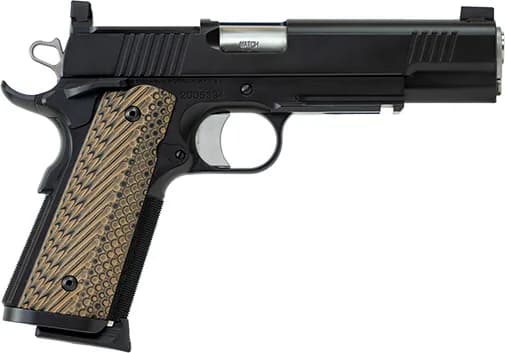
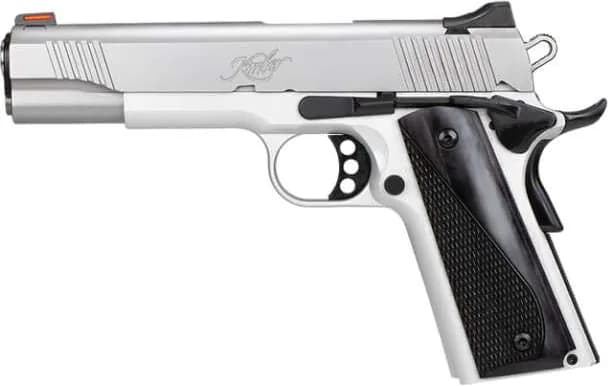
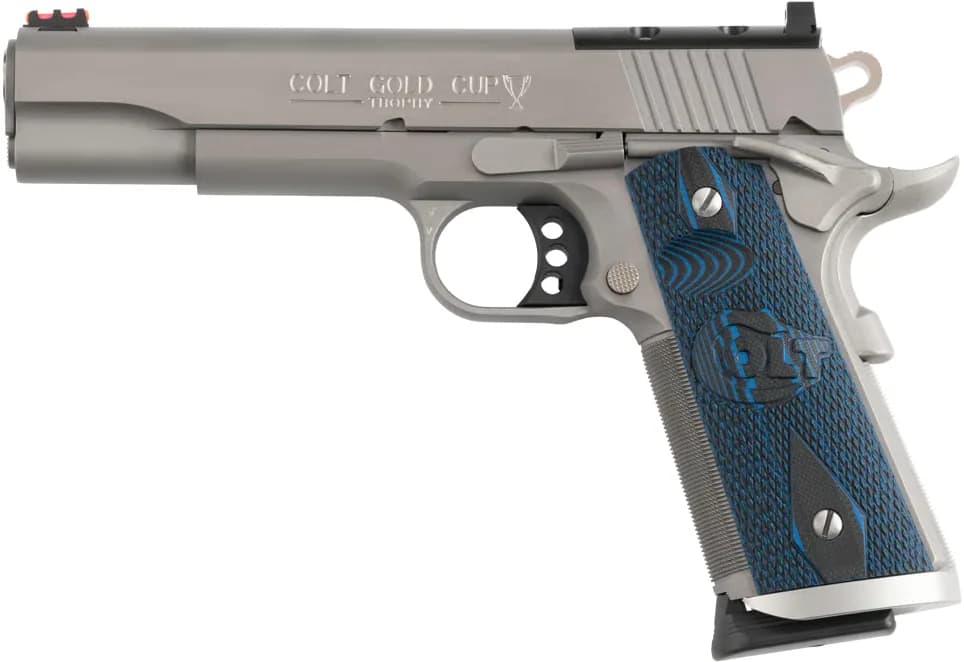
The Gold Cup Trophy follows contemporary competitive 1911 practice while keeping classic lines. The pistol is a round‑top Government‑length 1911 with a 5‑inch National Match barrel in stainless steel and a brushed (satin) stainless finish on slide and frame. The Trophy uses Colt’s Series 70 firing system, a wide three‑hole competition trigger, an upswept beavertail grip safety and undercut trigger guard for a high, secure grip. Factory Colt blue G‑10 grips are checkered and scalloped; the frame has 25 LPI checkering on front and rear straps and an integrated magwell to help speed reloads. Those factory features are explicitly the changes Colt brought into the Trophy to make a ready competition gun.
Sightline and optics capability are important in the Trophy’s design. Colt spec sheets and early hands‑on reporting list a genuine Novak fiber‑optic front and a fully adjustable Bomar‑style rear on the Trophy, giving a traditional adjustable target sighting system aimed at precise zeros for match loads. Separately, Colt has standardized “optics‑ready” 1911 products and sells optics plates for 1911 footprints—so shooters who prefer a modern mini‑red‑dot can fit plates and compatible footprints or opt for aftermarket mounts made for the Gold Cup’s Bomar cut. In short, the Trophy’s sighting package is tuned to iron‑sight precision while retaining paths to mount a small reflex when shooters want it.
The pistol’s weight and dimensions (full‑size 5" barrel, roughly 38–39 ounces unloaded, overall length around 8.5") give it inherent stability on target. The mass helps tame felt recoil in .45 ACP and supports sight recovery for follow‑up shots—exactly the handling traits target shooters value. The Colt dual‑spring recoil system used in modern Government models and the relatively heavy frame mean the Trophy manages full‑power .45 ammunition comfortably compared with lighter 1911 variants.
Contemporary press and range reviews of the Gold Cup Trophy emphasize what Colt set out to deliver: excellent accurate performance and a crisp, user‑friendly trigger. Early hands‑on reports and range tests praised the Trophy’s National Match barrel and wide target trigger for producing tight groups; reviewers who shot factory sample guns reported that the sight picture, trigger break and stabilization features translated into real, repeatable accuracy on paper and steel. Bench accuracy results in independent testing also favor the Trophy’s match‑oriented configuration.
Reliability reporting is generally positive but mixed. In formal reviews the Trophy ran well with common match and factory defensive loads; a small number of reviewers recorded isolated malfunctions that, when examined, were attributed to ammunition rather than systemic failure. Owner forums and community posts show a range of experiences—many owners report long, trouble‑free service; others have noted out‑of‑the‑box fitment issues or components that benefited from light gunsmithing. That variance is consistent with user reports seen across many premium 1911s in recent years and suggests buyers should inspect and test a new pistol before committing it to competition duties.
Trigger feel on the Trophy follows traditional wide 1911 practice: a relatively short, flat face with a clean break and a reset that users familiar with target triggers find intuitive. Some competitors want a sub‑3‑lb trigger for certain match divisions and will tune accordingly; Colt’s factory Series 70 arrangement is intended to be a capable baseline that is easily customized by an armorer or gunsmith if a shooter demands a different take‑up or pull weight. Recoil in .45 ACP remains perceptible but manageable thanks to the pistol’s weight and recoil‑system design.
Durability mirrors typical stainless Government 1911 expectations: with routine maintenance the Trophy’s metalwork and National Match barrel are built to last, and the G‑10 grips and checkering hold up well under heavy use. As with any precision handgun, long‑term durability and consistent match‑grade accuracy depend on proper maintenance and predictable ammunition selection.
The Gold Cup Trophy’s strengths are obvious: precision bullseye, action‑pistol stages that reward rapid, accurate fire, and range‑training where a quality target trigger and stable sight picture matter. Its 5‑inch barrel, full‑size controls and weight place it squarely in the competition and dedicated range‑gun camp rather than in concealed‑carry or ultralight defensive roles. Reviewers and Colt’s own marketing position the Trophy as a match pistol that gives shooters factory fit and finish often paid for with aftermarket work on lesser guns.
For defensive use in a home or fixed‑position role the Trophy is capable—any full‑size 1911 will handle defensive loads—but its size, sighting choice and competition ergonomics make it a less practical option for everyday carry than compact or duty‑oriented pistols. Conversely, for competitors who need a serviceable pistol that can be used reliably in club matches and national tournaments, the Trophy’s feature package is well aligned with those needs.
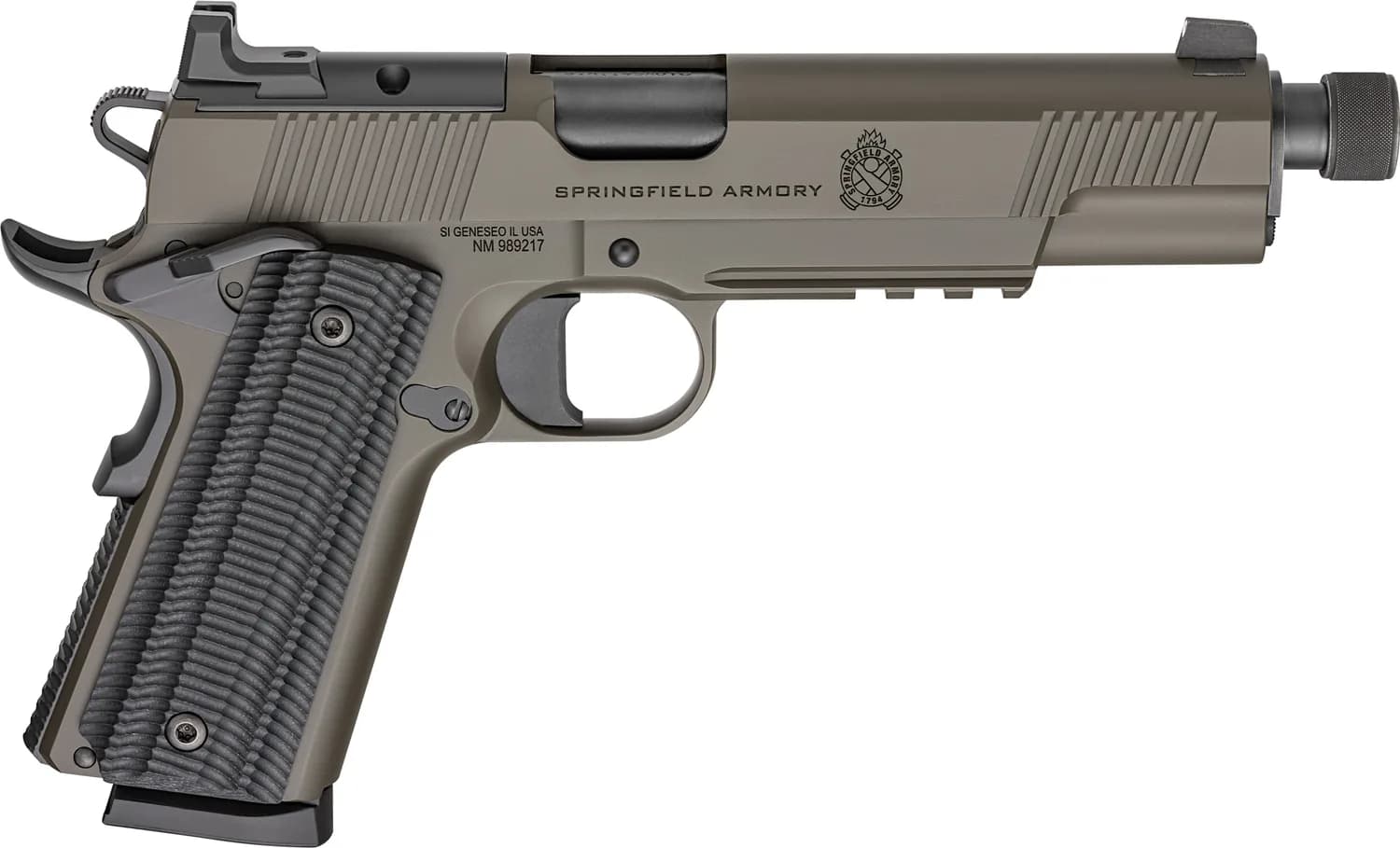
Colt markets the Gold Cup Trophy as a premium factory competition pistol that bundles common gunsmith upgrades into one package. In the broader 1911 marketplace it competes with other established match pistols from specialty builders and major manufacturers—guns from custom shops such as Les Baer and Wilson Combat, and factory competition offerings from Springfield and others. Compared with bespoke custom 1911s, Colt’s Trophy delivers a competitive feature set at a lower entry barrier because many match‑grade components and checkering arrive from the factory. Against aftermarket‑heavy builds, Colt’s value proposition is convenience and pedigree rather than ultimate custom fitment.
Reputation among enthusiasts is a balance of respect and scrutiny: the Gold Cup name still carries weight with bullseye and action shooters thanks to decades of competition heritage, and many owners praise the Trophy’s out‑of‑the‑box accuracy and ergonomics. At the same time, community discussion includes recurring notes about variability between individual production examples—an issue that prospective buyers should consider and mitigate by inspecting or test‑firing a sample and, when necessary, using a competent gunsmith to establish match‑grade consistency.
Colt’s product family also provides pathways for modern optics use: the company offers optics plates and has optics‑ready 1911 variants elsewhere in its line, and a healthy aftermarket for 1911 mounts supports fitting compact reflex dots to Gold Cup variants that retain a Bomar‑style rear. Shooters who require a red‑dot sight have options, but should confirm the footprint and mounting solution that suits their particular Trophy example.
For competitors who want a factory‑equipped target pistol that minimizes the need for costly custom work, the Gold Cup Trophy remains a relevant and practical choice—so long as buyers understand the place this model occupies in the 1911 ecosystem and perform routine due diligence when purchasing new production examples.
Start with a practical guide if you want a faster way to narrow the field before comparing specific models.
Learn how to choose the right concealed carry handgun based on size, comfort, safety, and everyday usability.
Read guideHome-focused buyersLearn how to choose the right handgun for home defense based on safety, ease of use, and practical everyday considerations.
Read guideComparison-focused shoppersA practical guide to comparing handguns the right way: what actually matters, what to ignore, and how to use comparison tools effectively.
Read guide