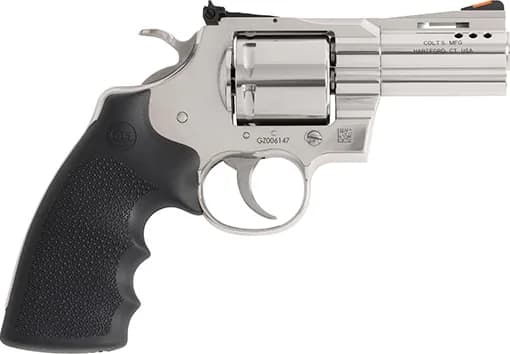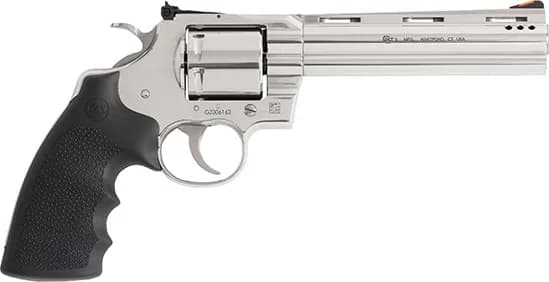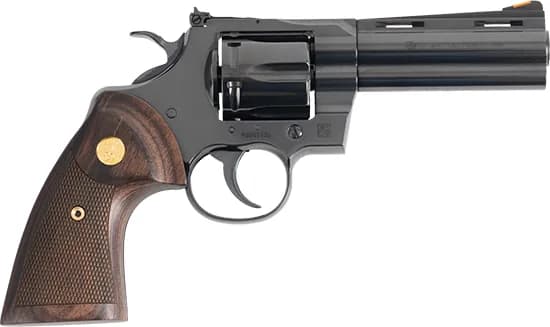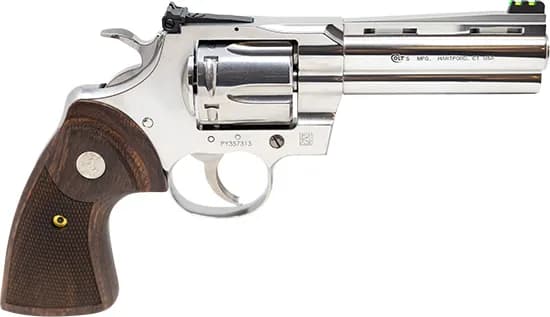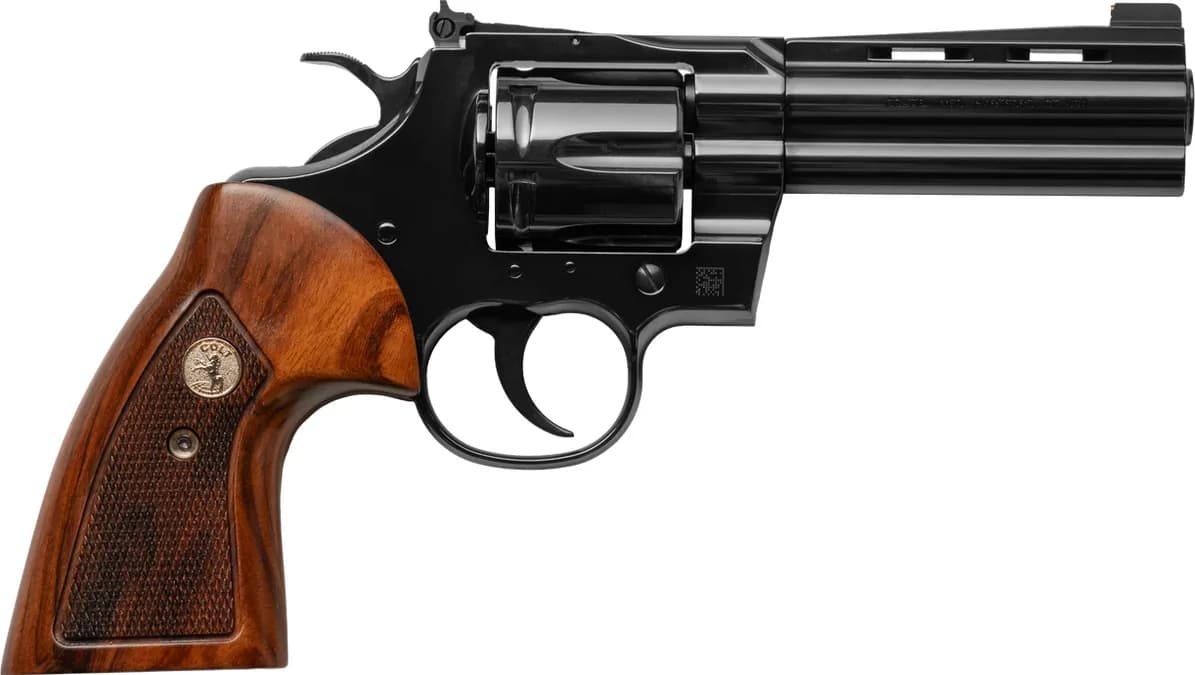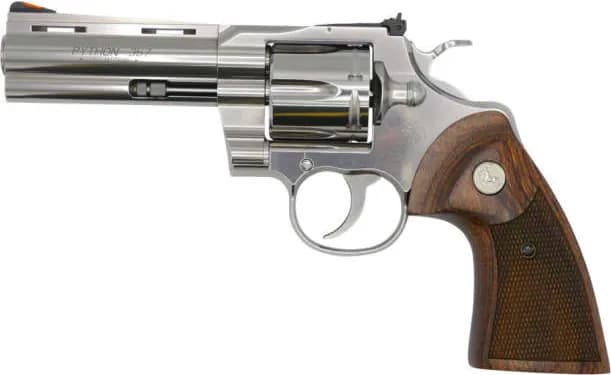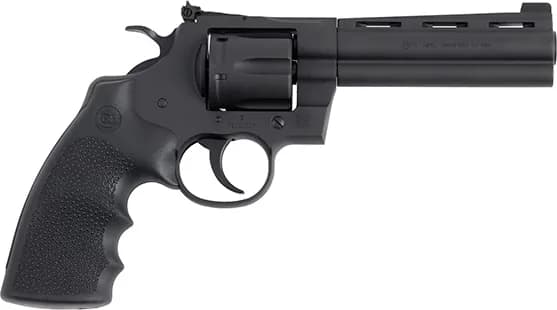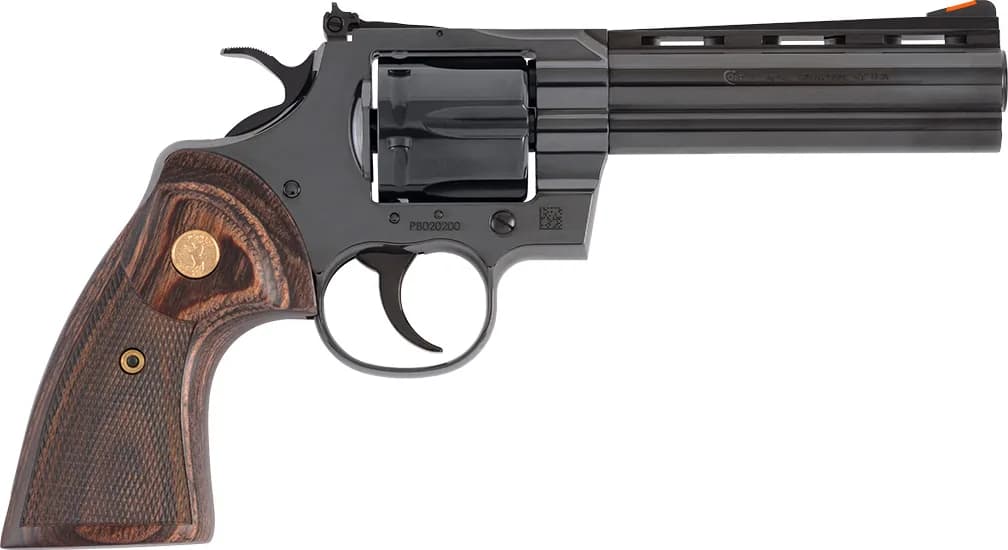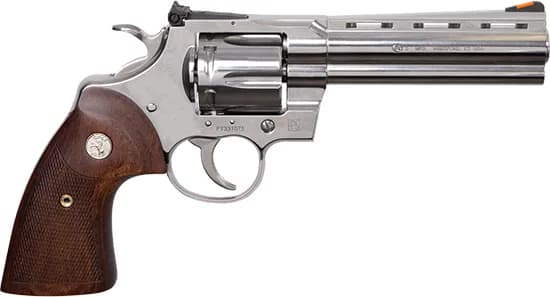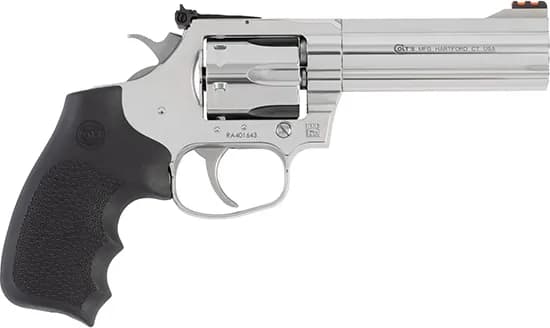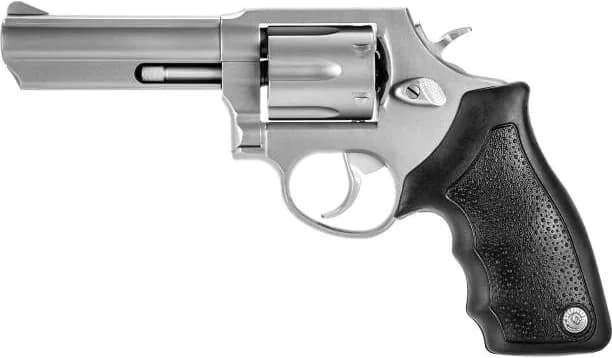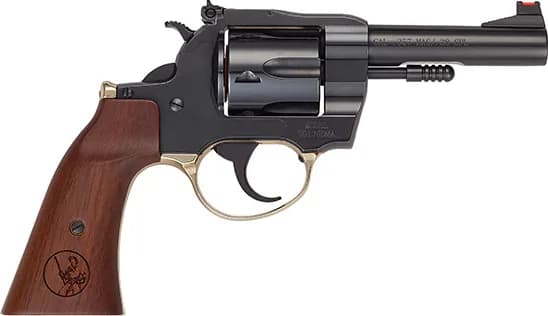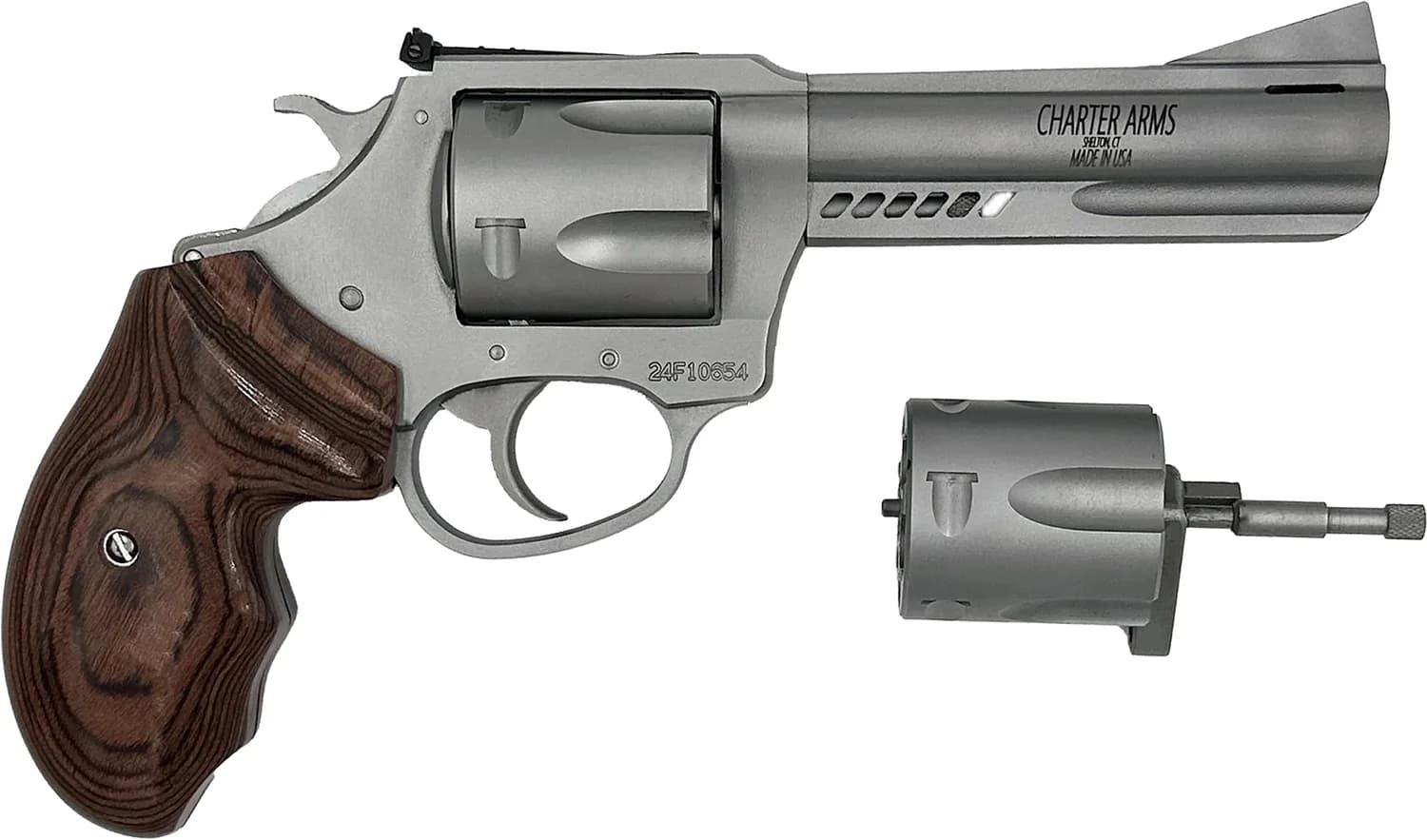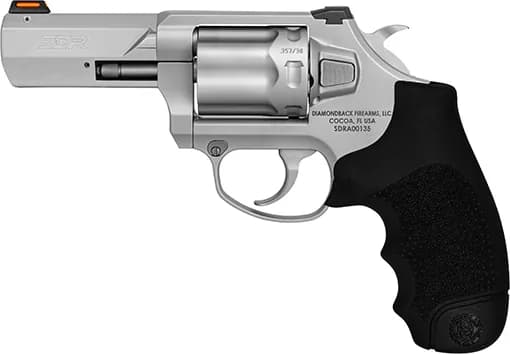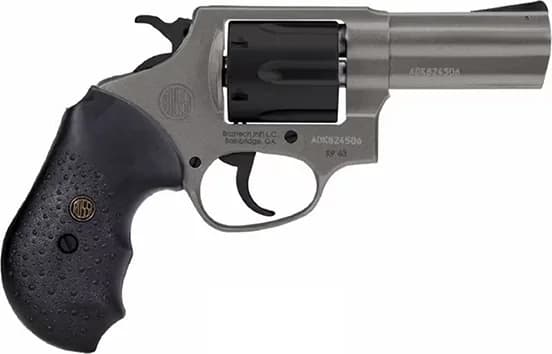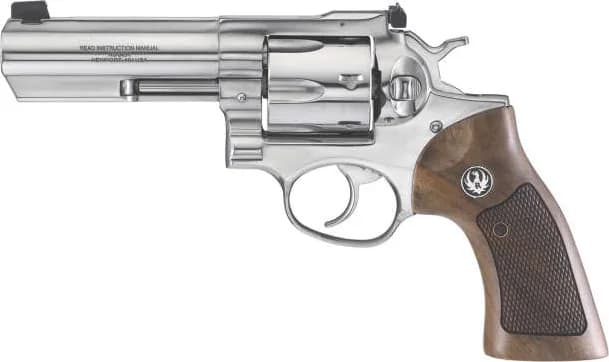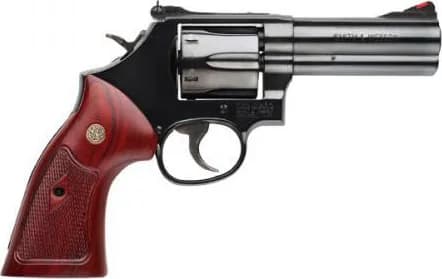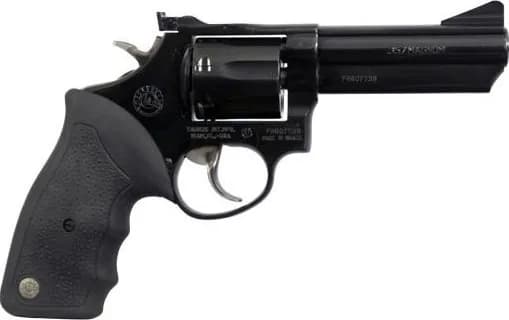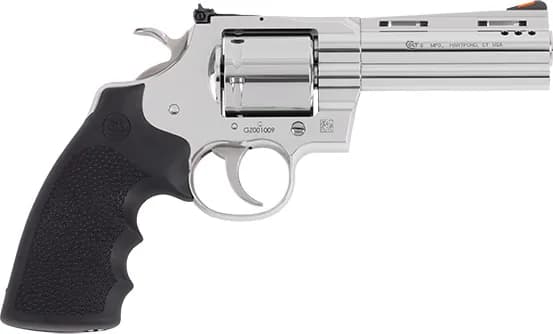
American Forged Stainless, Hogue Overmold Grips, Ported Barrel, D/A Trigger 8lb, S/A Trigger 3.5lb
Colt’s Grizzly arrived as part of the company’s recent expansion of wheelgun offerings aimed squarely at outdoorsmen and shooters who want magnum performance in a stout, reliable package. Announced alongside the Kodiak (.44 Magnum) and the more carry‑oriented Viper, the Grizzly is a 4.25‑inch .357 Magnum double‑action revolver built on Colt’s modern large‑medium frames and finished in stainless steel with Hogue OverMolded grips. Colt framed the pair as “Alaska‑themed” models intended for back‑country use and harsh conditions — a deliberate move away from the dressier Python variants and toward a harder‑working field tool.
Introduced in 2024 as a new member of Colt’s contemporary revolver family, the Grizzly bridges Colt’s legacy of precision “snake” revolvers and a renewed focus on practical, rugged wheelguns. Its combination of an unfluted cylinder, ported barrel and beefed‑up underlug give it a distinct look and function within Colt’s lineup — less showpiece, more workhorse.
At a glance the Grizzly is straightforward: forged stainless receiver and frame, a 4.25‑inch ported barrel with a full underlug, an unfluted six‑shot cylinder, replaceable red‑ramp front sight and an adjustable target rear. The manufacturer spec and production descriptions emphasize features that tame magnum recoil — the porting, the extra mass up front from the underlug and the Hogue rubber grips that absorb bite and improve purchase in wet or cold conditions. Colt’s published materials and early press coverage list a 1:14‑inch left‑hand, six‑groove rifling and an unloaded weight around 41 ounces, which give the Grizzly a steady, muzzle‑down feel on the bench and in the field.
The porting is conservative and arranged as three circular vents per side near the muzzle. Reviewers note that the ports do reduce muzzle flip with hotter .357 Magnum loads while producing the familiar upward blast of gas that can blacken the sight or rib after extended strings of fire — a tradeoff shooters should expect from any factory‑ported magnum revolver. The unfluted cylinder adds mass and strength but also gives the gun its purposeful, utilitarian aesthetic. Internally, reviewers reported solid lockup, robust crane/ejector components and a transfer‑bar safety mechanism consistent with modern wheelgun practice.
Colt’s stated trigger targets and independent measurements are modestly different: factory and press specs place the double‑action pull in the upper single‑digit range and single‑action pulls in the mid few pounds; independent testers recorded DA pulls around nine pounds and SA pulls in the mid‑six‑pound range on their samples, with some guns showing minor stacking or a slightly uneven break until broken in. That nuance is worth noting: the Grizzly’s action is in the Colt family tradition of being serviceable and smooth, but several testers observed the trigger could benefit from a few hundred rounds to reach its best behavior.
Independent test shots and range reviews show the Grizzly to be an accurate and capable .357 platform. In single‑action testing, one reviewer produced multiple groups under 2.0 inches at 25 yards and recorded an exceptional sub‑one‑inch group with a premium 180‑grain defensive load. That level of inherent accuracy is consistent with Colt’s tight lockup and attention to chamber and forcing‑cone fit.
Recoil management on heavy .357 loads is noticeably improved over an unport‑and‑half‑lug revolver of similar weight, with the ports and front mass reducing muzzle rise and making follow‑ups more tractable. Reviewers also reported that the Hogue OverMold grips do meaningful work in softening felt recoil and helping the shooter maintain a secure hold under duress. That said, heavy magnum loads remain stout in a 41‑ounce, 4.25‑inch package, and shooters sensitive to recoil or who plan to practice exclusively with hot factory magnums should plan accordingly.
Durability and reliability impressions have been broadly positive in published tests and long‑term owner commentary: smooth crane function, reliable ejection and clean, corrosion‑resistant finishes were common notes, and reviewers who logged hundreds of rounds reported no functional failures in serviceable ammunition. A handful of initial production samples did show minor issues — a slightly sticky cylinder latch out of the box and loosened rear‑sight set screws in some cases — that were easily remedied and that reviewers largely attributed to early production running in rather than systemic design flaws.
Colt positions the Grizzly as a back‑country defensive revolver and a versatile field handgun. Its strengths are clear: the .357 Magnum chambering allows for hard‑hitting defensive and hunting loads, the six‑shot capacity is traditional and practical, and the ported/weighted‑barrel combination facilitates faster follow‑ups than many comparable magnum revolvers. Reviewers suggest it is well suited for camp carry, hiking in bear country, hunting small‑to‑medium game and serious range work where a durable, accurate revolver is desired.
Its limitations are also obvious: at roughly 41 ounces and nearly 10 inches overall length the Grizzly is not optimized for everyday concealed carry. Shooters seeking a lightweight patrol or deep‑concealment option will find better choices elsewhere in Colt’s own Viper or in dedicated compact revolvers and semi‑autos. Additionally, the porting that helps with recoil also brings blasting gases upward — excellent for muzzle control but something to be aware of when carrying optics or for shooters who favor very low‑profile rib finishes.
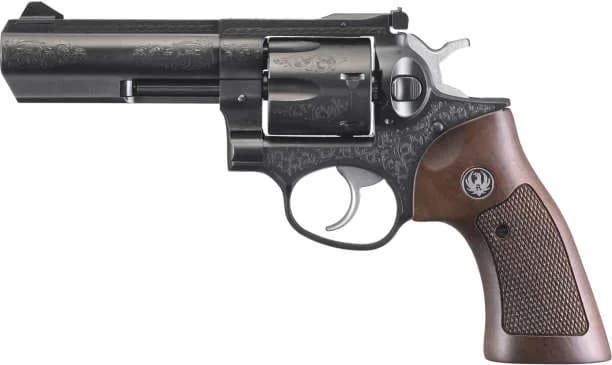
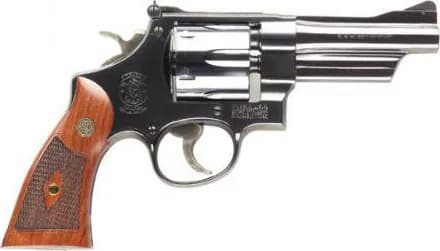
In Colt’s modern catalog the Grizzly sits between the dressier Python family and the larger Kodiak: it’s a purpose‑built, stainless‑finished, utilitarian magnum wheelgun that borrows Python engineering but is tuned for field use and rugged reliability. Compared with mass‑market competitors — Smith & Wesson’s 686 series and Ruger’s GP100 — the Grizzly aims more at the premium end of the market in terms of finish and fit while retaining a practical, no‑nonsense configuration. Reviewers have noted that the Grizzly’s combination of modern manufacturing, forged stainless components and premium grips puts it in a class above many value wheelguns while offering a different character than the Python’s showpiece approach.
For buyers who want Colt quality with field‑ready features — porting, heavy front mass, unfluted cylinder and rugged grips — the Grizzly presents a compelling option. It trades some of the Python’s flash for real‑world utility, and early reviews and owner reports indicate Colt largely succeeded in building a balanced, accurate .357 that performs where it was intended: at the range, on the trail and when a reliable magnum is needed in the woods.
Start with a practical guide if you want a faster way to narrow the field before comparing specific models.
A practical guide to comparing handguns the right way: what actually matters, what to ignore, and how to use comparison tools effectively.
Read guideFirst-time buyersLearn how to choose your first handgun by focusing on size, comfort, ease of use, and budget instead of getting lost in unnecessary details.
Read guide