Affiliate disclosure: HandgunCloud may earn a commission if you continue to the retailer and complete a purchase.
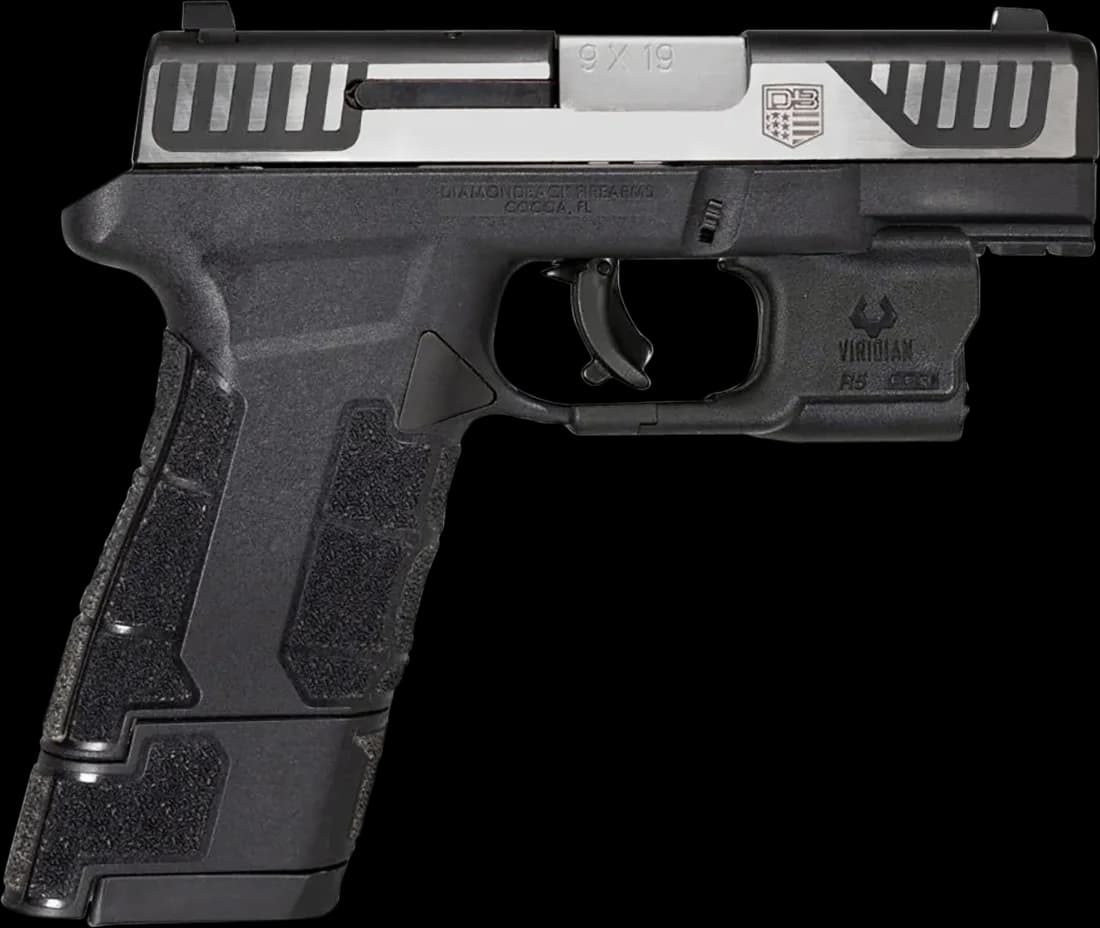
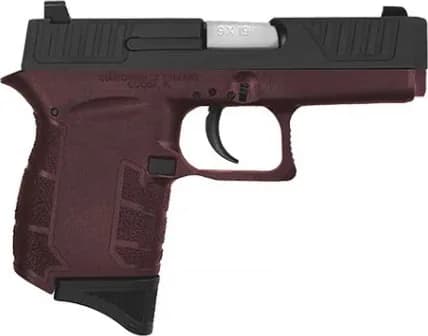
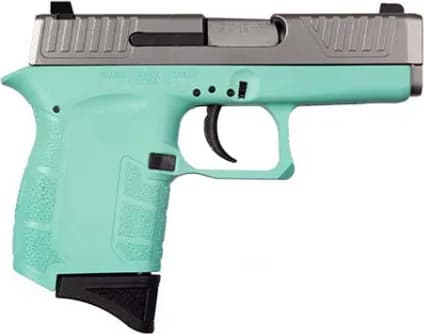
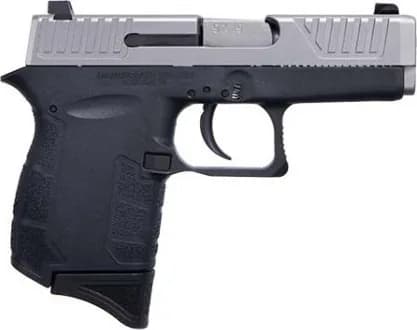
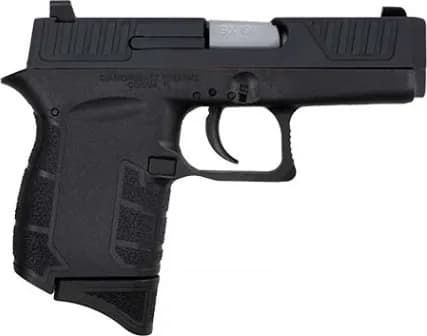
Buy from Impact GunsIntroduced in 2018, Diamondback’s AM2 is the company’s double‑stack, sub‑compact 9 mm entry—a 3.5‑inch‑barreled polymer pistol designed to give users higher capacity in a package small enough for concealed carry. It occupies a clear slot in Diamondback’s portfolio between the smaller DB9 family and larger compact pistols, offering a flush 12‑round magazine and an extended 17‑round magazine as standard equipment. The AM2 is listed in Diamondback’s catalog and parts documentation as a distinct sub‑compact model with a stainless steel barrel, polymer frame and two included magazines.
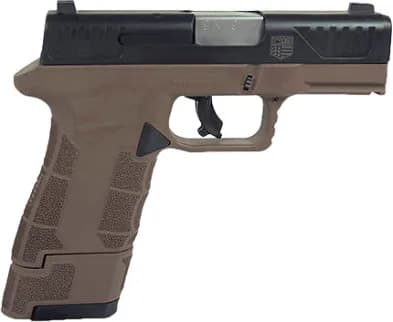
The AM2’s architecture is straightforward: a stainless steel, 3.5‑inch barrel in a gun‑grade stainless slide mounted to a serrated polymer frame with a front accessory rail. Its double‑stack grip profile is intentionally wider than many single‑stack sub‑compacts, allowing a full‑sized hand purchase with the 17‑round magazine while still accepting a lower‑profile 12‑round flush mag for deep concealment. The factory sighting system is a Glock‑pattern three‑dot front and a windage‑adjustable rear; sights are user‑replaceable with common aftermarket Glock‑compatible sets.
Mechanically the AM2 uses a striker‑fired action (marketed by the company as an AM2 striker system) with a number of safety and durability features documented in the parts manual: a mechanical firing‑pin block, a captured recoil guide/spring assembly, a reversible steel magazine catch, and a trigger safety. The manual and parts list confirm the AM2 chassis components and show that the design is modular enough for standard maintenance and parts replacement. Diamondback’s broader literature also highlights internal design practices such as finite‑element analysis in product development and in‑house coating capabilities—elements the company says support resilience in the field.
Ergonomically the AM2 trades extreme concealment for shootability. The grip is longer and thicker than many micro‑compact 9 mm pistols to house the double‑stack magazines; that extra real estate improves control and reduces perceived muzzle flip compared with single‑stack pocket 9s, but it makes the gun less suited to tight pocket carry. Slide serrations, a slightly undercut trigger guard and pronounced grip texturing are meant to enhance control in adverse conditions. Reviewers commonly note the AM2’s heavier‑feeling recoil spring and firm magazine seating, both design choices that favor durability and positive lockup but that make initial handling and loading slightly stiffer than on some rivals.
Independent reviewers and range testers generally find the AM2 competent for its intended role. Trigger pull on factory samples has been measured heavier than Diamondback’s marketing numbers—many testers report a relatively long, somewhat gritty striker pull in the neighborhood of six to eight pounds, with a positive, but not crisp, reset. Groups from typical shooters tend to fall in what reviewers describe as “service‑pistol” accuracy: practical hits at common defensive distances and three‑inch or slightly larger groups at 25 yards depending on ammunition and shooter technique. Reviewers also emphasize that the AM2’s larger grip and double‑stack magazines make follow‑up shots easier than with many micro‑compact 9s.
Recoil is generally described as stout but manageable—partly a product of the pistol’s weight (in the neighborhood of 21–22 ounces unloaded) and partly the geometry and recoil spring choices. Several long‑term tests and first‑impression write‑ups report that the AM2 runs reliably once broken in and properly lubricated; a few reviewers encountered minor break‑in quirks such as inconsistent slide lock‑back or ejection trajectories that cleared up with modest maintenance and additional rounds. At the same time, the AM2’s robust magazine springs and stiff recoil assembly are often cited as reasons why magazines take a bit more force to load and seat compared with competitors.
Diamondback’s community reception is mixed: many owners praise the platform’s value and capacity‑for‑size, while a smaller group of users documented early reliability problems with older generations on forums. Diamondback’s later production runs and the AM2’s engineering adjustments appear to have addressed many early concerns, but buyer experiences are not uniform—something prospective owners should weigh along with published range tests.
Where the AM2 excels is straightforward: it gives a concealed‑carry shooter a genuine double‑stack 9 mm capacity without stepping up to a compact full‑size platform. That makes it useful as a primary or backup concealed‑carry pistol for users who prioritize capacity and controllability over absolute tuckability. The longer grip with the extended magazine lends itself well to training, defensive shooting, and home‑defense duties where extra capacity and a controllable recoil impulse are advantages. Some reviewers have also recommended the AM2 as a “double‑duty” choice—adequate for range work and reliable enough for a nightstand role.
Limitations are equally clear: the thicker double‑stack grip and 1‑inch overall width make the AM2 less suitable for deep‑pocket or tiny‑purse carry compared with single‑stack micro 9s. The factory trigger is acceptable for defensive use but is not what precision shooters expect from higher‑end striker systems; many owners upgrade or tune the trigger if they require a crisper break. Lastly, magazine loading and seating require more effort than some rival designs due to strong springs and tight magazine wells—this is a tradeoff for double‑stack capacity and robust spring life.
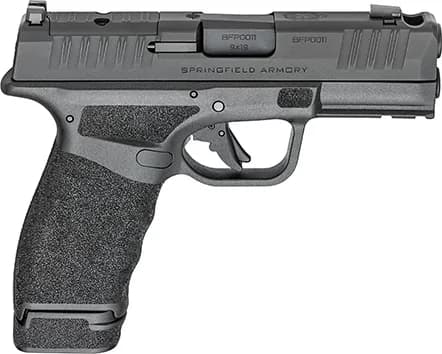
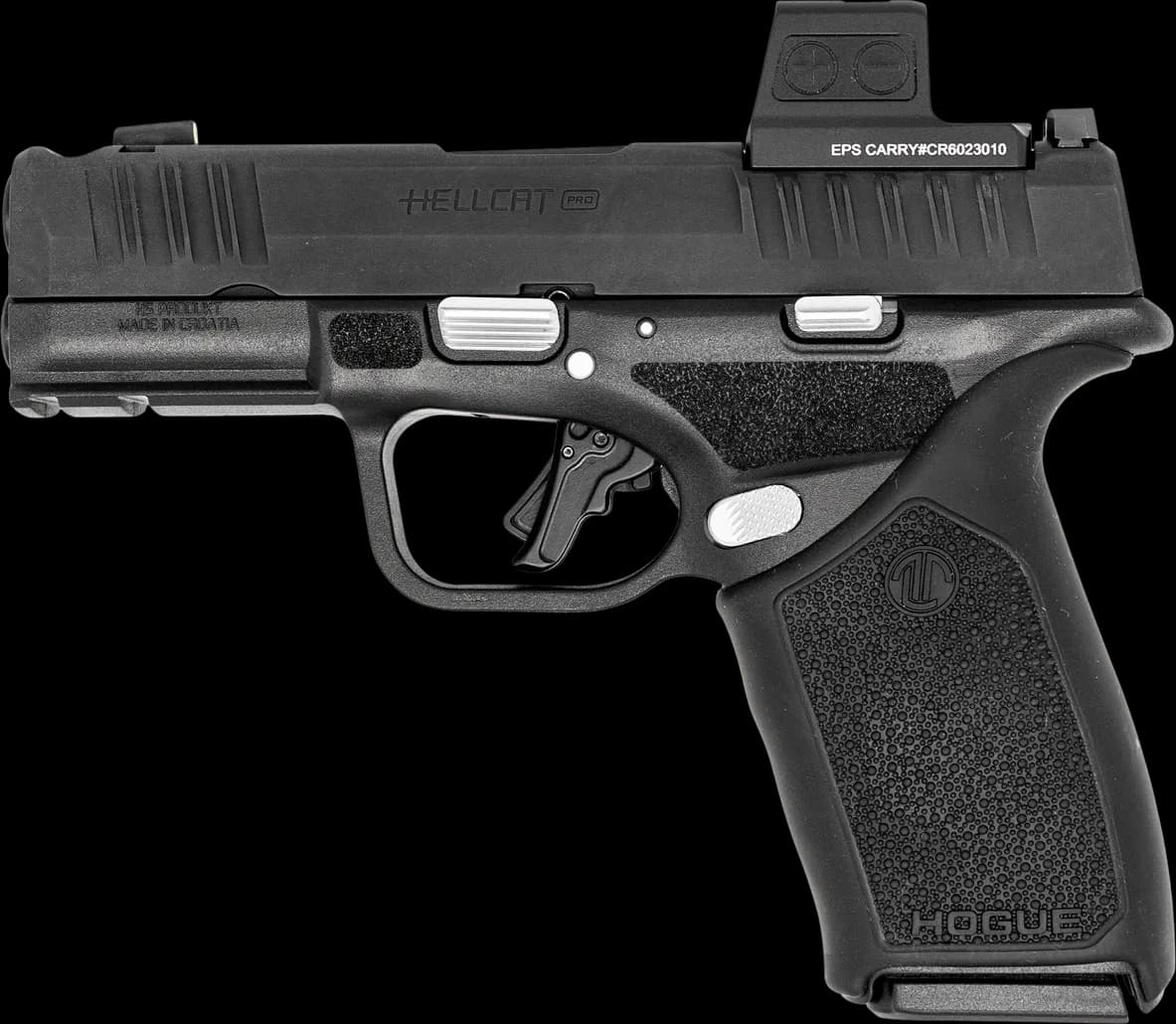
The AM2 competes in a crowded sub‑compact 9 mm segment populated by models that pursue different tradeoffs between concealability, capacity and shootability. The Springfield Hellcat and the SIG Sauer P365 family are the most direct market references: Springfield’s micro‑compact Hellcat is notable for offering flush and extended magazines (11+1 and 13+1 in standard Hellcat configurations) in a very compact footprint, while SIG’s P365 variants provide a range of slim, high‑capacity options with a strong reputation for reliability across a broad model family. The AM2’s defining niche is that it brings a true double‑stack, 12/17 magazine solution in a sub‑compact frame at a competitive price point, favoring capacity and ergonomics over minimal dimensions.
Value is a consistent theme in professional reviews: observers note that the AM2 delivers many features—double‑stack magazines, a 3.5‑inch barrel, and a steel‑barreled slide assembly—at a price that undercuts many premium alternatives, which is why it frequently appears on listicles of double‑stack sub‑compacts. At the same time, buyers comparing finish quality, trigger refinement and aftermarket ecosystem may favor the Hellcat or P365 lines; the AM2 instead markets toward shooters seeking capacity and a sturdy, serviceable pistol without paying a premium for brand cachet.
The AM2 is not a niche experiment—it’s a practical design that reflects Diamondback’s approach to give shooters a lot of capability for modest outlay. As with any pistol choice, prospective buyers should match the AM2’s strengths—capacity, control and simple, rugged engineering—against their carry posture, hand size and appetite for aftermarket upgrades or break‑in maintenance before purchase.
Start with a practical guide if you want a faster way to narrow the field before comparing specific models.
Learn how to choose the right 9mm handgun based on size, budget, and how you plan to use it.
Read guideCarry-focused shoppersLearn how to choose the right concealed carry handgun based on size, comfort, safety, and everyday usability.
Read guideHome-focused buyersLearn how to choose the right handgun for home defense based on safety, ease of use, and practical everyday considerations.
Read guide