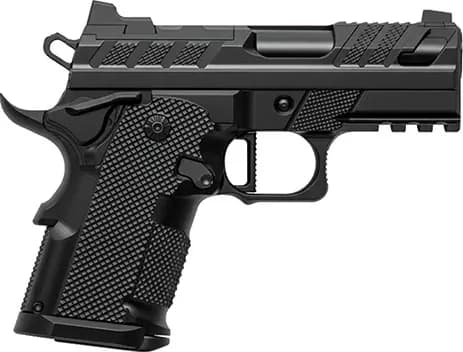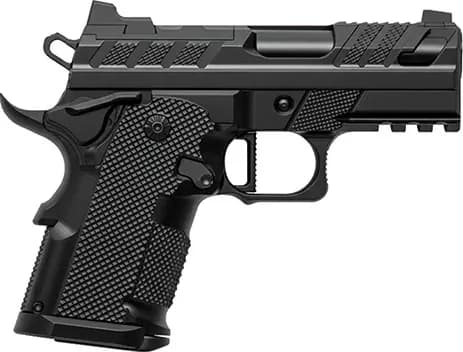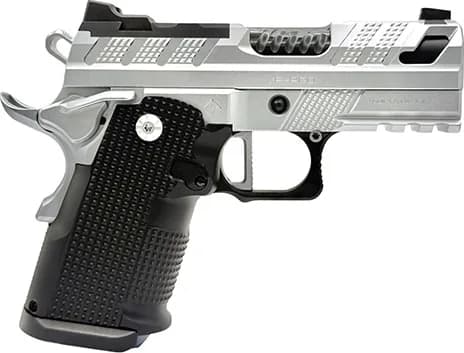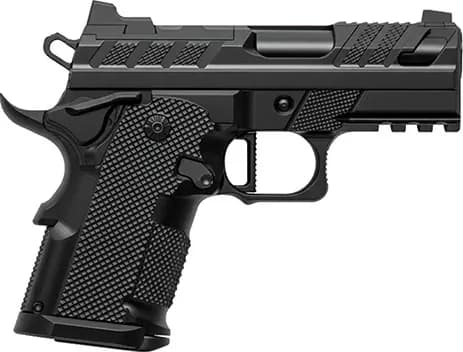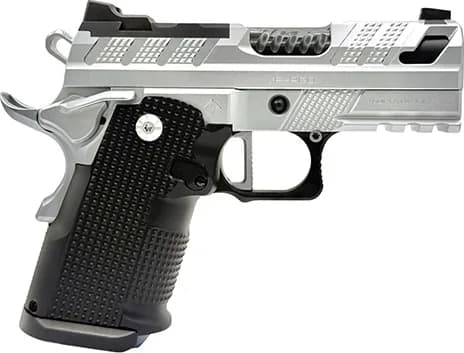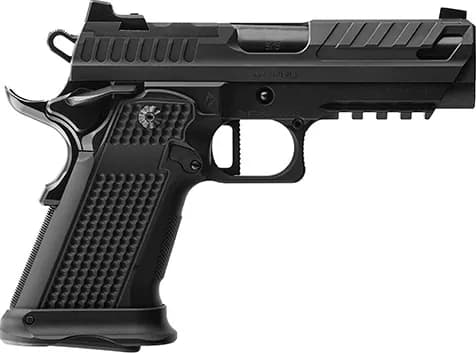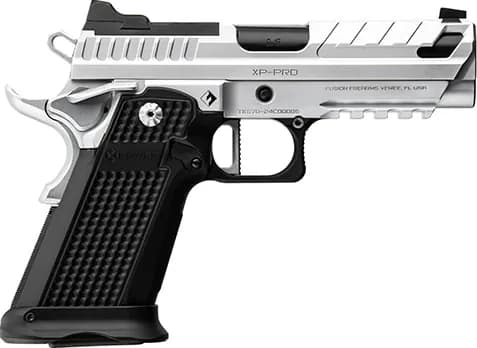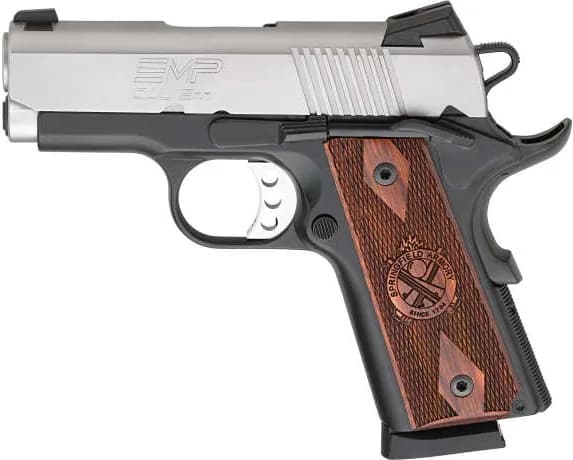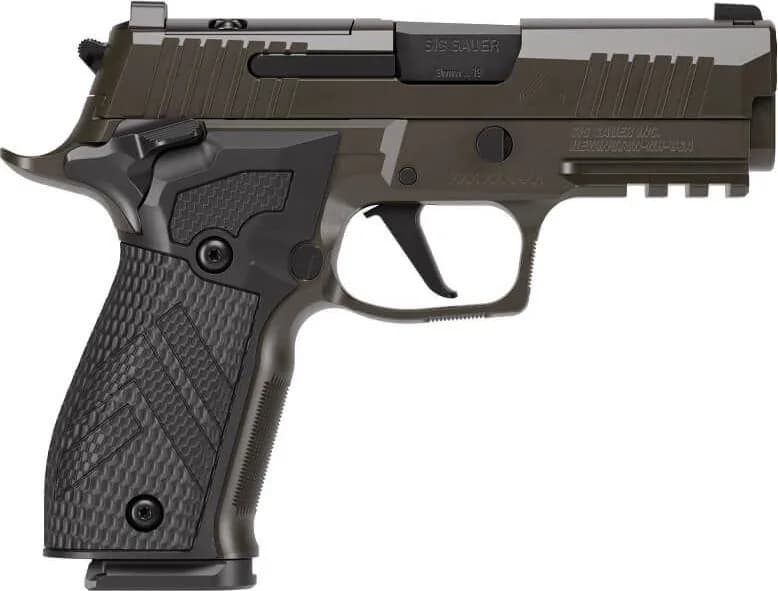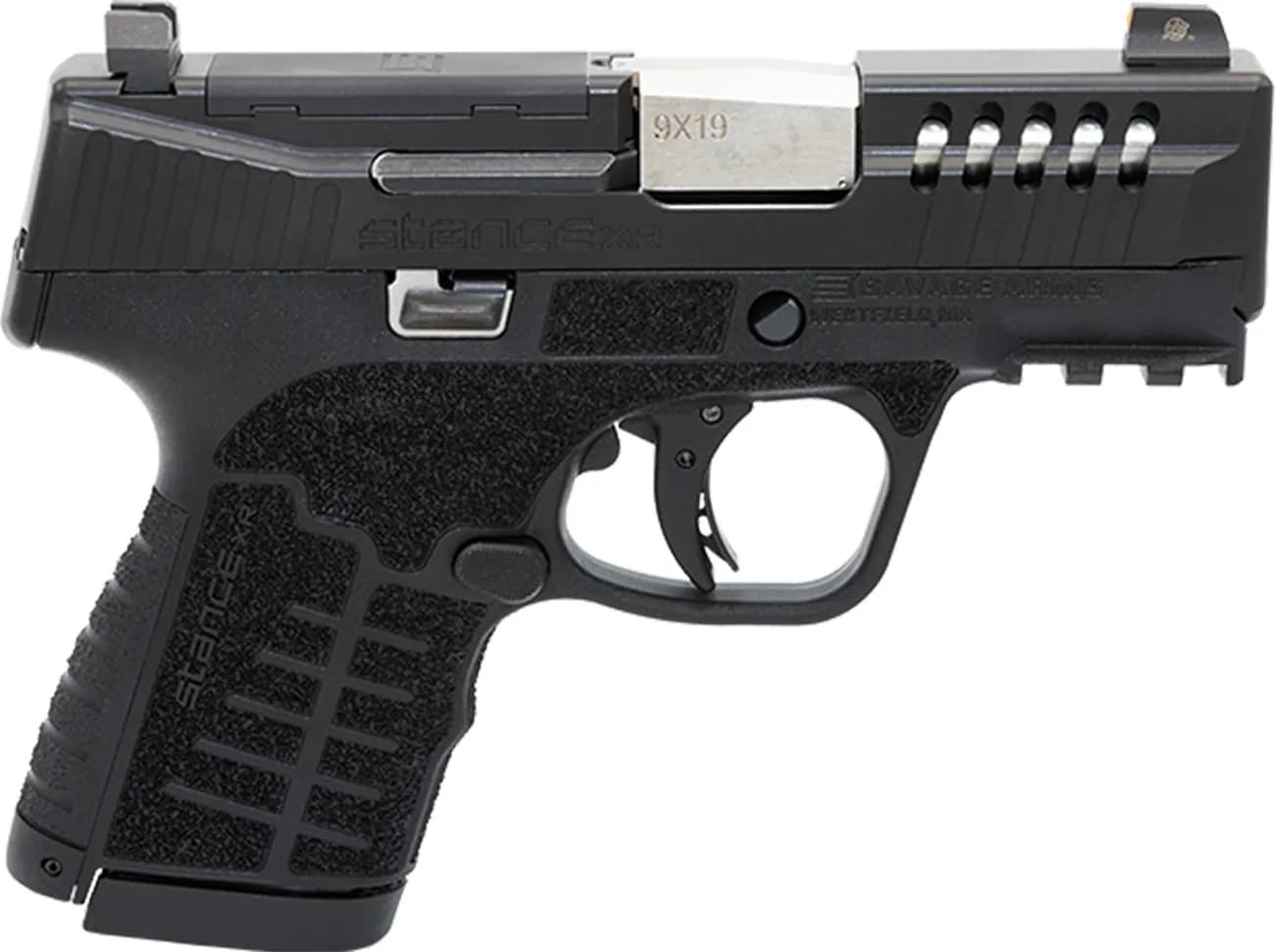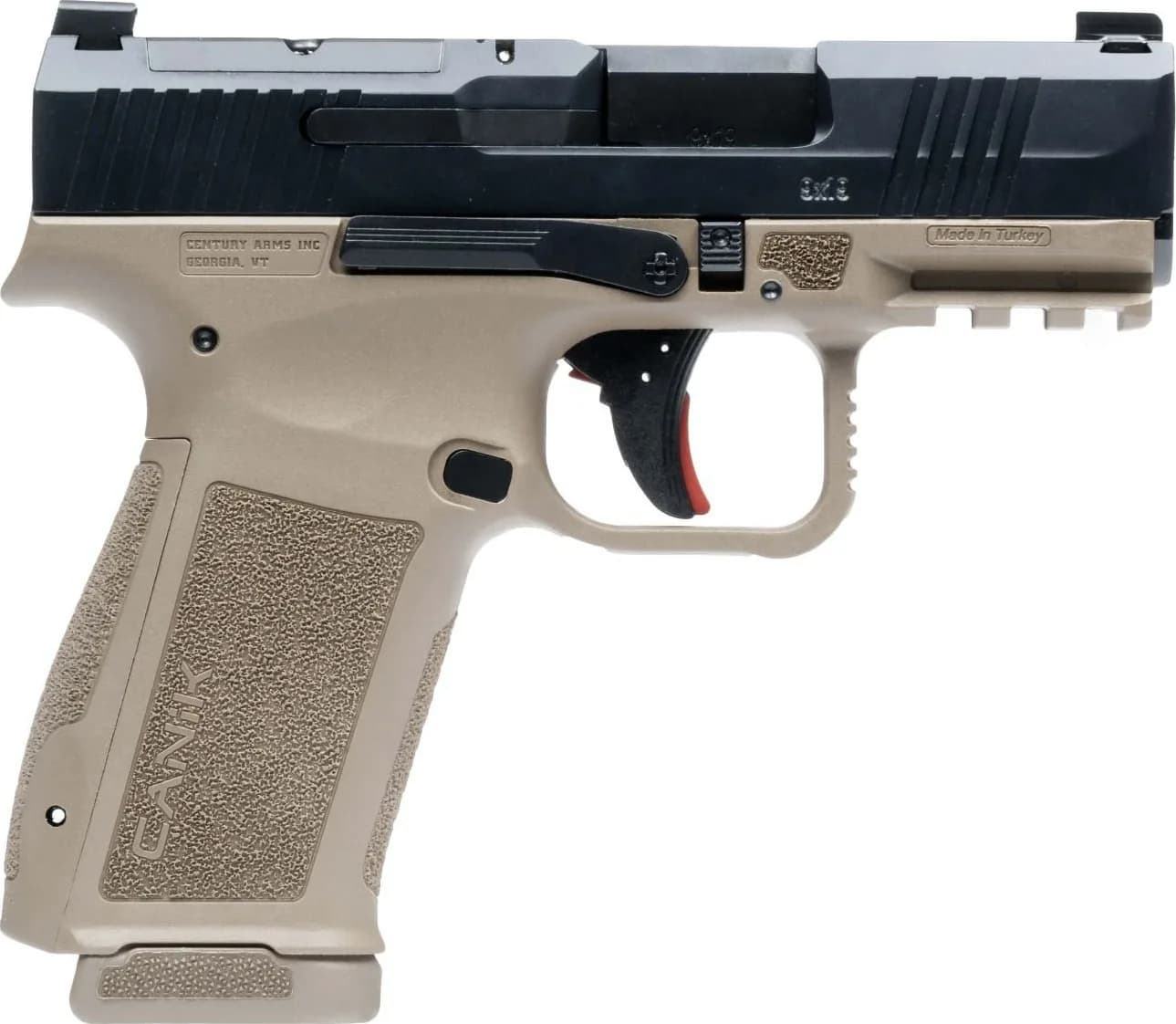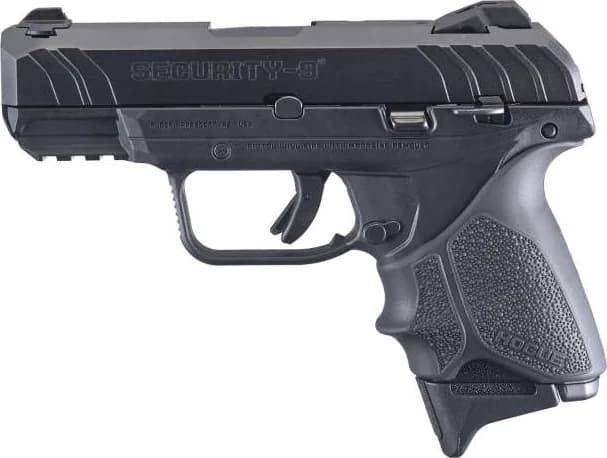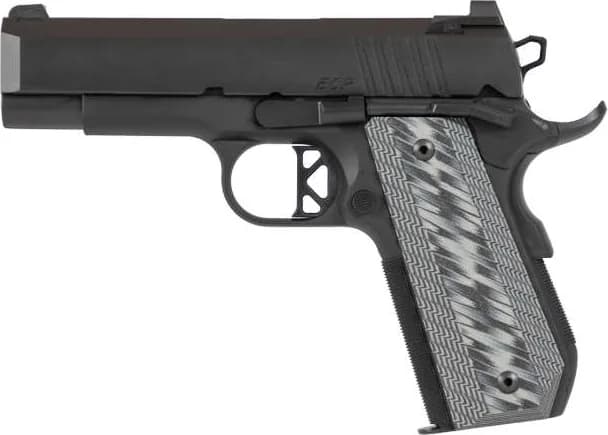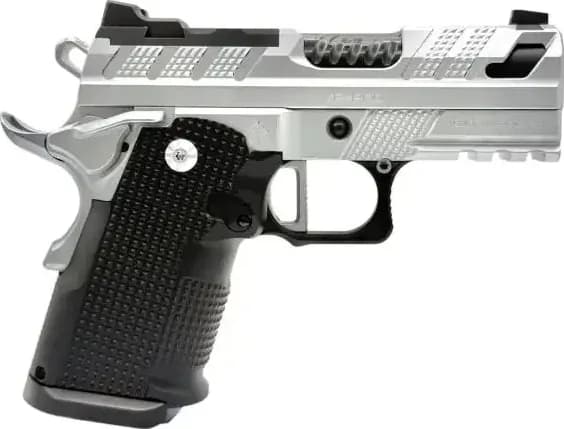
Grip Safety, Ambidextrous Safety, RMR & RMSc Plates Included, Accepts Glock 19 Mags
The XP 3C is Fusion Firearms’ compact entry in the company’s expanding double‑stack 1911 family, announced publicly in early 2026 as a purpose‑built “officer”/compact 2011-style pistol intended for modern concealed carry. Fusion, which has steadily broadened its Freedom Series and custom/production 1911 offerings since founder Bob Serva re‑launched the brand, positioned the XP 3C as a smaller sibling to its XP Pro and XP Comp models — sharing the same engineering lineage but shortened and tuned for carry use. Fusion’s recent product updates and outreach emphasize iterative development driven by customer feedback and optics/compensator options across the XP line.
That heritage matters: Fusion has been explicit about marrying traditional 1911 single‑action trigger dynamics and heavy steel construction with modern conveniences such as red‑dot mounting and compatibility with common magazines. The XP 3C, as presented in Fusion’s rollout and early coverage, is an attempt to provide those characteristics in a truly compact footprint.
At the heart of the XP 3C is a shortened double‑stack 1911/2011 concept: a 3‑inch barrel in a compact, steel upper and an aluminum grip module intended to give the shooter more purchase in a small package. Fusion’s marketing materials and early press describe a Tenifer/QPQ‑type hard finish, aggressive slide serrations and a high‑undercut frame for a low bore axis and positive control. The platform is optic‑ready by design, and Fusion states the compact model accepts Glock‑pattern magazines (specifically Glock 19 pattern magazines in the company briefings), which simplifies logistics for shooters who already own Glock equipment.
Those design choices translate to a distinct handling profile. A steel slide and frame mass in a short‑barrel package tends to damp felt recoil compared with similarly sized polymer pistols, but it also concentrates weight in the pistol rather than in the grip — a tradeoff that helps muzzle control at the cost of a heavier carry load. The aluminum grip module and undercut frame aim to let the shooter get a higher, more locked‑in grip that mitigates snappiness; Fusion’s approach here mirrors refinements the company has applied to larger XP models. Optic mounting in such a compact 1911 requires careful slide geometry and sight‑co‑witnessing considerations, which Fusion has prioritized across the XP family.
Independent, long‑term reviews of the XP 3C remain limited because the model was introduced recently and production has been ramping up; what is available so far is a mix of manufacturer testing, early media previews, and community range reports. Fusion’s development messaging stresses field testing and iterative tuning; early hands‑on coverage and photos released around the announcement show the intended feature set and construction.
Early user reports from online 2011 and handgun communities describe the compact XP platform as “flat‑shooting” for its size and praise the single‑action trigger feel that the 1911 family is known for. Several owners and reviewers have also noted that the small‑frame, short‑barrel configuration can be more sensitive to grip and recoil spring tuning than larger models — a familiar reality for condensed steel 1911s — and have recommended extended break‑in and varied spring setups when testing different loads. Community posts from experienced 2011 shooters cite a handful of initial stovepipes or feeding issues during early break‑in runs on some examples, but multiple range reports also describe guns that ran well after a few hundred rounds and after swapping spring weights or magazines as part of a break‑in regimen. Those accounts suggest the XP 3C’s durability and reliability profile is still being established in the field.
Because published, instrumented accuracy tests and long‑term endurance data are not yet abundant, reasonable coverage of the XP 3C’s real‑world performance must rely on these early impressions and on Fusion’s stated design intent. The brand’s other XP models have been promoted with match‑grade components and optic‑ready slides, and that engineering pedigree is being cited by testers as a likely indicator that the 3C will prove capable for precision shooting at typical defensive and practical distances once shooter and ammunition variables are sorted.
Where the XP 3C is at its strongest is obvious from its packaging and feature set: a compact, heavy‑frame 2011 with a short barrel that accepts common Glock‑pattern magazines is squarely aimed at shooters who want a controllable compact 9mm with true single‑action trigger characteristics and red‑dot readiness. That makes it attractive for owners who want a higher‑performance pocket or belt carry option than a micro‑striker pistol, or for those who want a compact defensive pistol that dovetails with an existing inventory of Glock magazines and accessories. Early commentary from the community places it in the same conversation as other premium compact metal 2011s — guns that prioritize shootability over the lightest possible carry weight.
Notable limitations flow from that same philosophy. A steel, double‑stack compact will be heavier and thicker than many polymer‑framed subcompacts, and users should expect a different carry and concealment tradeoff. Short‑barrel 1911 derivatives also require precise attention to recoil spring and magazine choice to deliver long‑term, trouble‑free feeding; early reports suggest the XP 3C is no exception. Finally, because the model is new, aftermarket holster and accessory options will lag initially, and conservative buyers seeking a proven, out‑of‑the‑box run‑and‑gun reliability record may prefer to wait for broader sample sizes and reviews.
Fusion has been explicit about building a 2011 ecosystem that intentionally lowers one of the traditional barriers to the format — magazine availability — by engineering compatibility with Glock magazines and by offering optic readiness and high‑quality finishes on production runs. That strategic positioning puts the XP 3C and its siblings into competition with compact performance 1911/2011 pistols from specialist makers, and in the eyes of many shooters it competes on features and value rather than simply on carry lightness. Early analyst writeups and forum‑level engineering posts that examine Fusion’s broader XP line emphasize the brand’s emphasis on bar‑stock construction, optics readiness, and practical feed geometry — attributes that can help a newcomer like the XP 3C gain acceptance more quickly than a purely boutique offering.
In short, the XP 3C is an intriguing attempt to distill the 2011 experience into a carryable package without forcing owners to surrender the ergonomic and mechanical benefits that draw shooters to steel single‑action pistols. Its ultimate standing will depend on how consistently production examples run with a variety of magazines and modern defensive ammunition, and on how the market responds to the weight/size tradeoffs compared with polymer carry platforms. Early community reports and Fusion’s own developmental transparency give the XP 3C a promising start, but wider, instrumented testing and longer‑term reliability data will be the decisive factors in its reputation.
Start with a practical guide if you want a faster way to narrow the field before comparing specific models.
Learn how to choose the right 9mm handgun based on size, budget, and how you plan to use it.
Read guideCarry-focused shoppersLearn how to choose the right concealed carry handgun based on size, comfort, safety, and everyday usability.
Read guideComparison-focused shoppersA practical guide to comparing handguns the right way: what actually matters, what to ignore, and how to use comparison tools effectively.
Read guide