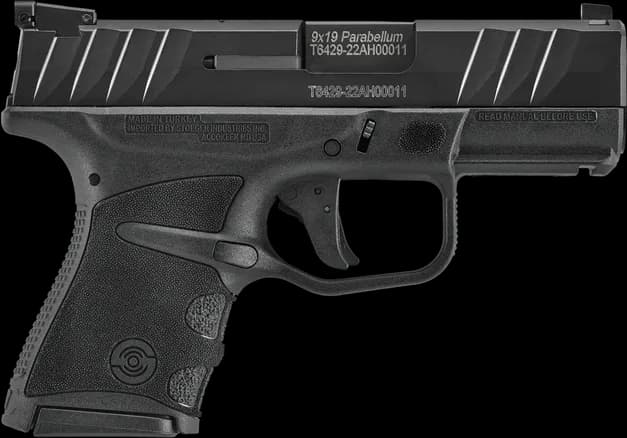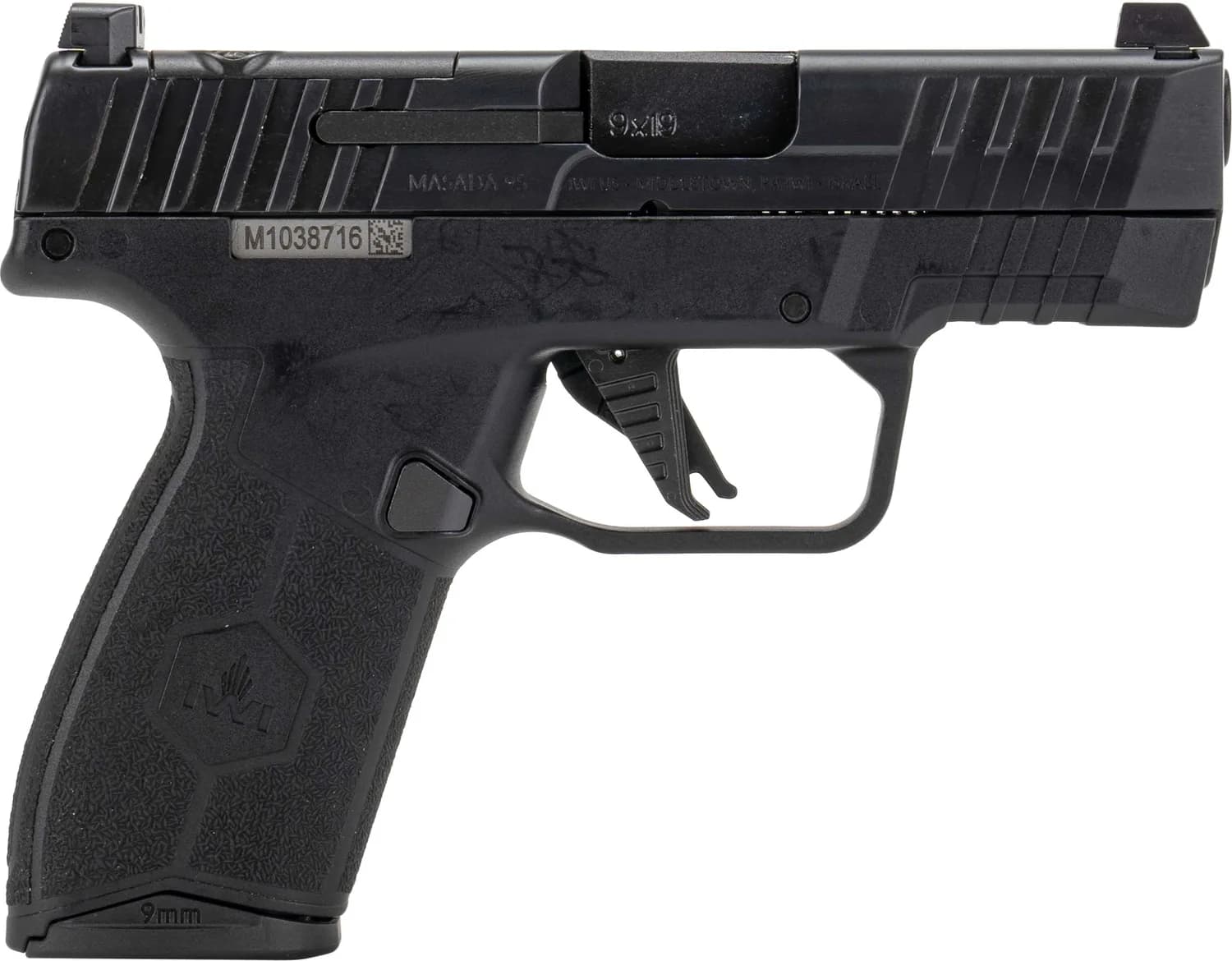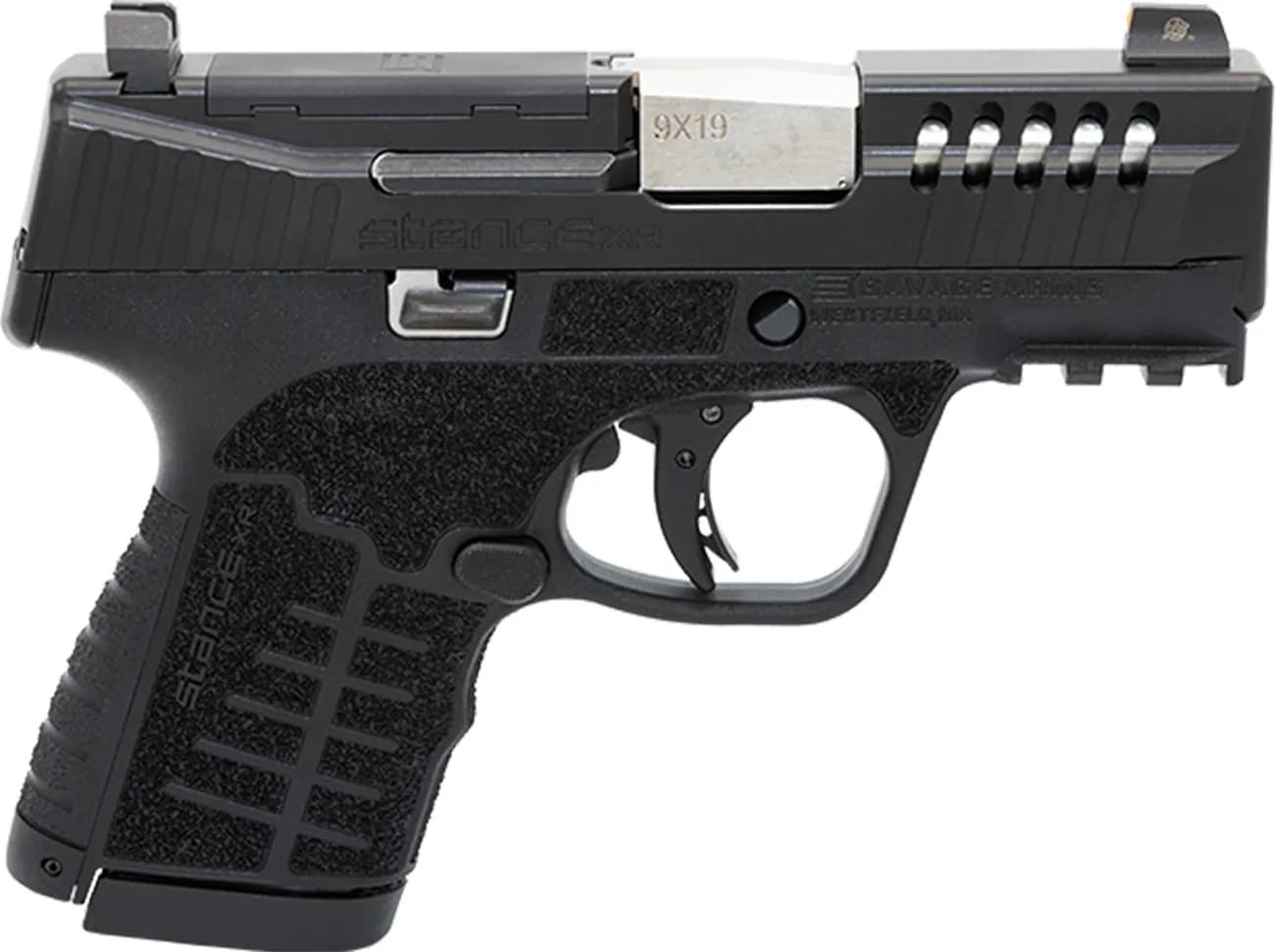
Affiliate disclosure: HandgunCloud may earn a commission if you continue to the retailer and complete a purchase.
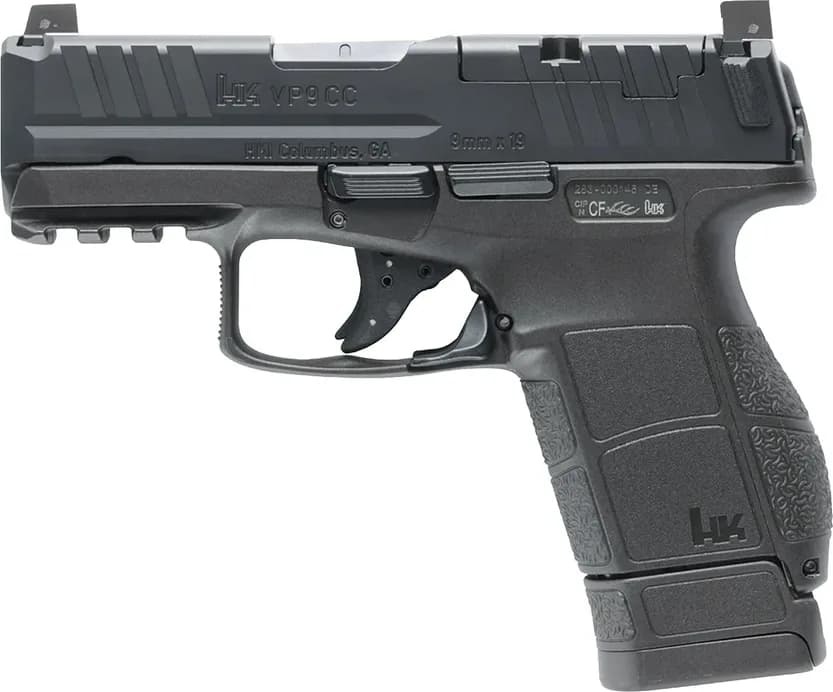
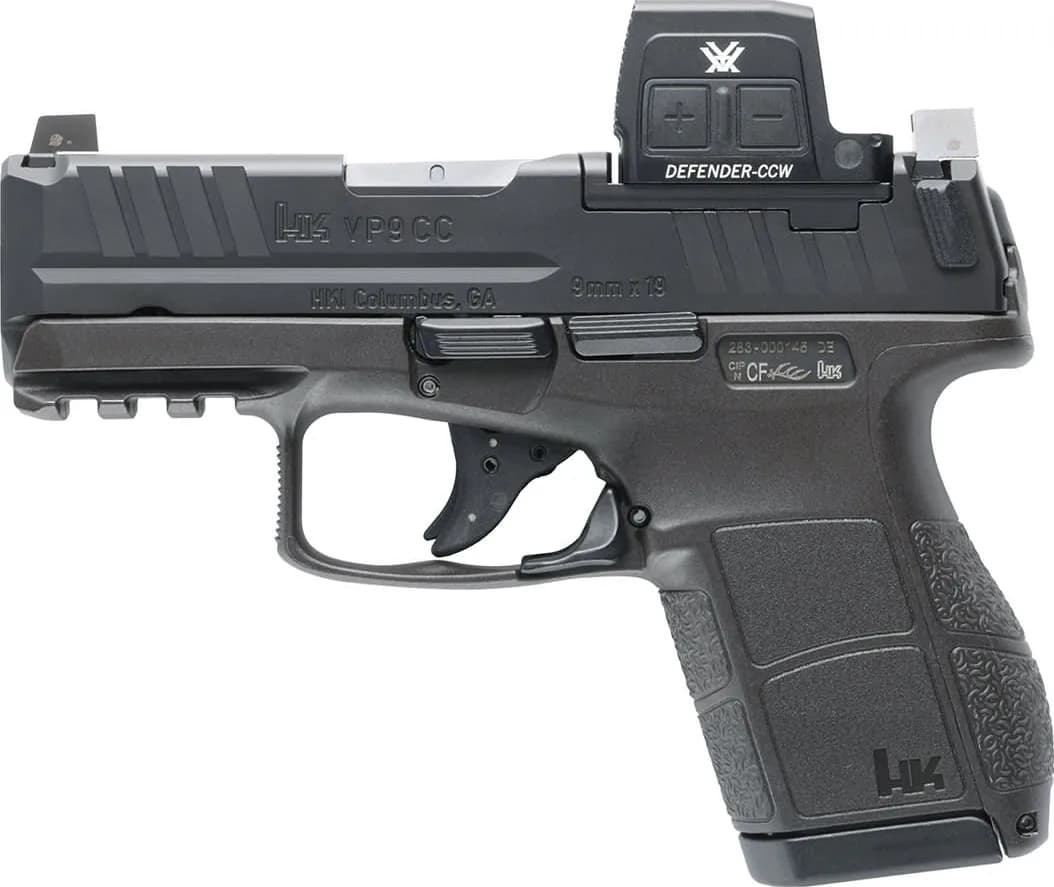
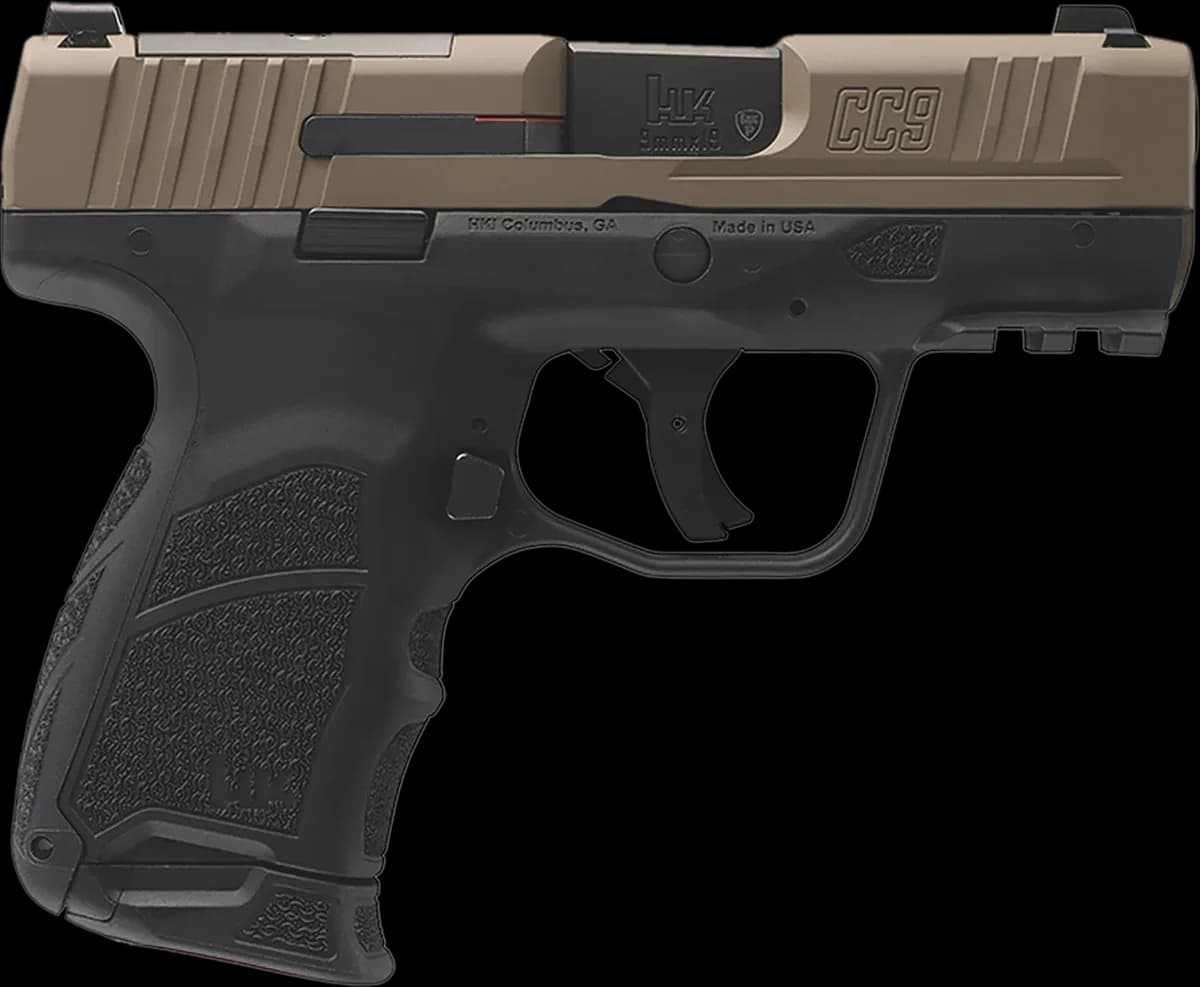
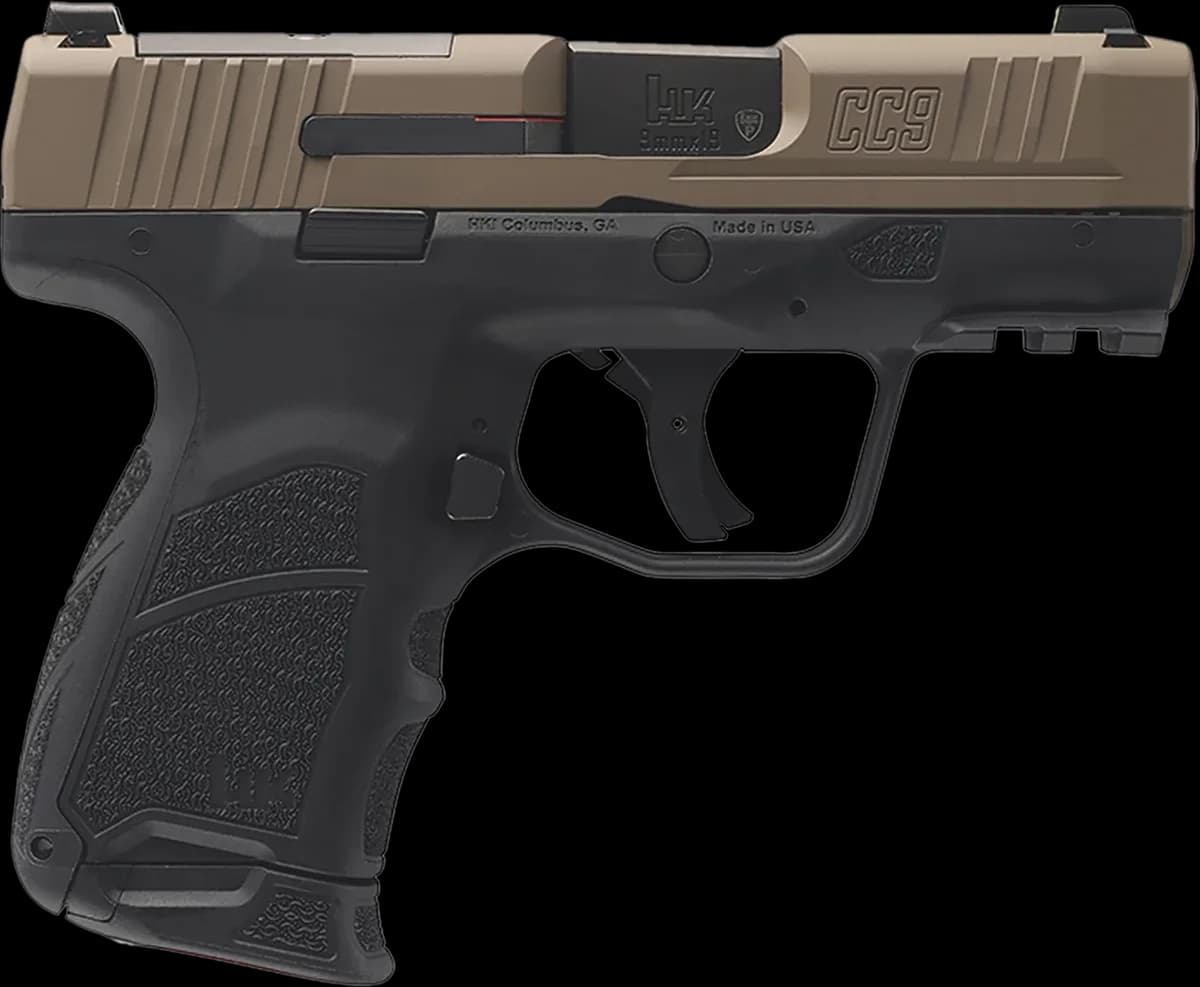
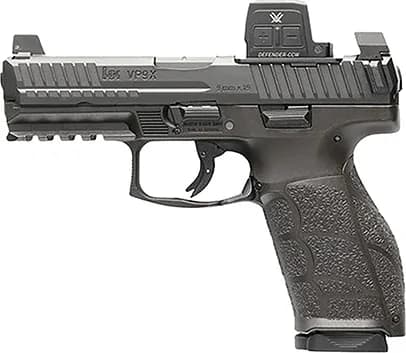
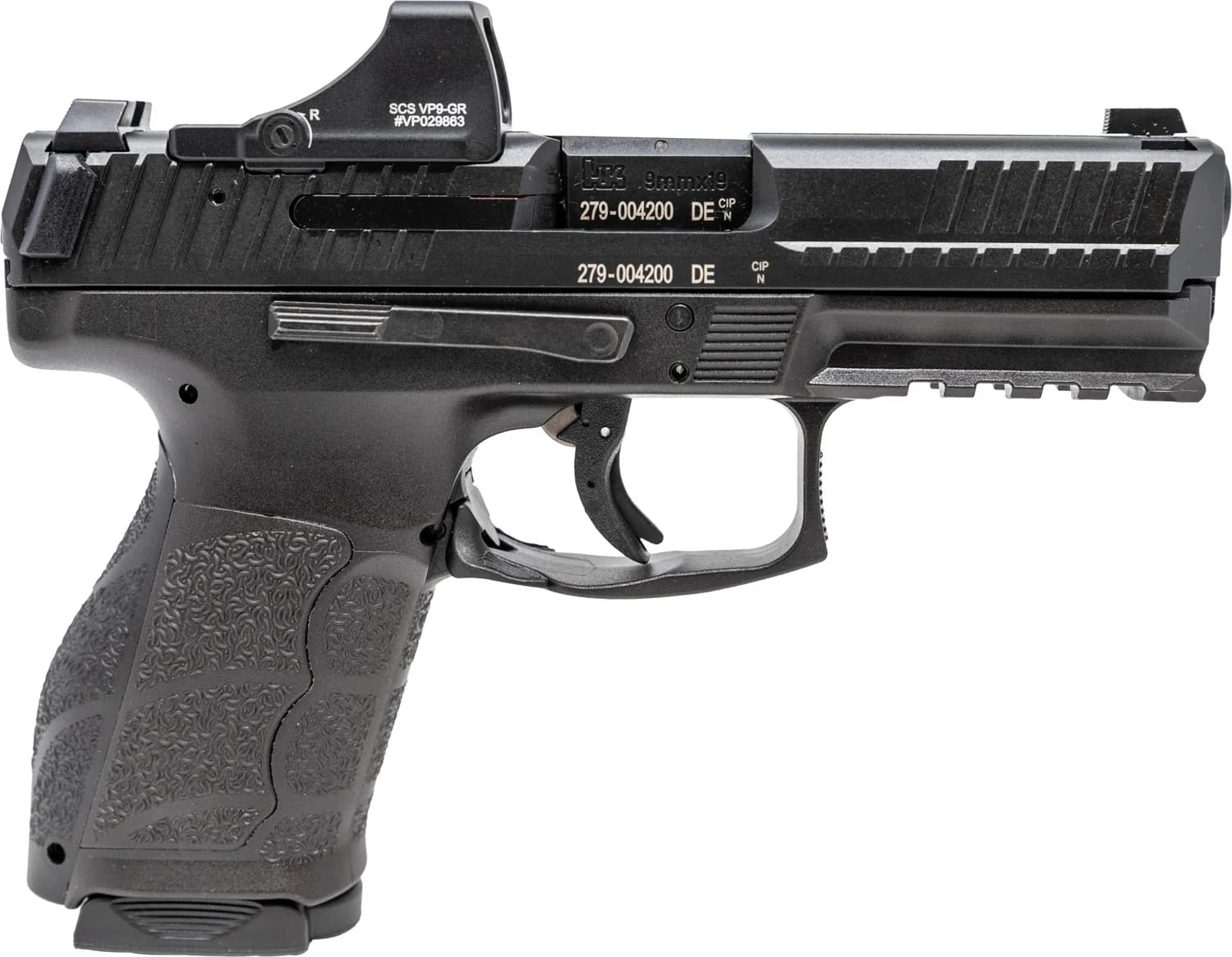
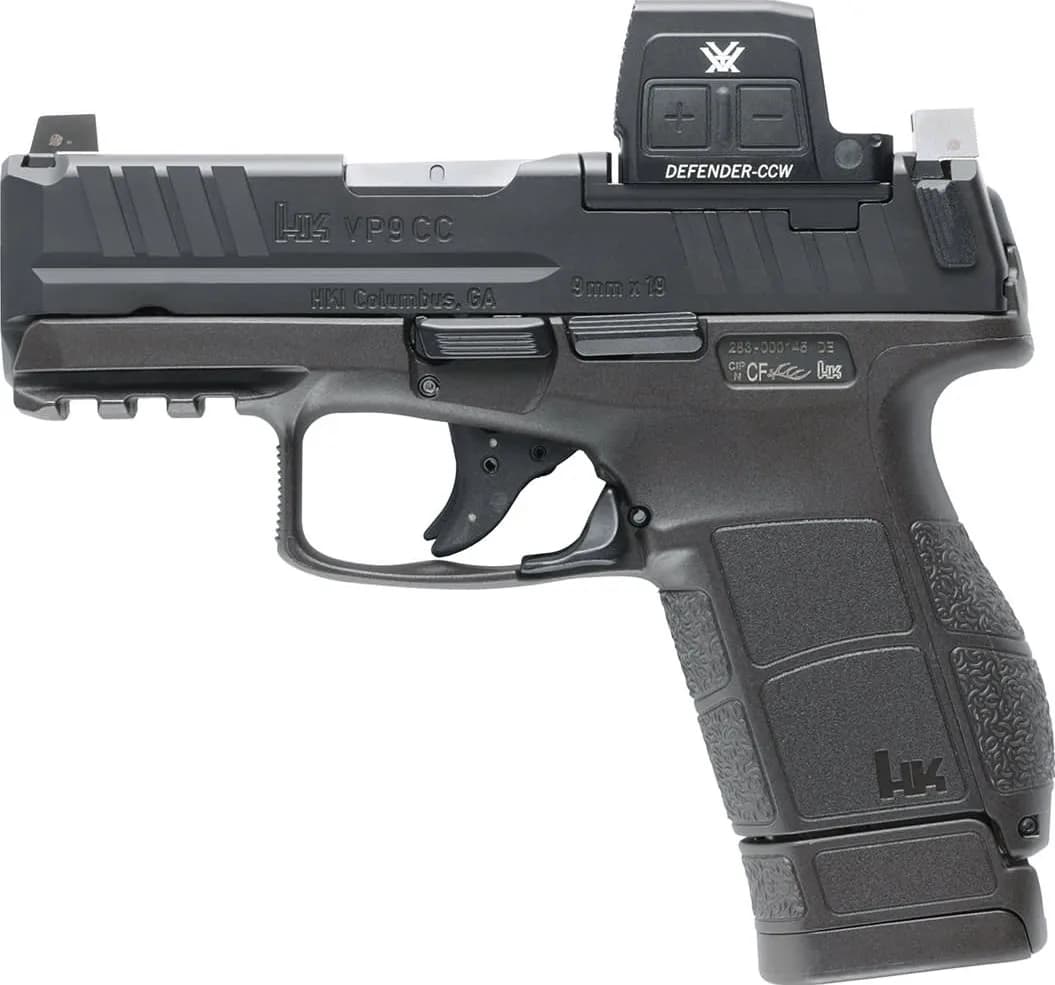
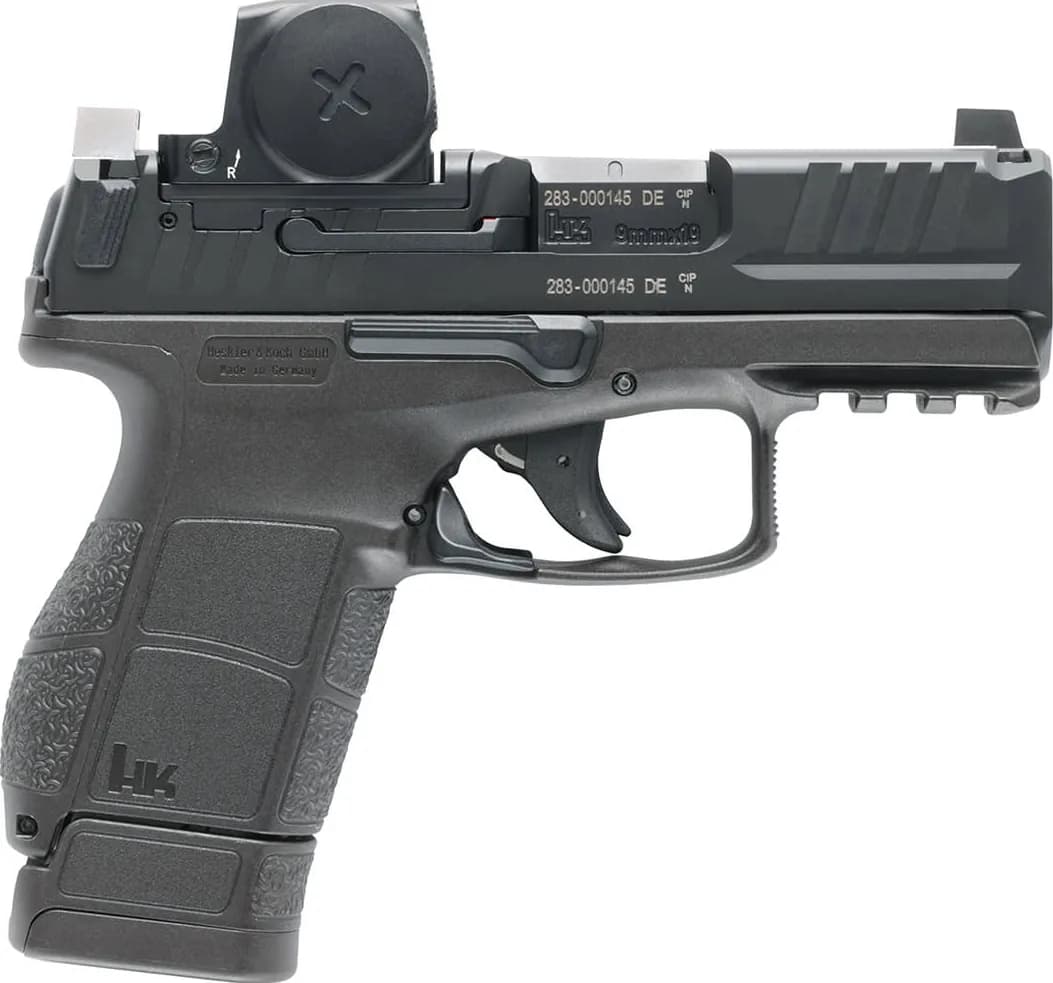
Buy from Impact GunsHeckler & Koch’s VP9 family has been a defining entry in the modern striker-fired, polymer-frame handgun market since its introduction in the mid-2010s. The VP9CC is the company’s micro‑compact interpretation of that platform, announced to dealers in spring 2026 as a purpose-built concealed‑carry pistol that preserves much of the VP9 character in a smaller package. HK positions the VP9CC as a “micro‑compact VP9,” built and tested to the same NATO AC/225 durability standards as its larger siblings, and shipped both as an optics‑ready model and as an optics‑equipped package with a factory‑installed closed‑emitter Vortex Defender CCW.
The VP9CC fits into HK’s product stack as the small‑frame, high‑quality alternative to other micro‑compacts in the market and as a complement to the company’s existing VP9 SK and full‑size VP9 variants. Where recent micro‑compact entrants have emphasized minimalism and cost control, HK has taken the opposite route: shrink the proven VP9 architecture while retaining a broad feature set—ambidextrous controls, charging supports, paddle magazine release, multiple backstraps and an optics‑ready slide—then manufacture it at HK’s Oberndorf, Germany plant.
Mechanically the VP9CC is straightforward: striker‑fired operation with HK’s multi‑axis safety scheme (trigger safety plus firing‑pin blocking safety), a hammer‑forged barrel, and a short, deliberate VP9 family trigger characterized by a short takeup, crisp break and positive reset. HK retained features that aid handling on a small pistol—patented rear charging supports to ease slide manipulation, a truly ambidextrous paddle magazine release, and an ambidextrous slide catch—so that the CC sacrifices as little control as possible to reach a micro‑compact footprint.
Ergonomics are a particular focus: instead of boxed‑in grip geometry, HK supplies six interchangeable backstraps to tailor trigger reach and length‑of‑pull. Combined with the VP9’s familiar grip texture and finger‑influenced shaping, that modularity helps bridge the gap between concealability and shootability—especially for shooters who find typical tiny pistols cramped. The slide also incorporates a deeper, proprietary optics mounting cut and an adapter plate that wraps around the striker channel; this lowers the optic mounting height substantially and enables co‑witnessing with the factory sights on compatible optics. Those engineering choices are notable for a gun in the micro class.
On paper the VP9CC rides a narrow line between the ultra‑thin pocket‑9s and compact double‑stacks. Its overall dimensions are just over six inches in length with a roughly 3.1‑inch barrel, and its unloaded weight is reported in early coverage in the high‑teens in ounces—small enough to be carryable, but noticeably heftier than the smallest micro‑compacts, which affects recoil impulse and perceived stability. Those measurements reflect HK’s intent to keep mass and grip surface to maintain controllability.
Because the VP9CC is a newly introduced model, long‑term reliability data and broad, independent endurance testing are still emerging. HK’s messaging and early first‑looks emphasize that the CC was subjected to the same rigorous testing regimes used for the rest of the VP family—NATO‑standard endurance and environmental procedures—and that the part‑quality (cold hammer‑forged barrel, steel slide finishes) mirrors HK’s German manufacturing pedigree. Those factory claims are a strong starting point, but independent verification will be important as the model accumulates service hours in civilian and LEO hands.
Initial hands‑on reporting and first‑look writeups note the VP9 trigger feel is consistent with the VP9 line—not a light match trigger but a short, clean takeup with a distinct break and tactile reset that enables fast follow‑ups when properly trained. Review copy also points out that the gun’s slightly greater mass relative to the narrowest micro‑compacts tends to translate into a gentler perceived recoil impulse and quicker sight recovery for many shooters. Precision at practical defensive distances is projected to be good for a 3.1‑inch‑barrel 9 mm, provided the shooter accepts the inherent ballistic limits of a short‑barrel platform.
Community commentary—early adopters and forum threads—has been split between enthusiasm for a high‑quality, German‑made VP9 in a carry size and questions about how the CC compares to more affordable micro‑compact choices. Many prospective buyers praise the ergonomics and the idea of a factory‑installed, enclosed‑emitter optic; others point to the higher cost and note that fewer corners were cut than with economy micro‑compacts, which leaves the VP9CC at a different market tier. Those discussions reflect typical early‑release dynamics: technical approval from brand loyalists, and a price/value calculus from buyers who already own other micro‑compacts.
The VP9CC’s core mission is concealed carry for shooters who want VP9 ergonomics and ambidextrous controls in a genuinely small package. Its strengths are modular ergonomics (six backstraps), controllability for a micro‑compact due to built‑in mass and grip surface, a robust optic‑mounting solution that accommodates a factory enclosed emitter optic, and the full set of VP9 controls—useful for those who prefer a paddle mag release and full ambidexterity.
Where the CC is less well suited is in roles that value minimal width or pocketability above all else: the VP9CC is not a sub‑1‑inch thin carry piece and will not compete in that niche with the very thinnest micro 9s. Likewise, while the factory optic option is compelling, some buyers prefer the universal RMSc/RMR‑style footprints offered by other micro designs; HK’s solution—an adapter plate and lower mounting channel—works well for co‑witnessing but is a different implementation than the direct‑mount footprints common on other micro models. Finally, short‑barrel ballistics and sight radius are inherent limits for any 3‑inch 9 mm when compared to compact or full‑size service pistols.
The VP9CC lands squarely in the premium micro‑compact segment. It is not an attempt to undercut the low‑cost market; rather, HK is offering a feature‑rich, German‑made micro that delivers the VP9 ergonomics, ambidextrous controls and a novel optics mounting system as selling points. That makes it a direct alternative for buyers who value manufacturing provenance, VP9 ergonomics and a factory optics package over absolute value pricing.
Against other micro‑compacts, the VP9CC trades absolute thinness and bargain pricing for build quality, a broader feature set and a more substantial grip. For shooters who already prefer paddle mag releases, ambidextrous functionality and a more controllable recoil impulse in a small pistol, the VP9CC occupies a distinct and defensible niche. For the buyer whose priority is the thinnest possible carry or the least expensive micro, competing models will remain compelling choices. Early coverage and community reaction reflect those two axes—cost versus completeness—and suggest the VP9CC will be evaluated over the coming months on how well HK’s engineering choices translate into long‑term reliability, accessory support and real‑world carry comfort.
For shooters and agencies looking for a compact platform that preserves VP9 handling and brings a factory optics option in a micro‑sized package, the VP9CC is a noteworthy—and deliberately premium—entry into the crowded concealed‑carry market.
Start with a practical guide if you want a faster way to narrow the field before comparing specific models.
Learn how to choose the right 9mm handgun based on size, budget, and how you plan to use it.
Read guideCarry-focused shoppersLearn how to choose the right concealed carry handgun based on size, comfort, safety, and everyday usability.
Read guideComparison-focused shoppersA practical guide to comparing handguns the right way: what actually matters, what to ignore, and how to use comparison tools effectively.
Read guide