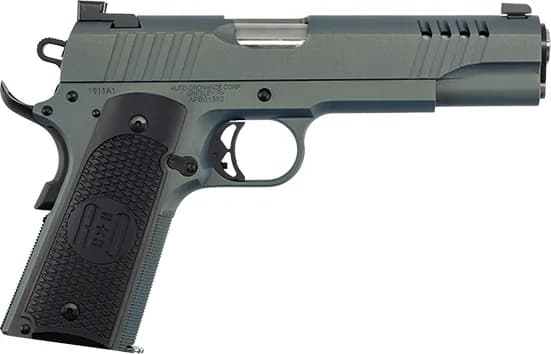
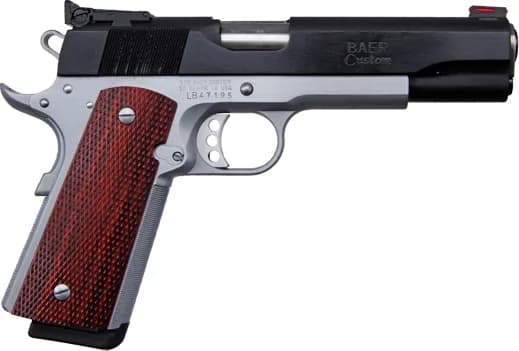
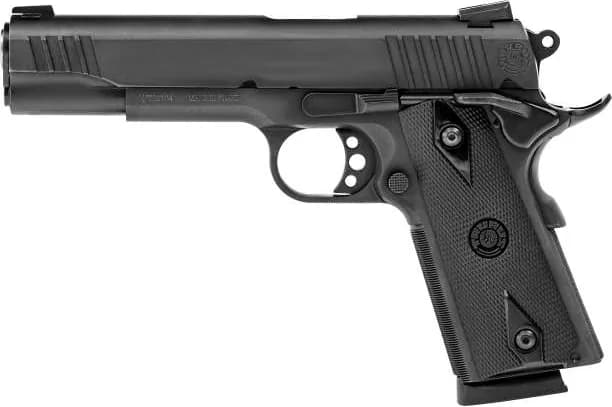
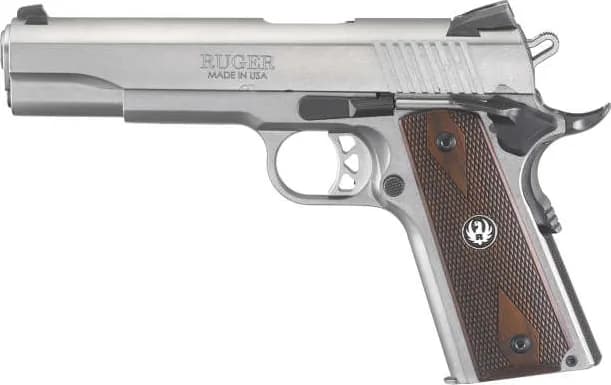
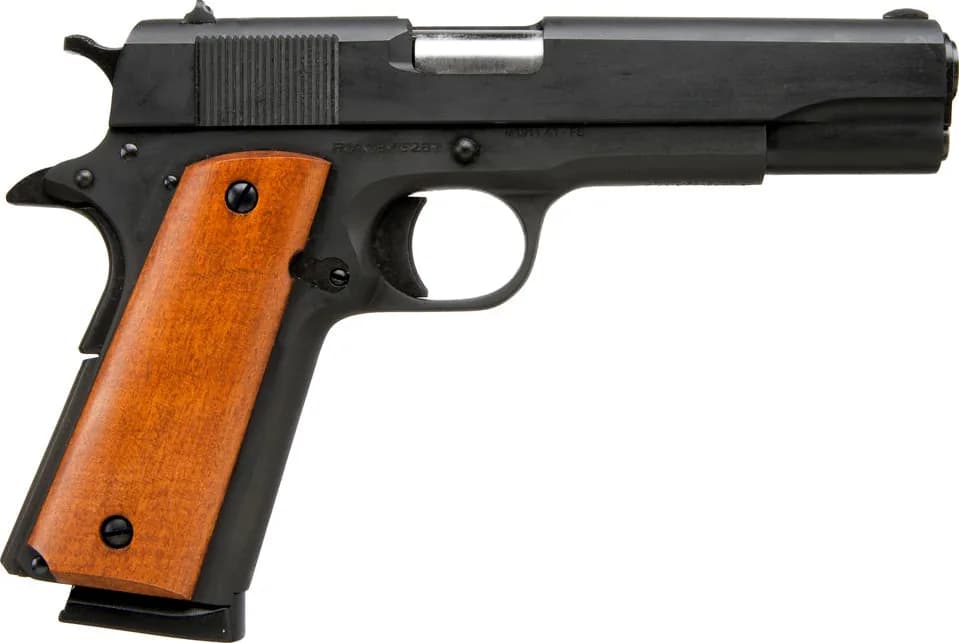
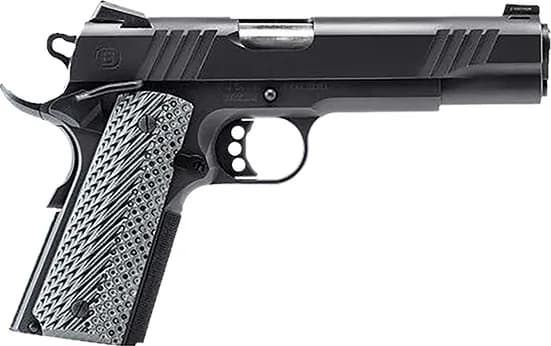
Skeletonized Trigger, Checkered Frontstraps, Liberty Belle and Eagle Theme Hardwood Grips
Auto‑Ordnance’s 250th‑anniversary 1911s are a recent commemorative series produced under the Kahr Firearms Group umbrella to mark the United States’ semiquincentennial. Announced in 2025 and shown in industry previews through early 2026, the program pairs Auto‑Ordnance’s Government‑format M1911A1 platform with bespoke cosmetic work from partner shops (Altered Arsenal and other customizers) to produce limited, highly engraved commemoratives honoring branches of the armed services and the nation’s 250‑year milestone. The pistols are built on Auto‑Ordnance’s stainless 1911 architecture — a contemporary American‑made interpretation of the classic Government 1911 — and are presented as display‑quality pieces that are nevertheless fully functional firearms. The company framed the releases as collector’s tributes rather than mass‑market duty or carry pistols.
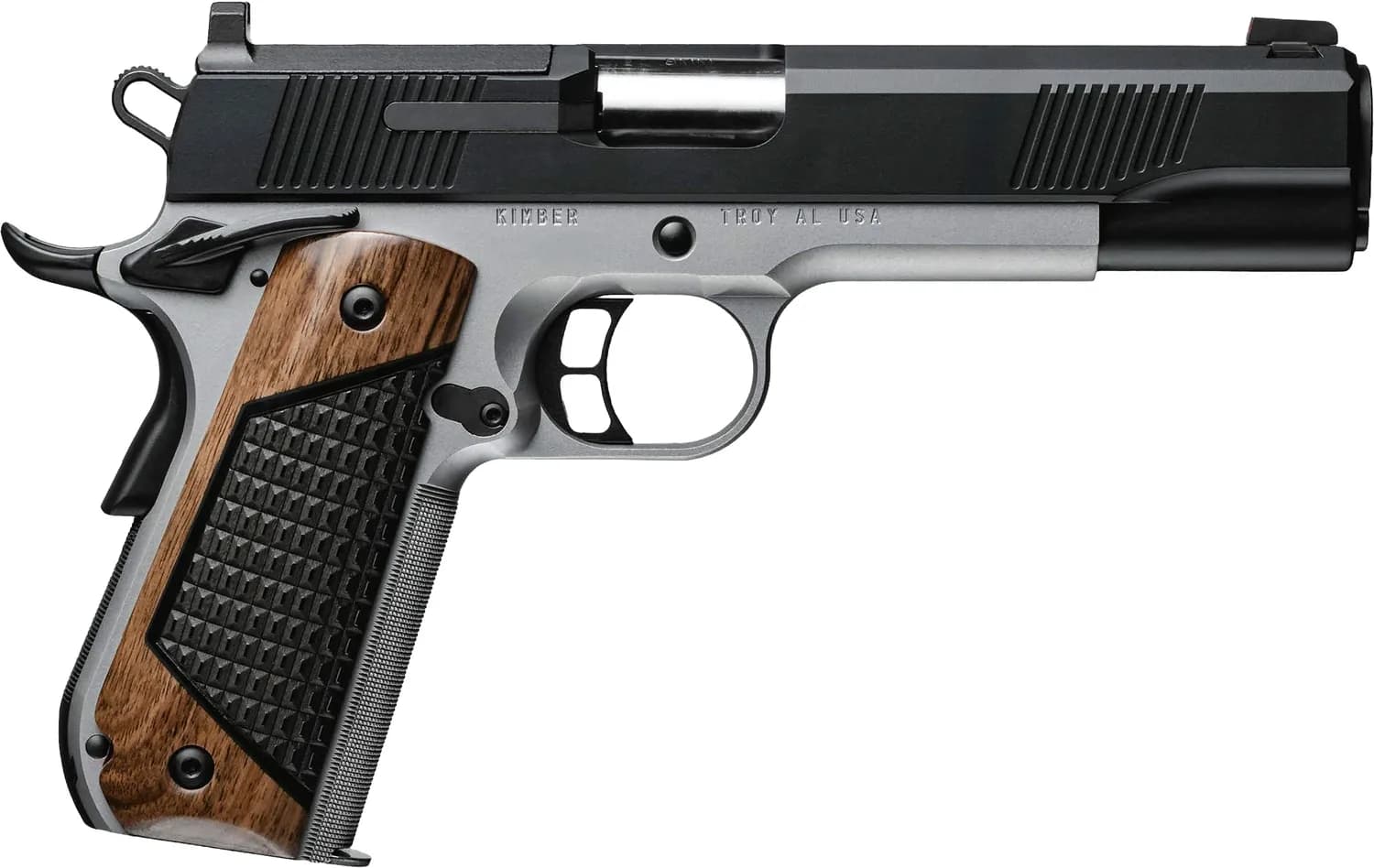
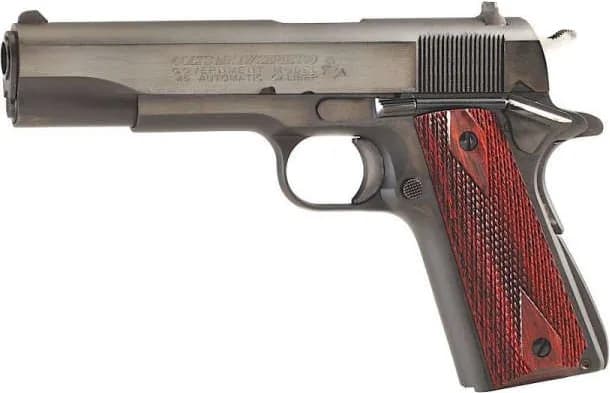
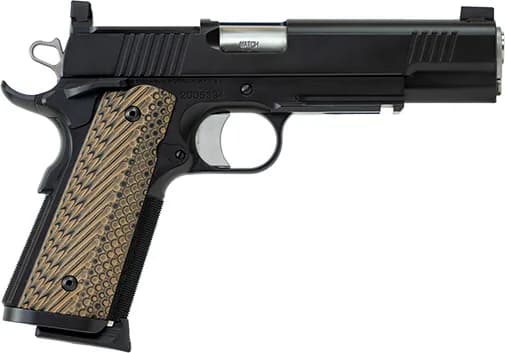
At their core these commemoratives use the familiar Government‑frame 1911 dimensions: a five‑inch match‑grade barrel with an overall length in the neighborhood of 8.6 inches and a weight in the mid‑30‑ounce range. Auto‑Ordnance’s production 1911s in this family are forged and machined from quality stainless steel, and many catalog entries for their stainless 1911 line describe features such as skeletonized triggers and hammers, full‑length guide rods, extended beavertail grip safeties, and machine‑checkered frontstraps and mainspring housings — all of which improve grip purchase and reduce perceived weight during recoil impulse. Typical sights offered on related models include three‑dot combat day sights or TruGlo night sights, depending on configuration. Those dimensional and component choices translate to a traditional 1911 balance: a nose‑heavy, steady sighting platform that tames .45 ACP recoil relative to smaller, lighter pistols but is less convenient for everyday carry due to its size and weight.
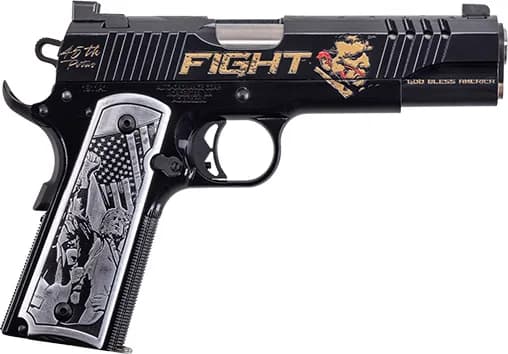
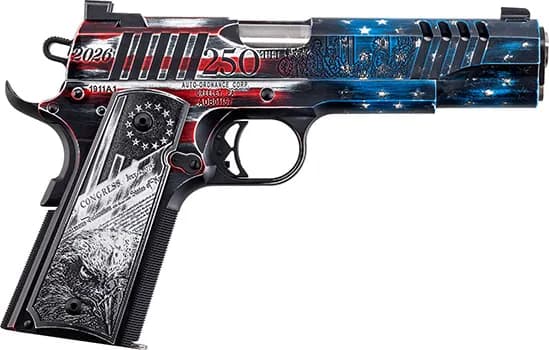
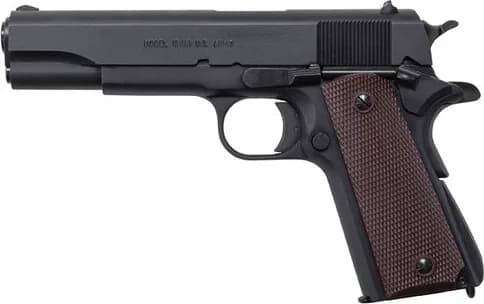
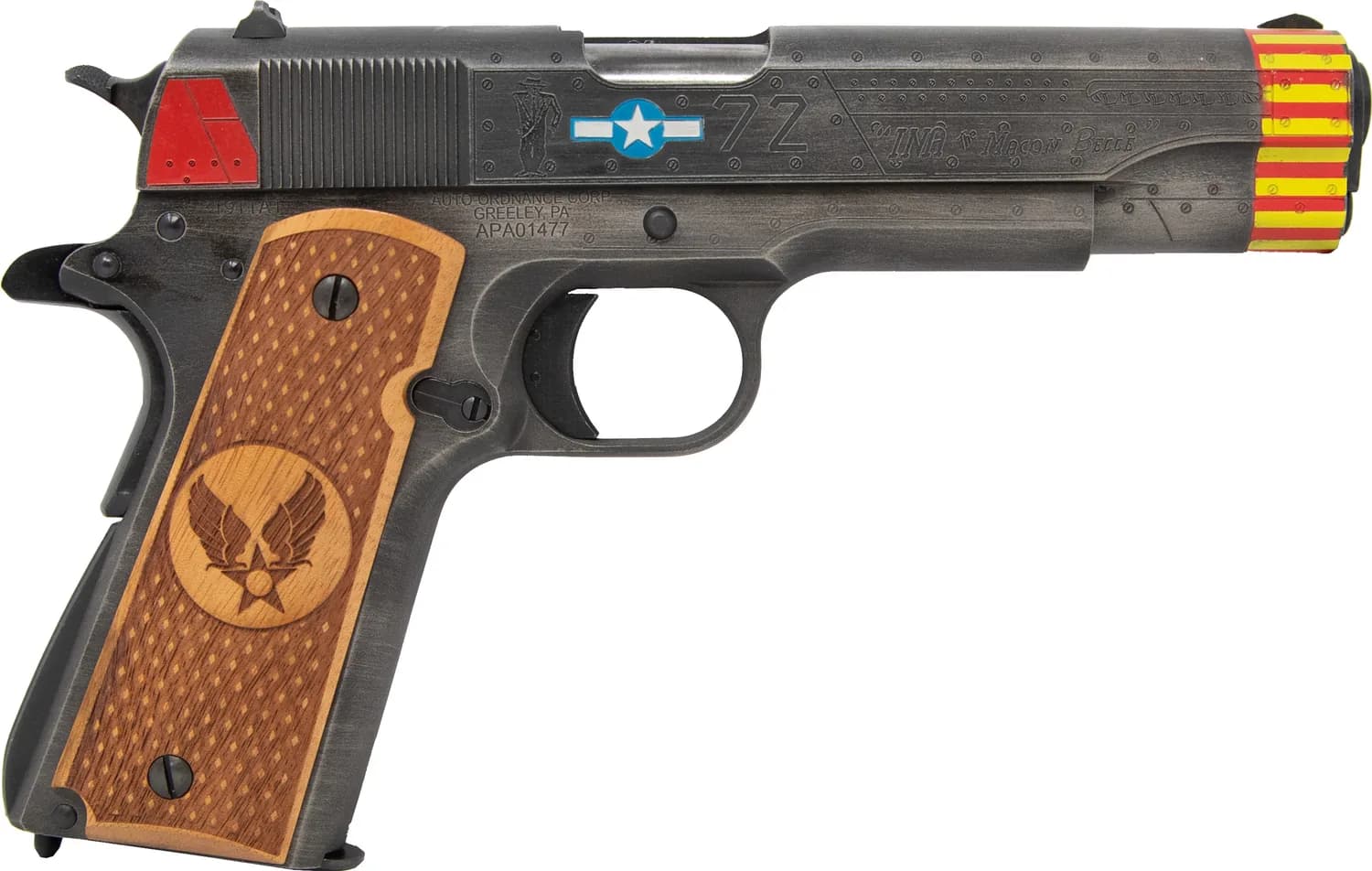
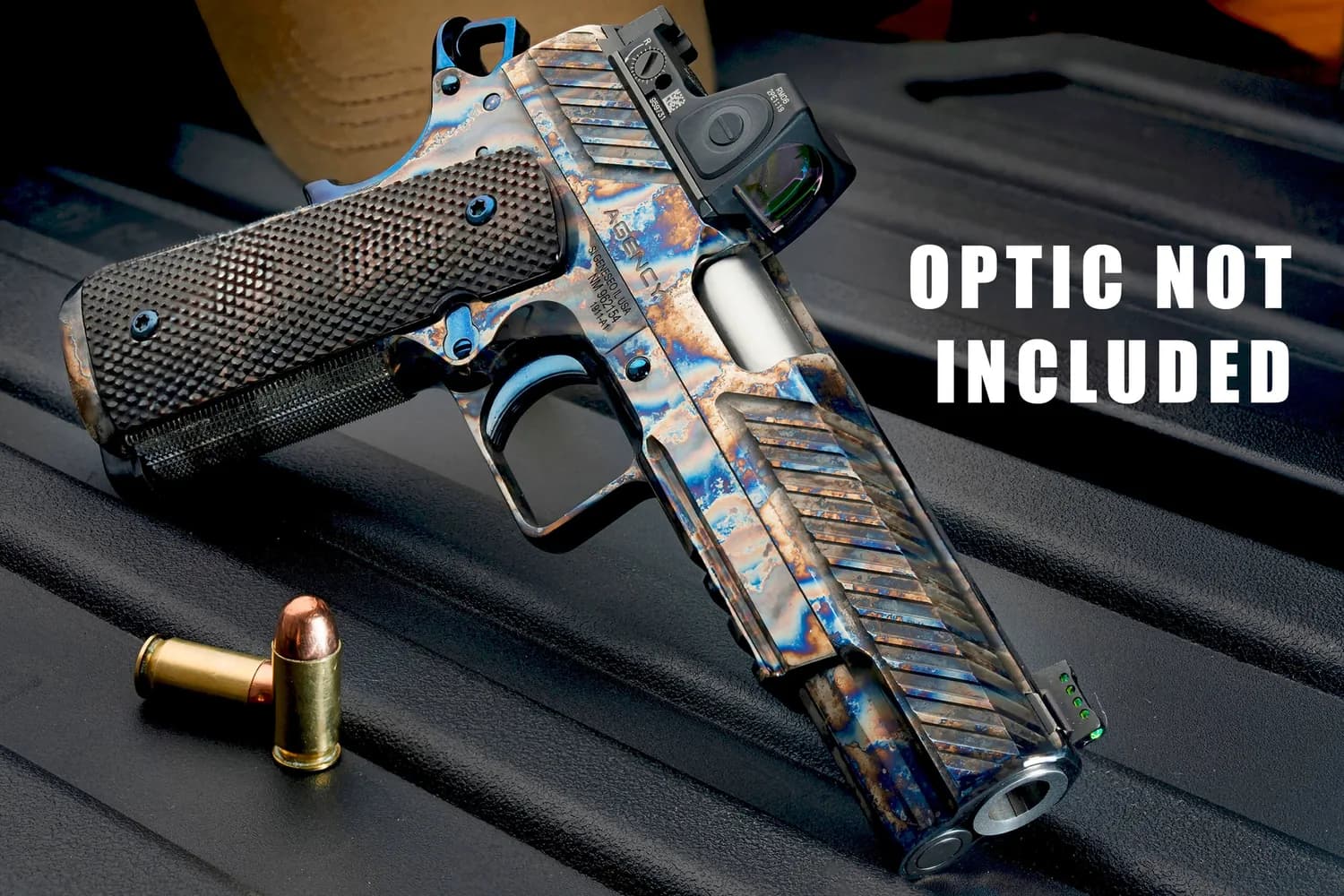
Aesthetically these editions depart sharply from plain GI finishes. The commemoratives pair two‑tone Cerakote liveries (for example a gray frame and slide with copper‑tone inlays and accent engraving) with deep laser and hand engraving on slides and frames, and specialized hardwood grip panels engraved with period imagery (Liberty Bell motifs, eagles, branch iconography, and portraiture). Those surface finishes are decorative but use Cerakote — a durable polymer‑ceramic coating — so the artwork is more resistant to handling than simple paint or plating would be. Still, heavy carry or rough use will abrade high points of engraving and edges over time; these guns are clearly built first as commemorative pieces and second as working tools.
Mechanically, the platform is the tried‑and‑true single‑action 1911; shooters familiar with Government‑size 1911s will find the controls (thumb safety, grip safety, slide geometry and manual of arms) immediately recognizable. The 5‑inch barrel and the weight distribution commonly produce a steady sight picture and manageable muzzle flip with .45 ACP loads. Skeletonized triggers and tuned sears — features listed for Auto‑Ordnance’s stainless 1911 variants — typically yield a crisp, short travel and comparatively light trigger pull for an out‑of‑the‑box Government 1911, which helps with follow‑up shots and accuracy in hands comfortable with single‑action operation. Sight choices such as TruGlo day/night units or white three‑dot setups give clear front‑sight acquisition in both daylight and lower light.
Independent, in‑depth field reviews specific to these exact 250th commemoratives are scarce in the public record; most contemporary coverage has focused on photography and show‑floor impressions rather than extended range testing. Where Auto‑Ordnance’s stainless 1911s have been evaluated, reviewers generally find acceptable accuracy for a service‑length 1911, solid component fitment, and typical 1911‑class durability — provided the pistol is broken in and maintained. Historical forum commentary about legacy Auto‑Ordnance products notes that pre‑Kahr ownership models had more variable quality; under Kahr Firearms Group stewardship the manufacturing consistency of Auto‑Ordnance has been widely reported to have improved. Because the commemoratives use upgraded production components and are finished by experienced custom shops, expectations for out‑of‑the‑box function are higher than for lower‑priced imports, though prospective owners should treat them as both collectible and shootable rather than assuming they are competition‑spec match guns.
Accuracy: With a five‑inch match barrel and a single‑action trigger setup, these 1911s are capable of consistent 25–50 yard groups in competent hands and with quality ammunition. The heavier Government frame and longer sight radius help precision versus compact pistols. Specific, measured group sizes for the 250th pieces are not widely published; performance expectations come from the same Auto‑Ordnance stainless models that underpin them.
Recoil: The .45 ACP in a 36‑ish‑ounce, full‑size steel pistol is brisk but controllable; most shooters report moderate muzzle rise and a predictable, manageable impulse that makes fast, accurate follow‑ups more achievable than in lighter polymer‑frame .45 pistols.
Trigger feel: Factory skeletonized triggers and tuned sears on the production platform generally produce a clean single‑action break and short reset relative to entry‑level 1911s; however, final trigger characteristics vary with end‑user tuning and any aftermarket work performed as part of the commemorative finishing process.
Durability: Cerakote finishes and stainless components provide good corrosion resistance; engraved surfaces and colored inlays will show handling wear over time if the pistol is carried or used heavily. The commemoratives were designed and marketed primarily as presentation‑grade pieces, although they are built on rugged mechanical underpinnings intended to be serviceable.
These pistols excel as display and ceremonial pieces, as part of curated collections, or as range guns for special‑occasion shooting. Their strengths are aesthetics, historical theming, and the steady shooting characteristics inherent to a full‑size steel 1911. They are less ideal as daily carry guns due to size, weight, and the impracticality of exposing detailed engraving and specialty finishes to the wear and tear of everyday use. For serious competition, a dedicated, competition‑tuned 1911 with match sights, tuned feed geometry and a known aftermarket parts list will usually outperform a commemorative that balances ornamentation with function. For home defense and occasional range use, however, the platform remains more than capable.
Positioned as limited, collectible variants of a production stainless Government‑format 1911, the 250th commemoratives sit above basic GI‑spec Auto‑Ordnance models in both finish and presentation. Compared with other manufacturers’ commemorative or premium 1911 offerings, they follow a familiar formula: a proven mechanical base (the Government 1911), premium finishing and engraving, and a smaller run count that appeals to collectors. That places them in the niche premium‑commemorative tier rather than the utility or budget segments. Published press and industry previews emphasize craftsmanship and artwork over value‑for‑volume, so buyers should weigh the collectible appeal and artwork quality against alternatives if their priority is match‑grade performance or practical everyday carry. Public coverage around the releases has emphasized limited availability and the partnership with custom shops; it also notes that the underlying Auto‑Ordnance 1911 line shares the company’s renewed focus on consistent, American manufacturing under the Kahr Firearms Group.
Note on sources and scope: public manufacturer materials, catalog entries, and show coverage document the 250th Anniversary program’s aesthetics and basic specifications and identify the collaboration with custom shops; however, extended hands‑on reviews and long‑term durability testing for these exact commemorative variants remain limited in public outlets. Where direct, model‑specific testing was not available, this appraisal relies on manufacturer specifications for the stainless 1911 platform and on contemporary industry reporting of the commemorative releases.
Start with a practical guide if you want a faster way to narrow the field before comparing specific models.
Learn how to choose the right concealed carry handgun based on size, comfort, safety, and everyday usability.
Read guideHome-focused buyersLearn how to choose the right handgun for home defense based on safety, ease of use, and practical everyday considerations.
Read guideComparison-focused shoppersA practical guide to comparing handguns the right way: what actually matters, what to ignore, and how to use comparison tools effectively.
Read guide