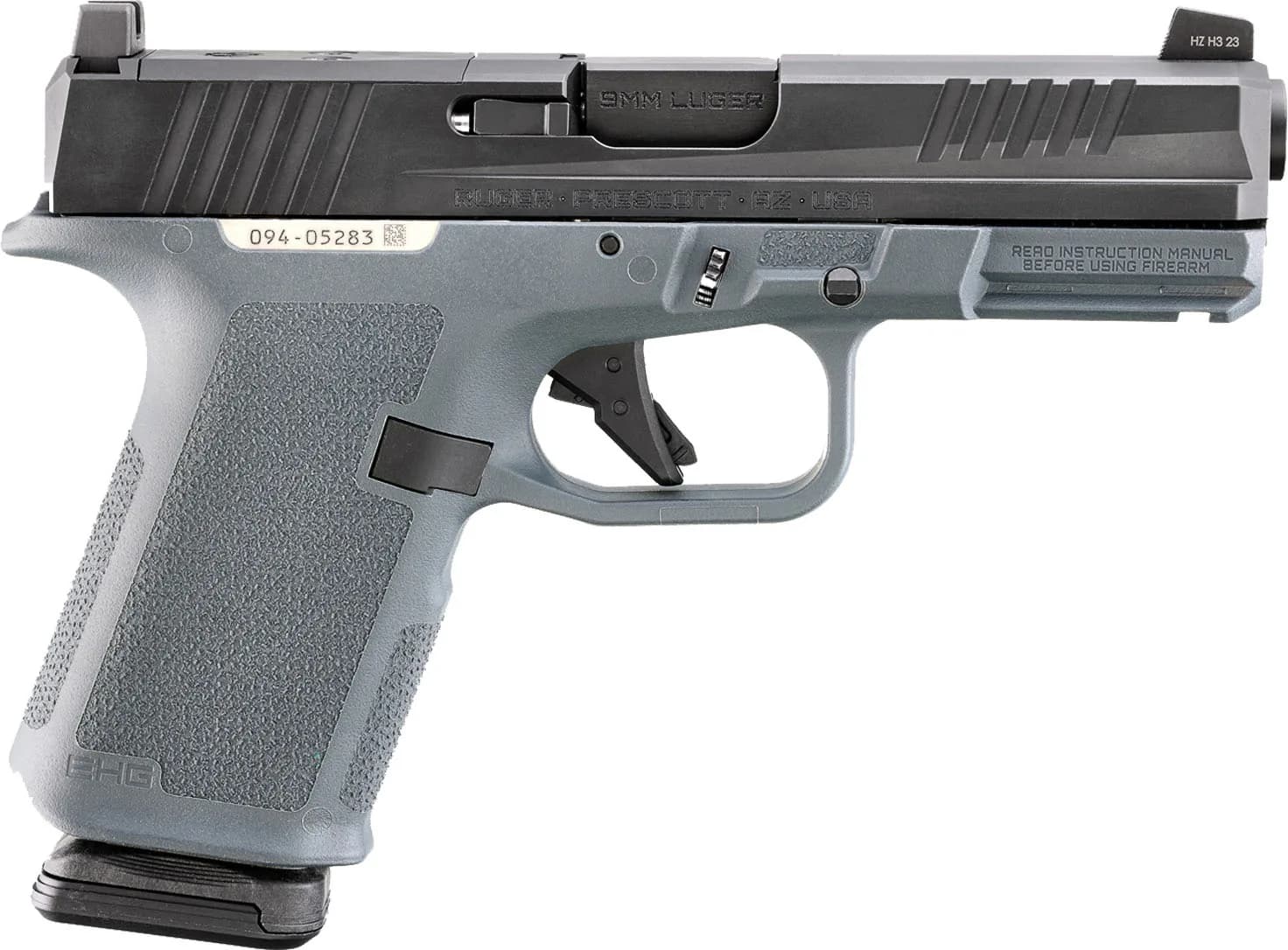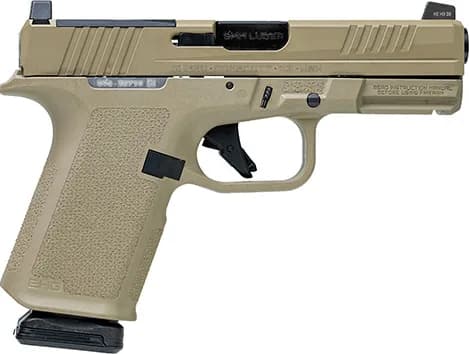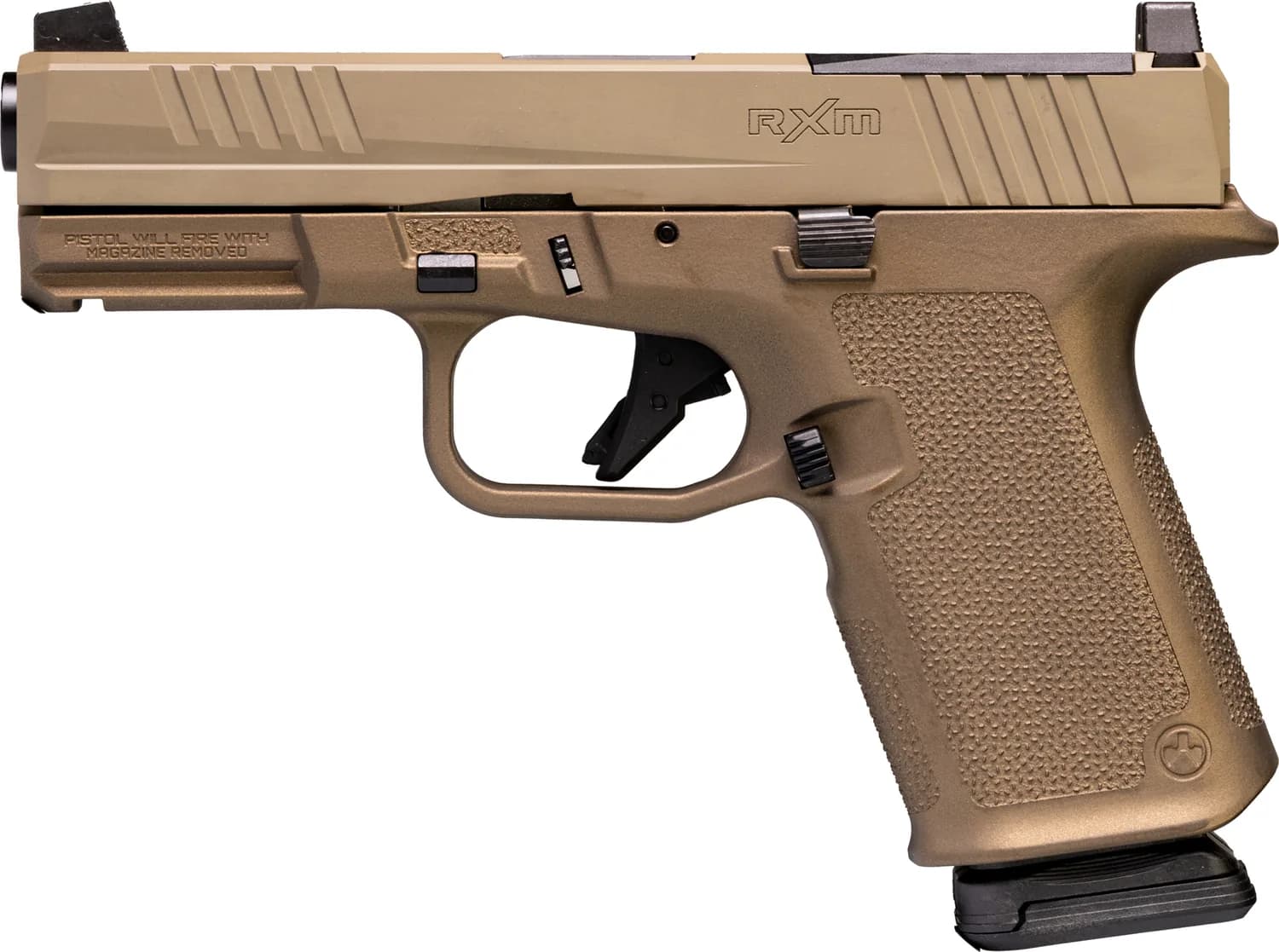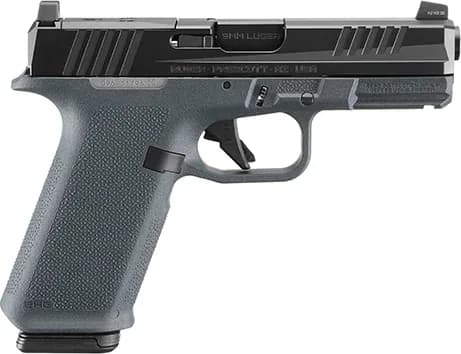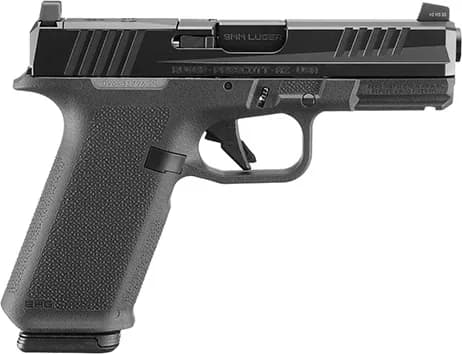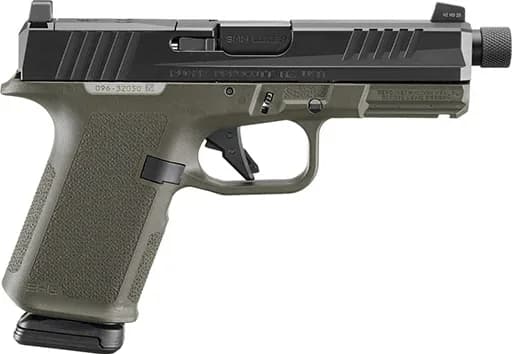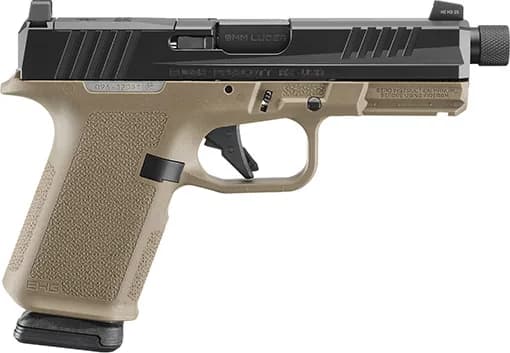
Magpul Enhanced Handgun Grip, Davidson's Exclusive, Gunsite Edition, Engraved Gunsite Logo
The Ruger RXM arrived as one of the more consequential handgun debuts of the mid‑2020s: a collaboration between Ruger and Magpul that married a Ruger‑designed serialized fire‑control insert with Magpul’s modular Enhanced Handgun Grip (EHG). Ruger formally introduced the RXM family in late 2024, pitching it as a modern, modular 9mm platform that would compete in the compact duty/carry and value‑conscious market segments while offering upgrade paths rarely found at this price point. The architecture intentionally echoes the modular chassis approach popularized by other designs: the stainless‑steel fire‑control insert (FCI) is the serialized component, while the polymer grip module is an interchangeable chassis that can accept different Magpul grip sizes and aftermarket parts.
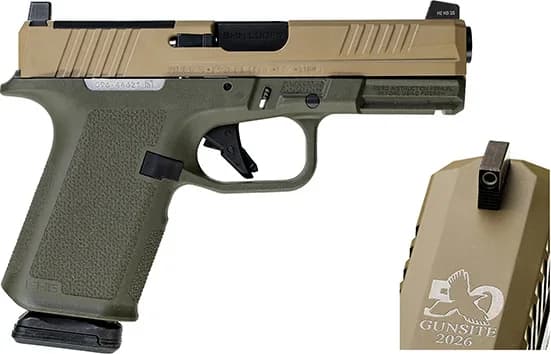
Shortly after the initial launch Ruger expanded RXM SKUs to include multiple colorways and special distributor exclusives; industry reporting and distributor announcements also signaled limited special‑edition runs tied to outside partners, including a commemorative Gunsite‑themed release distributed through a major wholesaler. Those special runs build on Ruger’s long history of limited editions and distributor exclusives while keeping the RXM squarely in the company’s mainstream pistol lineup.
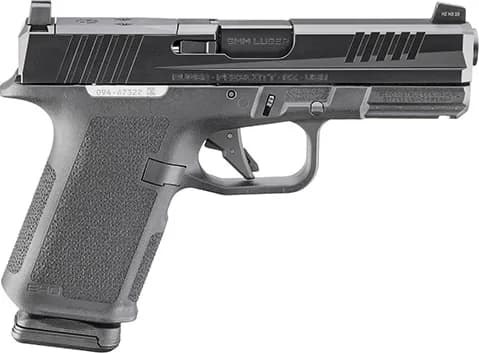
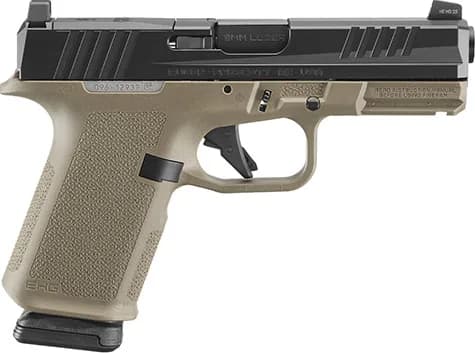
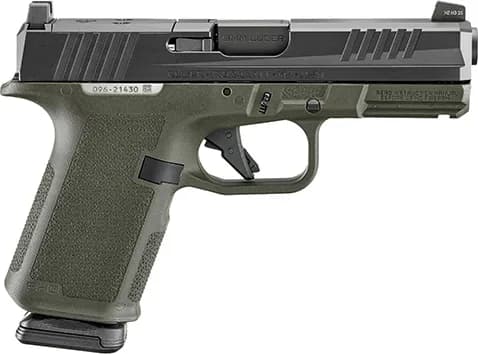
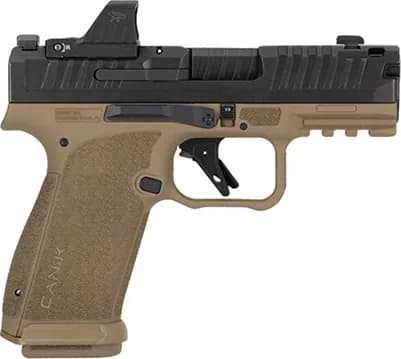
At its core the RXM is built around Ruger’s stainless‑steel FCI that houses the trigger components, striker assembly and serialized parts. That insert sits in a Magpul EHG grip module that brings aggressive but ergonomic Magpul texturing, an undercut trigger guard, a beavertail and a modestly flared magwell — features aimed at improving purchase, speed of reloads and hand alignment compared with many basic polymer designs. The slide is steel with a nitride or Cerakote finish depending on the variant, and Ruger fitted an optics‑ready cut that accepts common footprints (RMR, RMSc, DeltaPoint Pro) without adapter plates. Iron sights are a steel front post with a tritium insert and a serrated, drift‑adjustable rear notch; the sights were designed to co‑witness with lower‑profile optics.
Measured dimensions put the RXM in compact duty territory: roughly a 4.0‑ to 4.5‑inch barrel depending on configuration, an overall length in the low sevens and an unloaded weight in the low‑20‑ounce range for the standard 15+1 configuration. Those proportions translate to a pistol that is large enough to be comfortable for extended range sessions and defensive use, but small enough to be carried concealed by users willing to accept a compact footprint rather than a subcompact. Ruger’s engineering emphasis is on modularity and parts compatibility: the design accepts many Glock Gen‑3 pattern parts and Glock‑pattern magazines, which eases owners’ access to replacement parts and aftermarket upgrades.
Early hands‑on tests and extended‑use reviews have been generally positive about what the RXM delivers for the money. Testers praise the ergonomics of the Magpul grip module — the angle, texture and beavertail tend to make the pistol point naturally and reduce perceived muzzle flip — and reviewers note that the optics‑ready slide and co‑witness‑capable sights are well executed out of the box. Trigger feel is described variably across testers: the flat‑faced factory trigger is serviceable and predictable for a striker platform, but some reviewers expected and recommended aftermarket triggers or a careful break‑in for shooters seeking a crisper competition feel. Reliability in published torture tests and long‑range evaluations has been solid overall, with several outlets running hundreds to thousands of rounds with minimal stoppages when using appropriate magazines and ammunition.
Accuracy at typical self‑defense and practical‑range distances is in line with other quality compact 9mm pistols: capable of consistent, serviceable groups at 7–15 yards and enough mechanical accuracy for competitive use in production classes when paired with a proper optic. Recoil is described as mild and well‑managed for the platform’s size and weight; the mass of the slide and the grip geometry both contribute to predictable recovery between shots. Some owners and reviewers have reported occasional accuracy variance or a need for attention to sight installation and barrel‑to‑slide fit on early examples — issues that, where they appeared, were handled through Ruger customer service or the usual gunsmithing adjustments.
The RXM’s sweet spot is versatility. It suits range‑and‑training shooters who want a comfortable, upgrade‑friendly platform that accepts optics without exotic adapters. For home defense and duty roles it offers full‑size‑capability magazines in a compact package, robust sights and an ergonomics package that lends itself to fast, accurate follow‑up shots. Some competitors in the same segment push harder on optics‑ready competition features or offer lower‑mass, tuned triggers out of the box; those wanting a high‑end competition pistol may still prefer aftermarket tuning or purpose‑built race pistols. For deep concealment the RXM is not a subcompact — its 15‑round, full‑grip variants trade concealability for capacity and shootability. Overall the RXM reads as a do‑everything compact rather than a niche specialist.
Special‑edition runs — including distributor exclusives and a commemorative Gunsite 50th Anniversary RXM reported by industry press and by Ruger’s distribution partners — add cosmetic and branding touches (unique Cerakote schemes, engraved Gunsite markings and co‑branding, and sometimes optics preinstallation). Those editions are primarily collector‑oriented or intended as limited, commemorative offerings rather than performance upgrades.
The RXM enters a crowded field of “Glock‑compatible” and Glock‑pattern‑inspired pistols, but it differentiates itself by combining an American‑made FCI chassis with Magpul ergonomics and a modest entry price. Reviewers and industry writers have noted that its modularity and parts compatibility make it an attractive platform for budget‑minded shooters who still want upgrade paths and aftermarket support. In comparative terms the RXM competes directly with established compact polymer pistols on ergonomics and feature set, and it gains ground by offering a serialized chassis system — a selling point for buyers who value interchangeable grip modules and flexibility. Limited exclusives and co‑branded editions (such as the Gunsite commemoratives distributed through partner wholesalers) further raise the RXM’s profile among collectors and fans of the partnering brands.
For shooters looking for a modern, optics‑ready compact 9mm that emphasizes ergonomics and modularity without a premium price tag, the RXM is a credible entrant. As with any new platform, prospective buyers should handle the specific configuration they intend to buy (sight height, grip size and finish options vary), check current reviews for any production‑run quirks, and consider whether they want a standard production example or a limited distributor edition with commemorative markings.
Start with a practical guide if you want a faster way to narrow the field before comparing specific models.
Learn how to choose the right 9mm handgun based on size, budget, and how you plan to use it.
Read guideCarry-focused shoppersLearn how to choose the right concealed carry handgun based on size, comfort, safety, and everyday usability.
Read guideComparison-focused shoppersA practical guide to comparing handguns the right way: what actually matters, what to ignore, and how to use comparison tools effectively.
Read guide