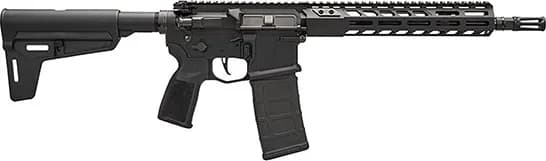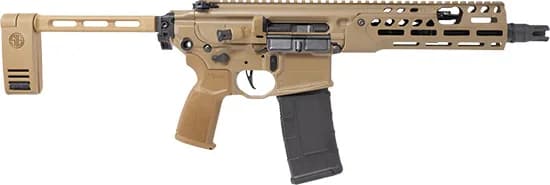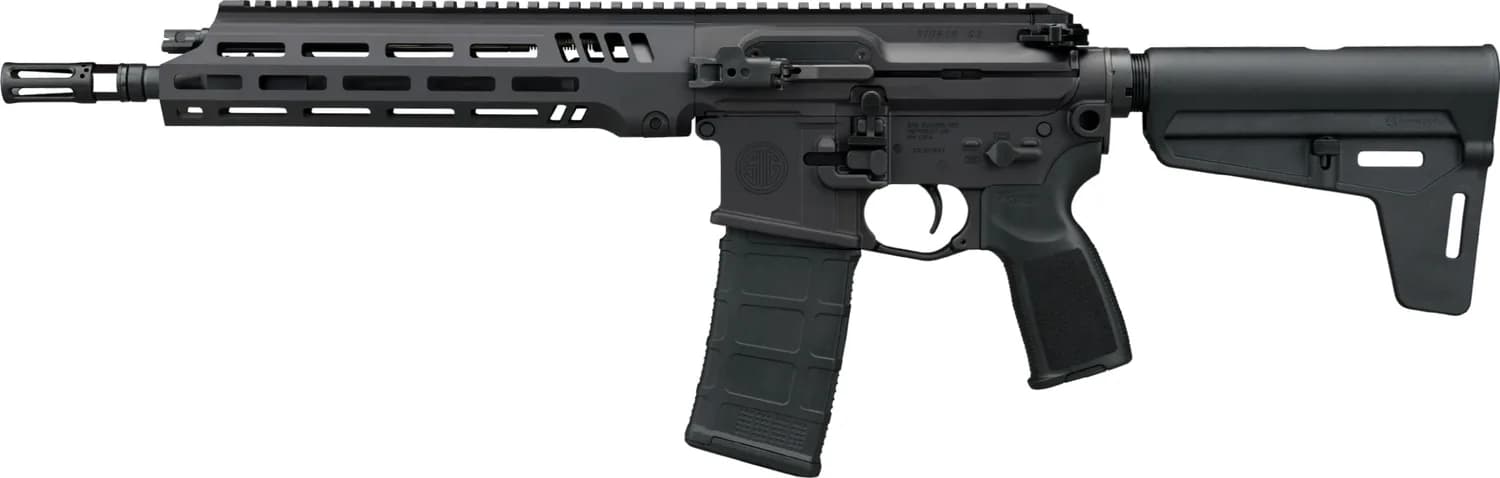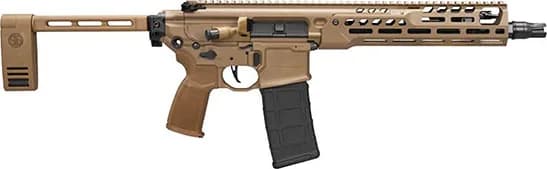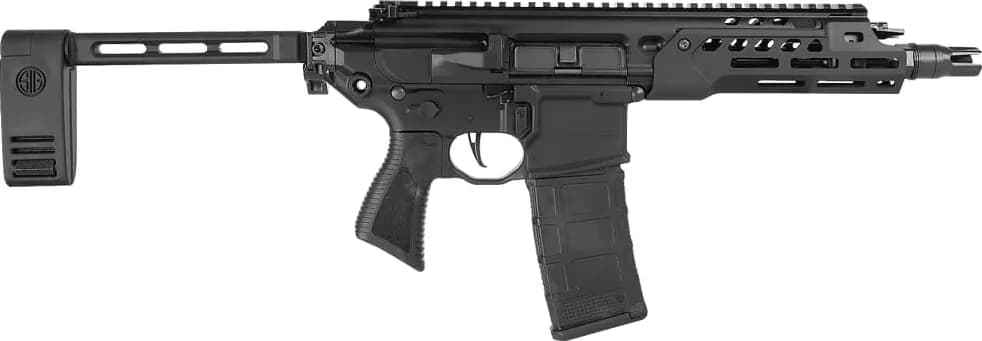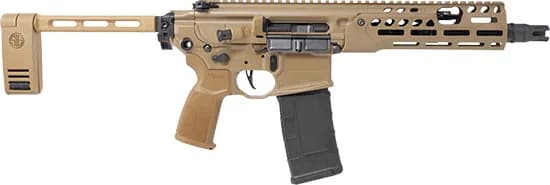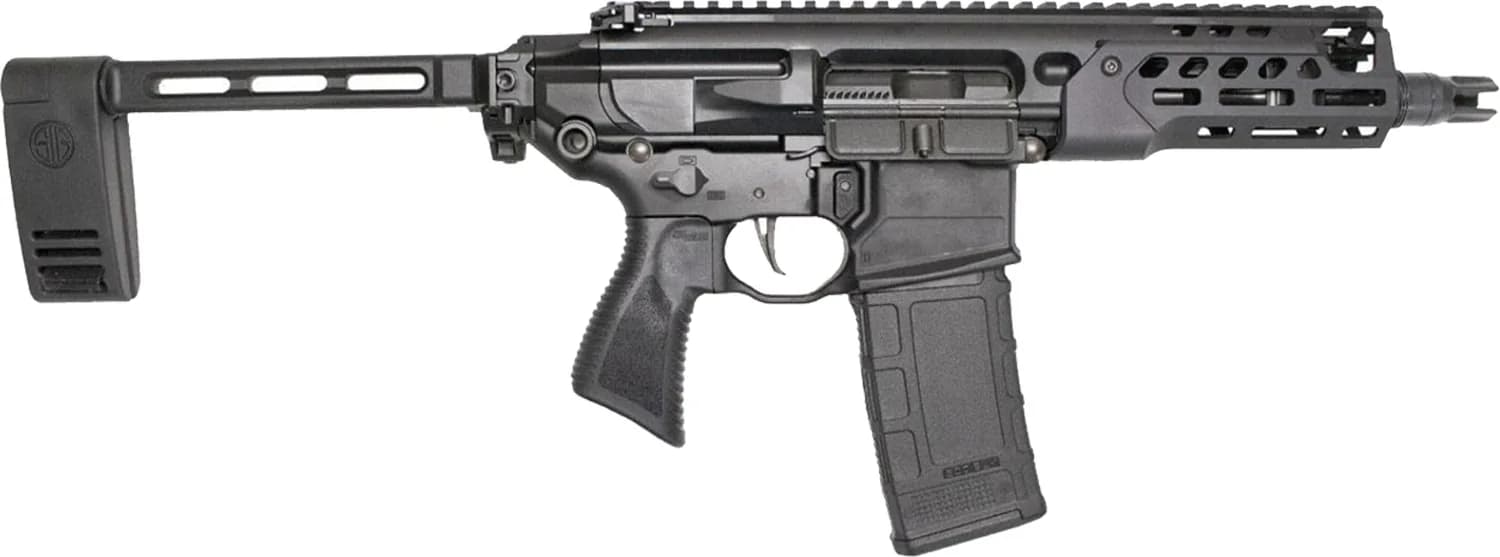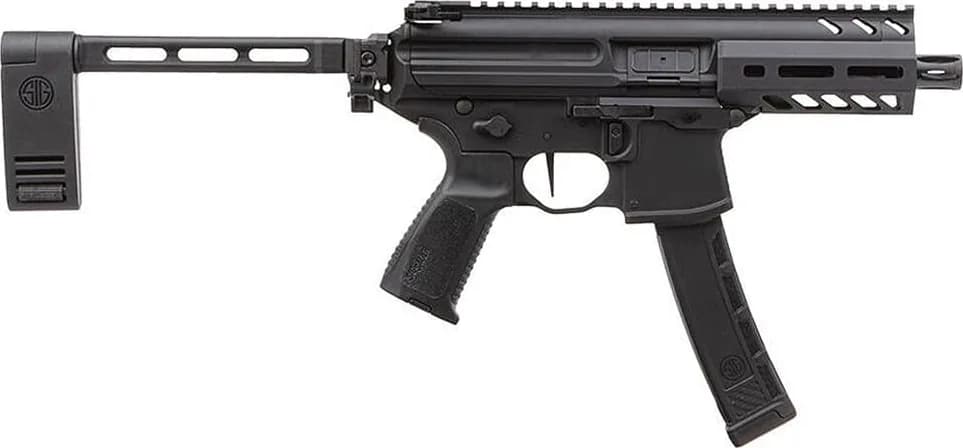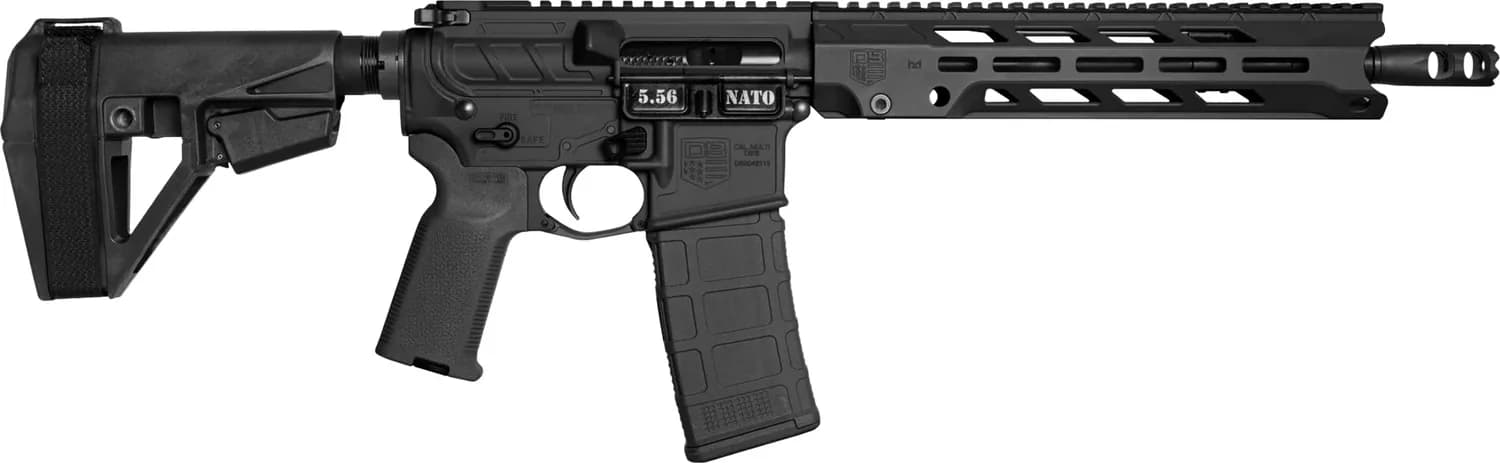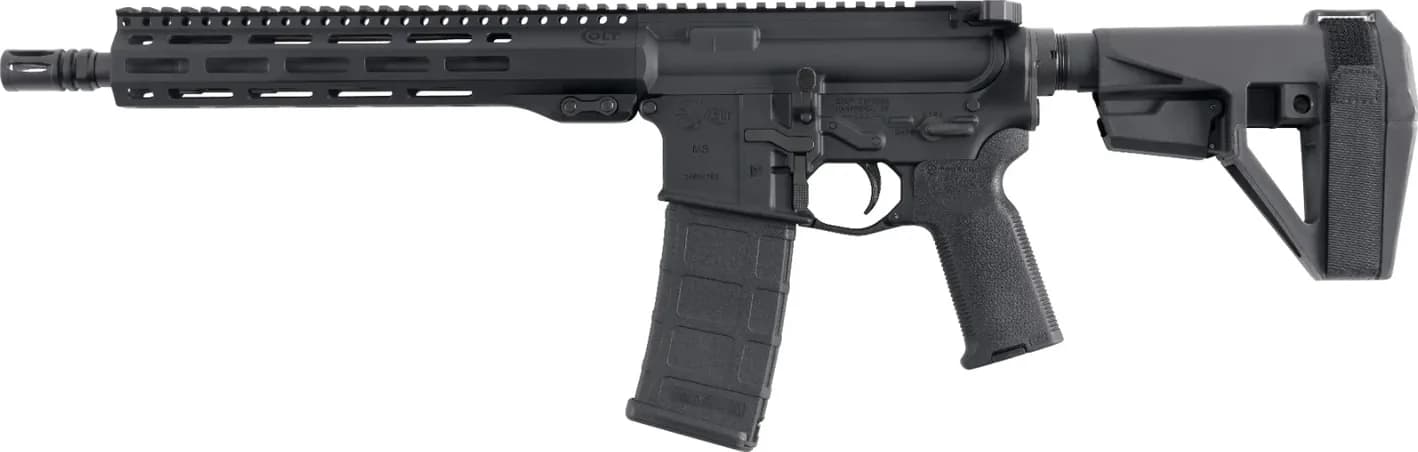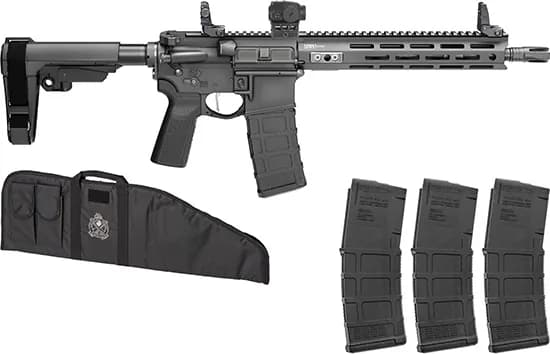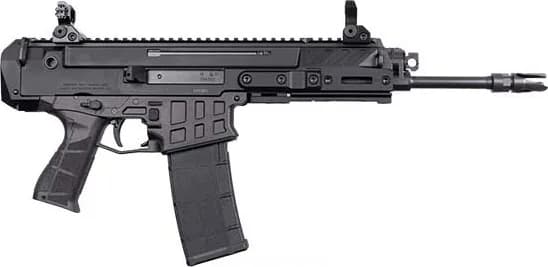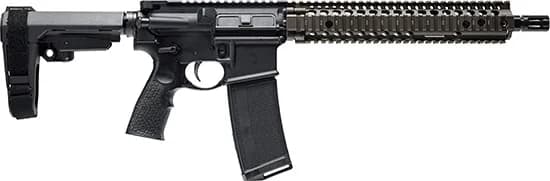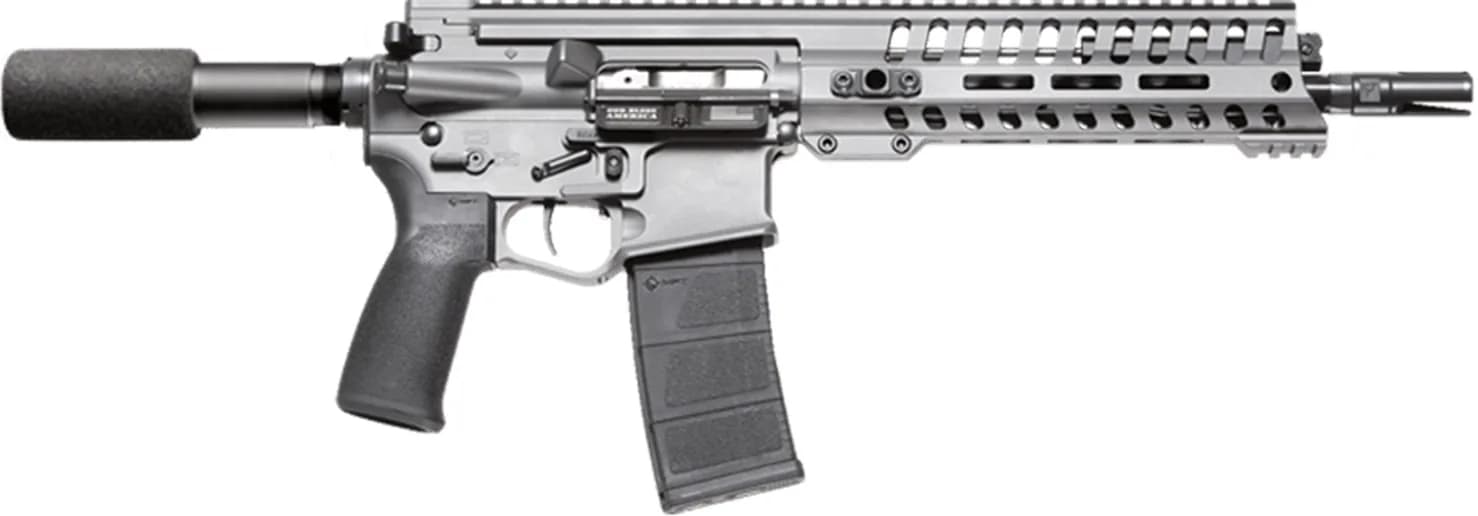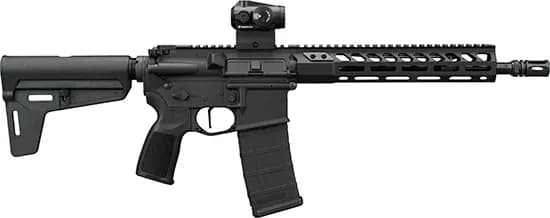
Magpul BSL Arm Brace, 2-Stage Flat Blade Trigger, 10 M-LOK Handguard, Romeo-MSR Gen II (SORMSR101)
Announced at industry shows in spring 2026, the Sig Sauer M400 Forge is a deliberate re-positioning of the company’s M400 family: where the earlier Tread line offered a basic, value-oriented AR-15, the Forge is built to arrive at the range ready to work with components many owners otherwise add aftermarket. Introduced in multiple configurations — a 16-inch rifle, an 11.5-inch pistol with a Magpul BSL arm brace, and an 11.5-inch SBR for NFA-registered owners — the Forge is aimed at shooters who want a factory-packed, duty-capable platform without buying and fitting premium parts separately. Early coverage positioned the model as SIG’s “out-of-the-box” offering that closes the gap between entry-level price points and higher-spec rifles by including trigger, barrel, optic, and ergonomics upgrades from the factory.
At its core the M400 Forge remains an AR-pattern, direct-impingement firearm chambered in 5.56x45mm NATO, but SIG’s choices in parts and manufacturing are where the Forge differentiates itself. The 16-inch rifle uses a cold hammer-forged, ferritic nitrocarburized (FMC) barrel produced on the same tooling lineage SIG uses for its MCX family; the shorter 11.5-inch barrels supplied in the pistol and SBR variants are hammer-forged with a chrome-lined bore and external FMC finish to handle the higher stresses of a carbine-length gas system. Barrel treatment and manufacturing method are emphasized as contributors to long-term durability and consistent bore dimensions. The rifle-level gas system differs by configuration — mid-length on the 16-inch and carbine-length on the 11.5-inch — a choice that affects bolt velocity and felt recoil.
Ergonomics and controls are similarly upgraded. The factory trigger is a TriggerTech two-stage flat-blade design with a published ~3.5 lb pull — a markedly nicer duty-style trigger than the mil-spec single-stage units typically found at similar price points. Ambidextrous controls include the safety, magazine release and an aftermarket-style Breek Arms “Warhammer” ambidextrous charging handle; the bolt release remains left-side only on many SKUs. The pistol variant swaps a Magpul BSL stabilizing arm brace for a shoulder stock and is fitted with a roughly 10‑inch free‑float M-LOK handguard, while the rifle version ships with a longer free‑float M-LOK fore to accommodate more accessories. SIG also includes a Romeo MSR Gen II red-dot optic mounted from the factory, so the pistol configuration is not delivered “iron-sights-only” but ready with an aiming solution out of the box.
Specs translate directly to how the Forge feels in the hands. The 11.5-inch pistol variant is compact and maneuverable: published overall lengths and weights for the pistol place it in the low‑6‑pound range unloaded (roughly 99.2 ounces, depending on finish and configuration), giving a carryable but stable platform for close‑in work and vehicle or home use. The shorter barrel and carbine gas system yield snappier muzzle impulse than the 16‑inch rifle but paired with the TriggerTech trigger and the relatively light but stiff handguard, the pistol remains controllable for follow-up shots. Reviewers who ran the early press samples reported smooth cycling and no malfunctions through initial test strings, and noted that the build quality (upper/lower fit, bolt carrier finish, and extractor support pin) felt above the expected standard for this price echelon.
The included Romeo MSR Gen II optic (a 2‑MOA dot with long battery life and waterproofing) is positioned as a practical close‑to‑mid‑range sighting solution; that factory optic plus a crisp two‑stage trigger shortens the out‑of‑box learning curve for shooters who want to make accurate, fast hits without immediate upgrades. Durability expectations are bolstered by the hammer‑forged barrel process and robust coatings, both highlighted in press coverage as reasons SIG could promise above-average barrel life compared with many budget ARs.
Early range testing and first impressions center on two themes: the Forge offers a noticeably better trigger and smoother cycling than typical value‑tier ARs, and the hammer‑forged barrels give the platform a confidence‑inspiring feel. Reviewers reported the TriggerTech two‑stage as crisp with a distinct wall and predictable break — not a match trigger but far superior to a mil‑spec single‑stage for precise shot placement and practical defensive use. Accuracy testing beyond initial range sessions is still being compiled by press outlets, but the combination of the factory trigger, solid barrel manufacturing, and a mounted 2‑MOA red dot sets reasonable expectations for consistent groups at common engagement distances for a 5.56 platform. Recoil is described as manageable; the shorter barrel does increase muzzle blast and perceived snap compared with the 16‑inch rifle, but not to the point of limiting rapid follow-ups for typical readers.
The M400 Forge pistol is best suited to close‑quarters, vehicle, and home‑defense roles where compactness and quick target acquisition matter; the included red dot and two‑stage trigger make it a factory‑ready tool for those tasks. It is also a fully capable range rifle for training and practice, and the rifle variant extends the Forge concept to a more general‑purpose duty/training platform with better ballistic potential at distance. For precision competition or long‑range work the two‑stage TriggerTech is competent but enthusiasts will still fit specialized match triggers and optics; conversely, the Forge removes the immediate need for several common aftermarket changes for those who want a capable daily driver. Limitations to acknowledge include the shorter barrel’s reduced velocity and terminal performance compared with a 16‑inch barrel, increased muzzle blast on the 11.5 pistol, and the left‑side‑only bolt catch that some shooters prefer to be fully ambidextrous. Additionally, buyers choosing the pistol versus an NFA‑registered SBR should be aware of the legal differences and registration requirements associated with stock replacement in the United States.
Strategically, the M400 Forge sits above SIG’s value Tread models and competes directly with other manufacturers’ “value‑plus” offerings by collapsing common upgrades into the factory price. That bundle approach — TriggerTech trigger, hammer‑forged barrel, premium charging handle, an included 2‑MOA red dot, and Magpul furniture — is the Forge’s primary value proposition, and early independent coverage frames it as a product that undercuts the cost of assembling the same parts on a budget AR. In the crowded AR market the Forge aims to be the factory option for buyers who want a work‑ready rifle or compact pistol without the add‑ons and fitting hassles; for those who already plan heavy customization, a builder route may still be preferable, but for most shooters the Forge narrows the upgrade list considerably.
Taken together, the M400 Forge is a tactical re‑scoping of the M400 family: familiar AR mechanics but with factory choices that address the most common buyer upgrades, producing a platform that, in early testing and reporting, behaves and feels closer to a higher‑tier rifle than many competitors at its nominal price band.
Start with a practical guide if you want a faster way to narrow the field before comparing specific models.
Learn how to choose the right handgun for home defense based on safety, ease of use, and practical everyday considerations.
Read guideComparison-focused shoppersA practical guide to comparing handguns the right way: what actually matters, what to ignore, and how to use comparison tools effectively.
Read guideFirst-time buyersLearn how to choose your first handgun by focusing on size, comfort, ease of use, and budget instead of getting lost in unnecessary details.
Read guide