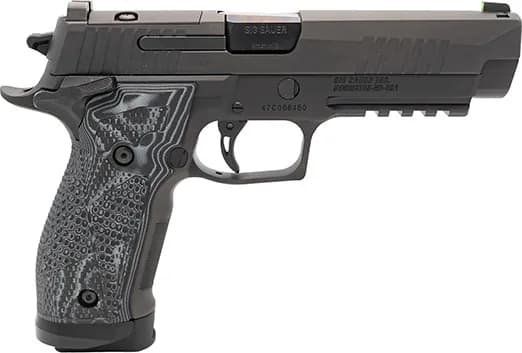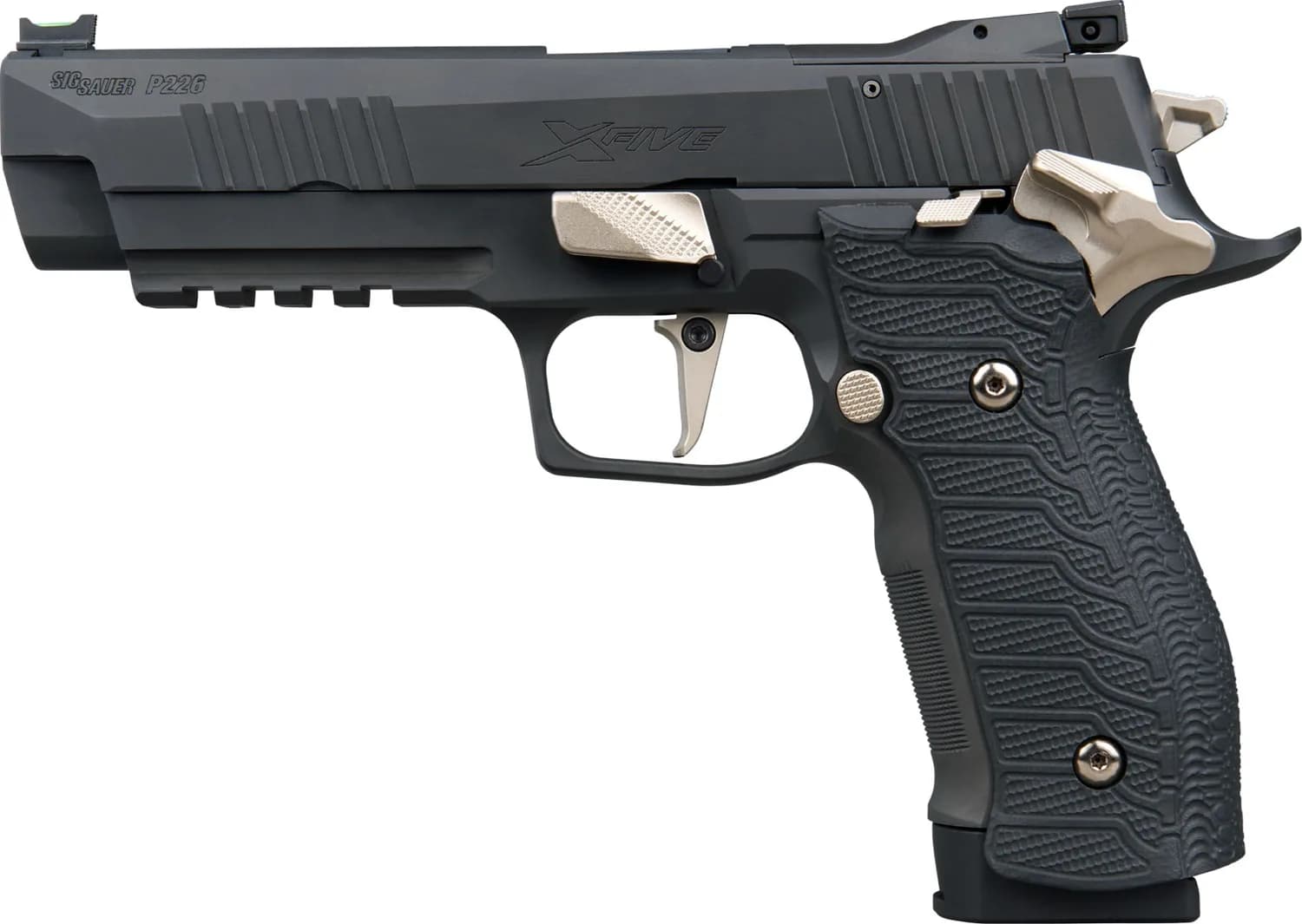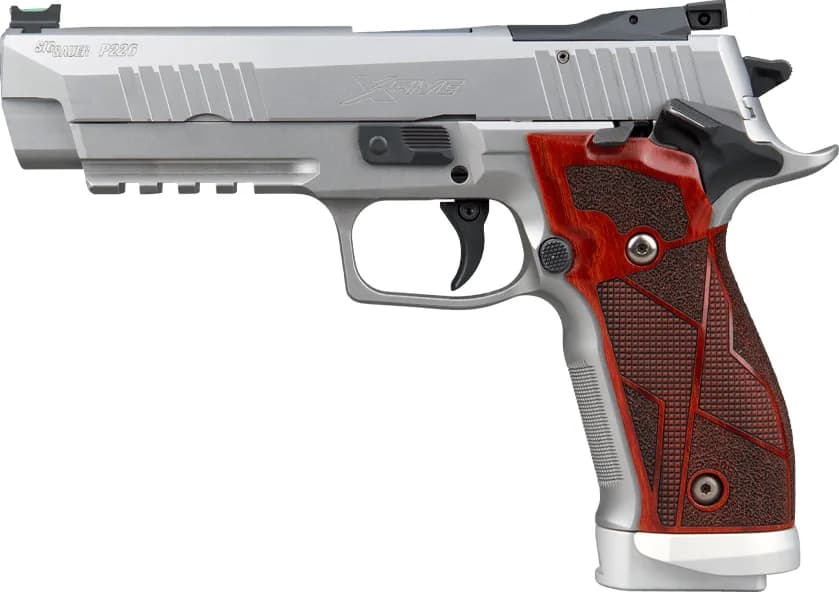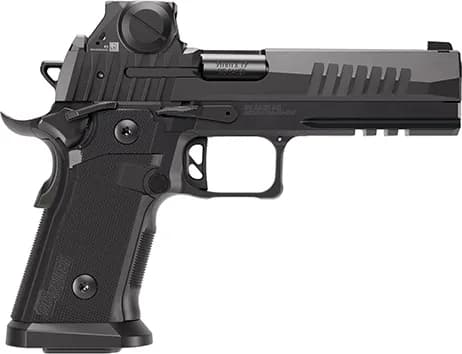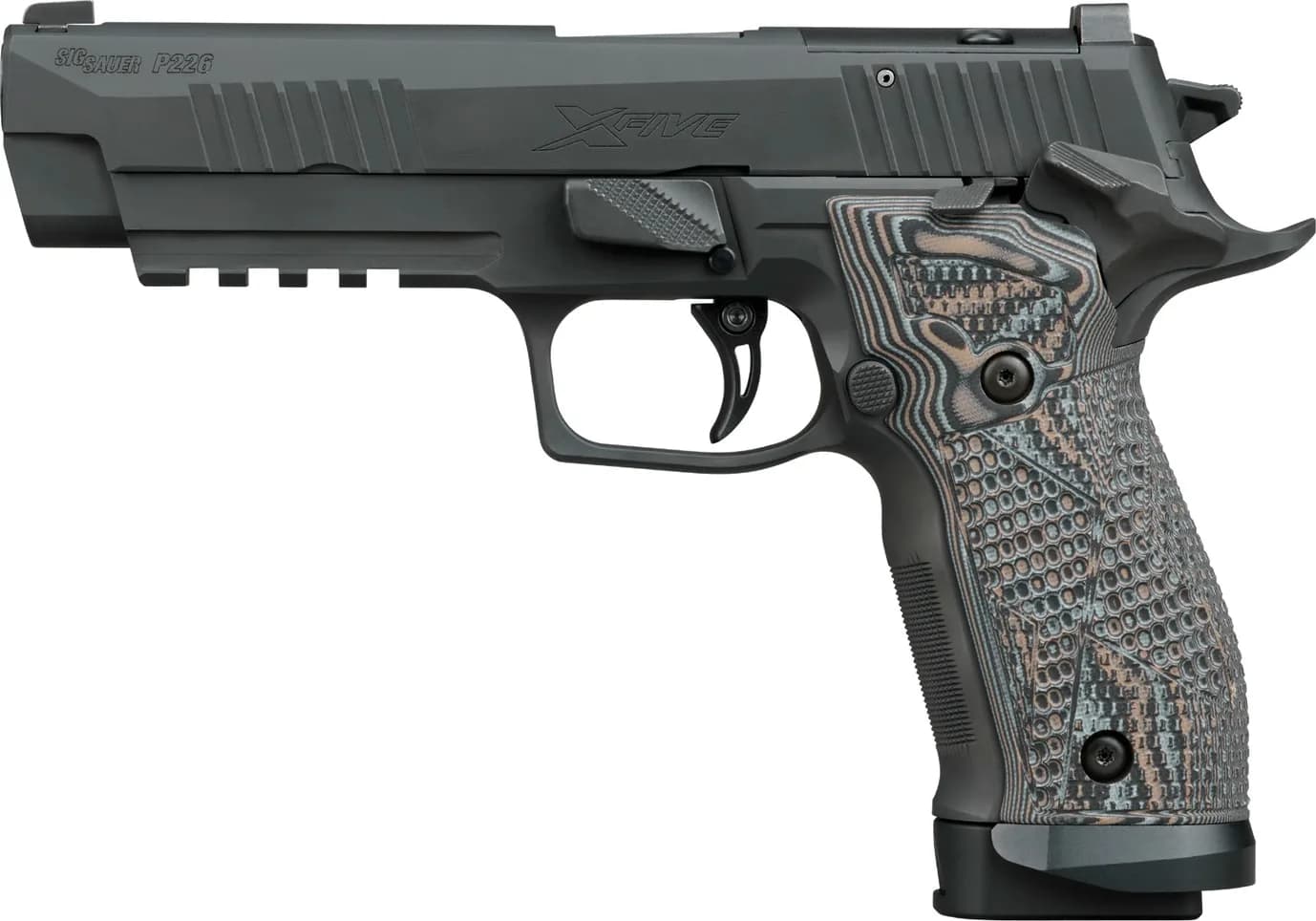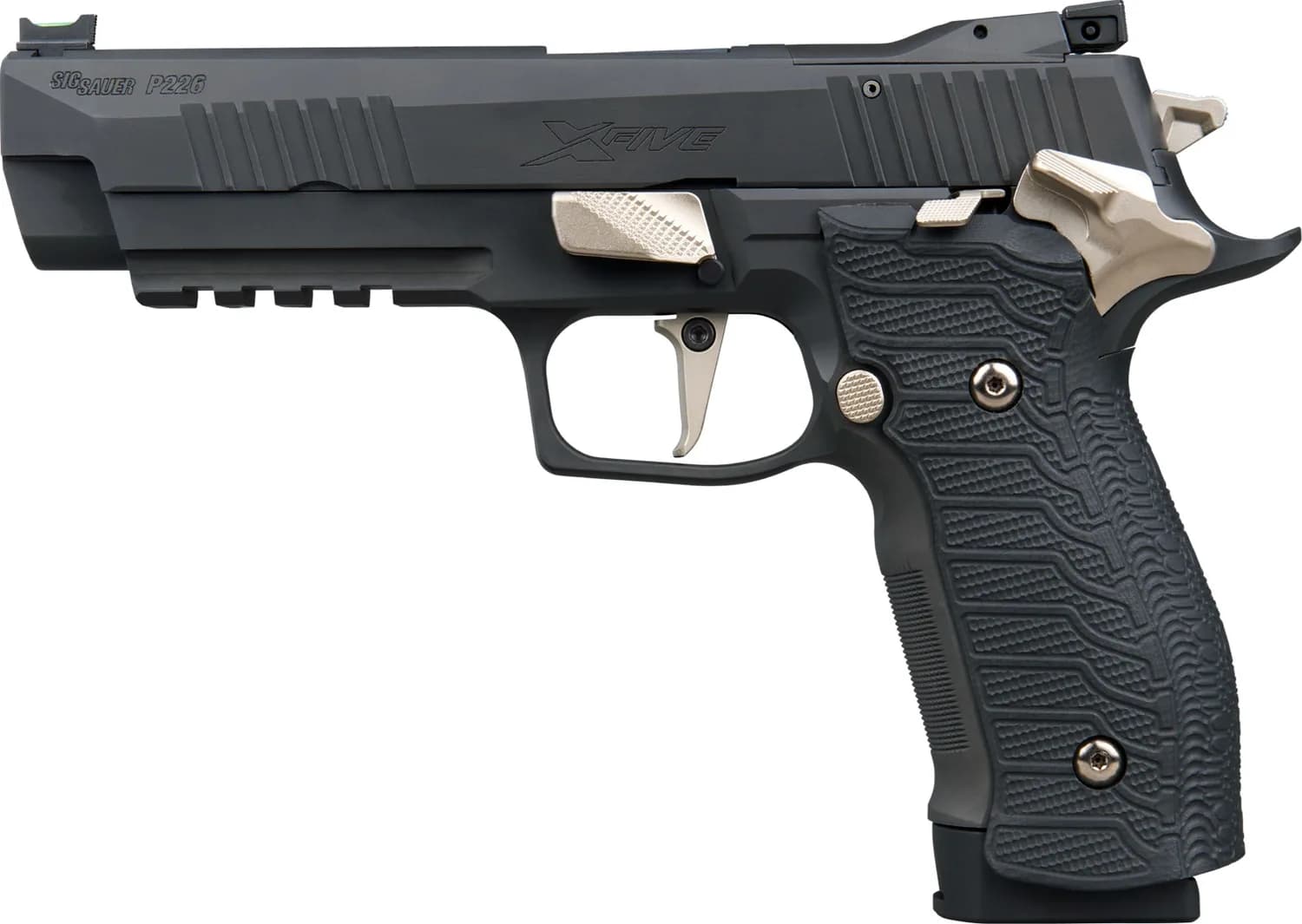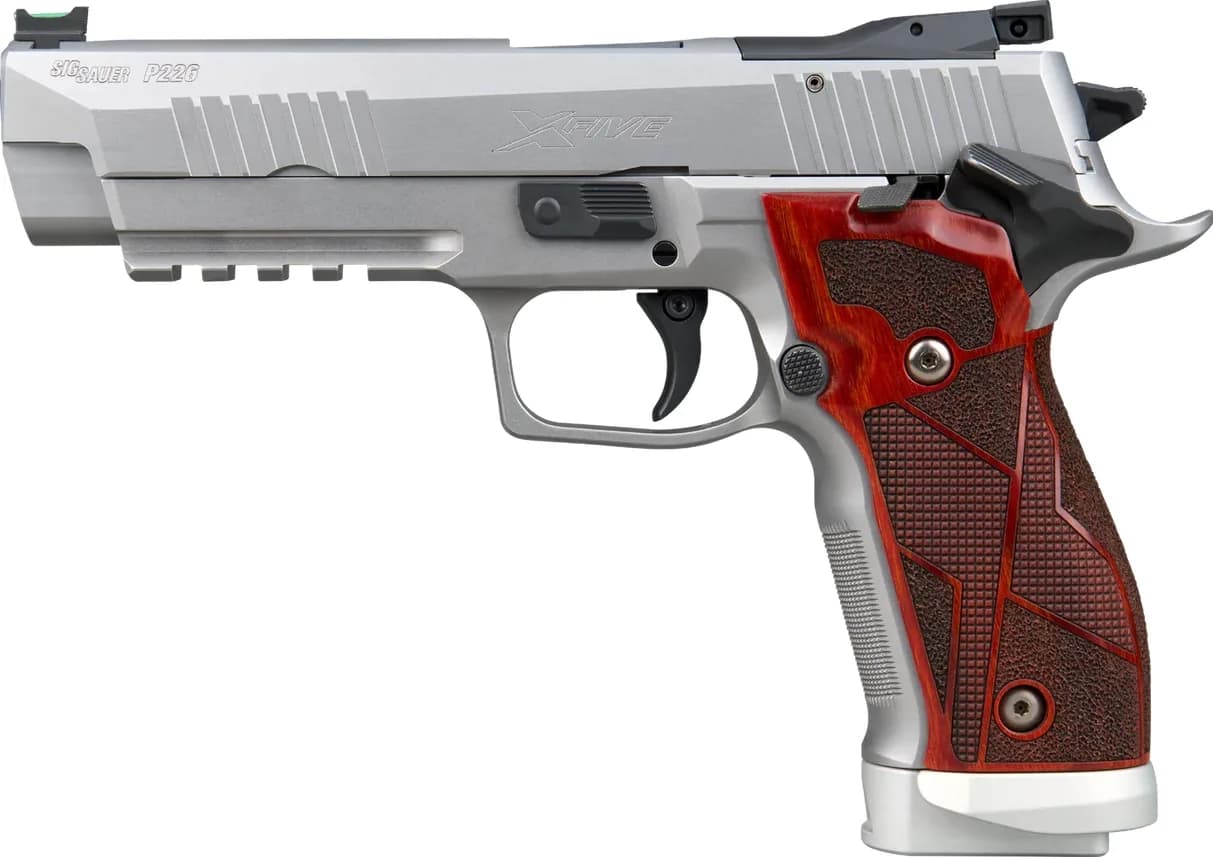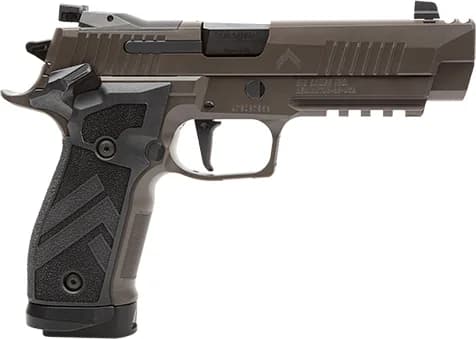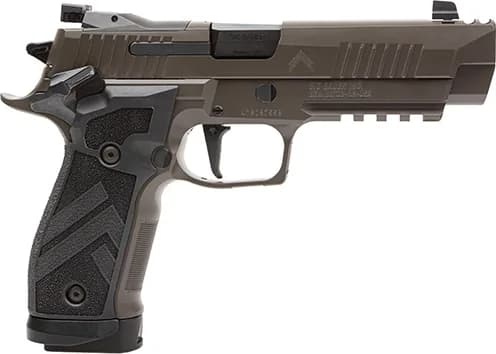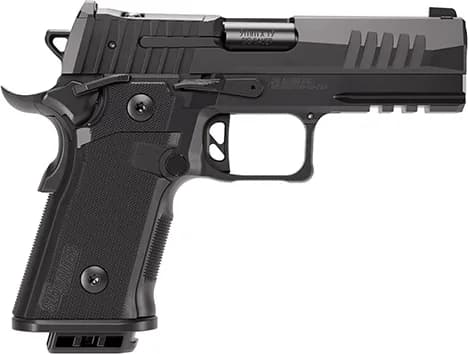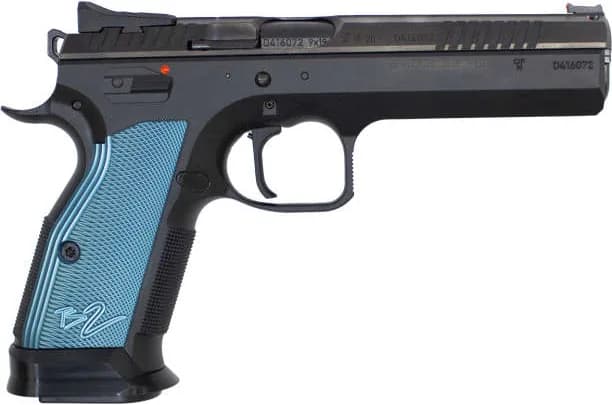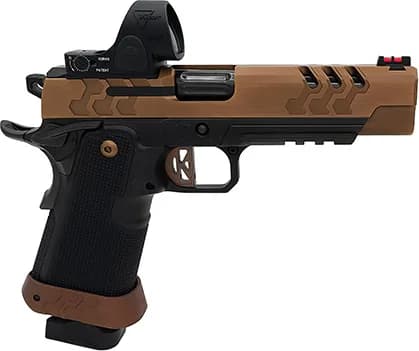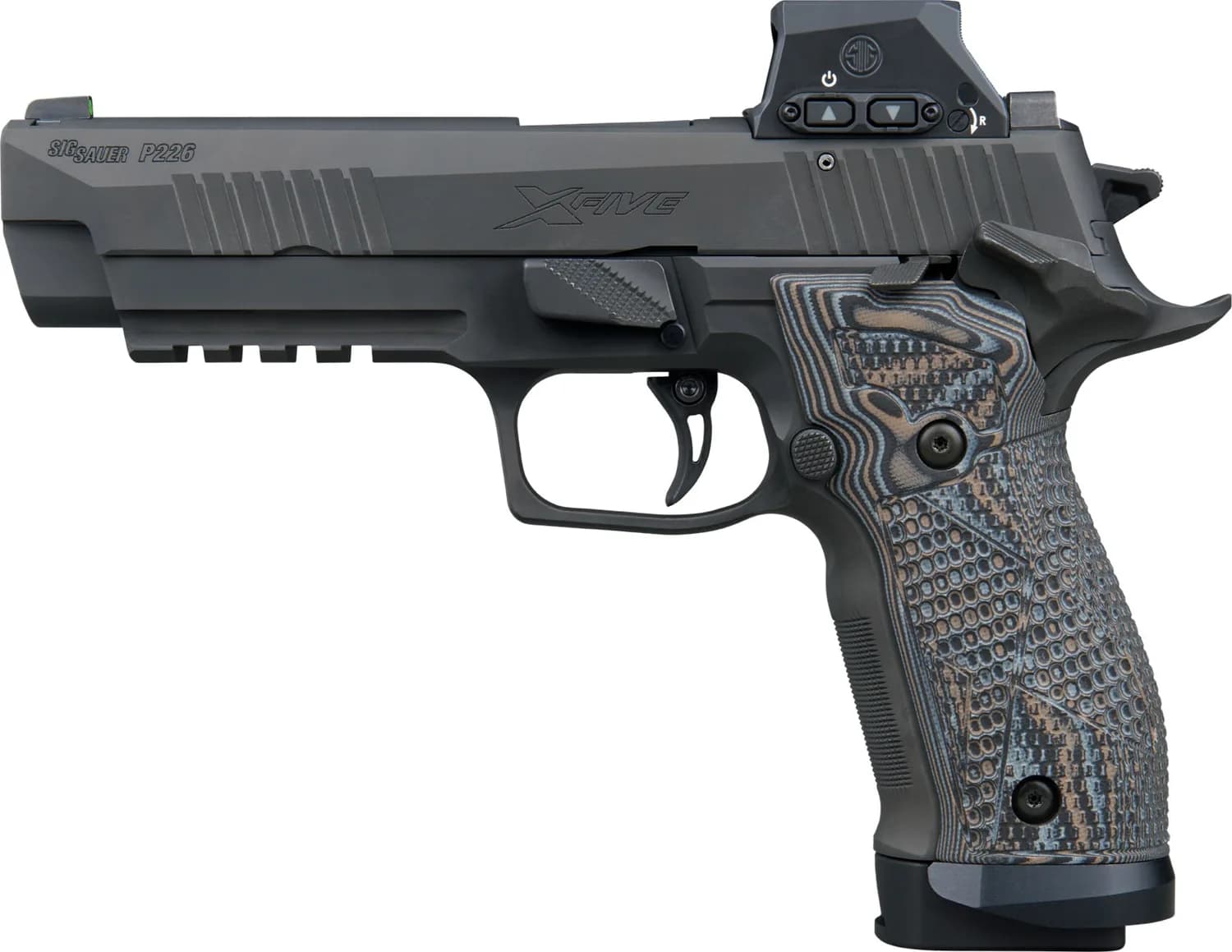
Fully Adjustable AX3 Curved Skeletonized Trigger, Includes Romeo-X SIG-LOC Optic (SORX1500)
The P226 has been a mainstay of Sig Sauer’s lineup since its development for the U.S. XM9 trials in the 1980s. Over the decades the basic P226 architecture has been adapted into a family of purpose-built variants: duty/configuration models, competition-focused X‑Five guns, and special‑edition “Extreme” and Legion offerings that mix competition features with service‑grade durability. In recent years Sig has revived and expanded the X‑Five nameplate with American‑made XFIVE models (including Rustic/Classic, Legion, and Reserve trims) that push the platform toward competition and precision‑oriented shooting while retaining the P226’s all‑metal construction and service ergonomics.
The package described here — an XFIVE platform outfitted with Extreme‑series ergonomics and a factory-installed Romeo‑X optic using Sig’s new SIG‑LOC footprint — is an example of how Sig’s modern catalog combines modular options. Sig’s current product documentation and dealer listings show multiple P226 X‑Five and Extreme variants, and Sig’s electro‑optics line now includes the enclosed ROMEO‑X units built for the SIG‑LOC mounting standard.
Mechanically the X‑Five family is a traditional hammer‑fired P226 scaled and tuned for precision. Typical XFIVE configurations feature a longer “match” barrel and a slide/frame geometry optimized for a lower‑bore axis, extended beavertail, and an undercut trigger guard for higher, more consistent hand placement. On competition and high‑end XFIVE models Sig installs the AX3 trigger module — a three‑position, fully adjustable single‑action trigger that gives shooters control over pull weight, pre‑travel, overtravel and reach. That modular trigger system is one of the central engineering differences between an XFIVE and more basic P226 trims.
Ergonomically, the Extreme series historically emphasized snag‑free controls and aggressive grip texture. Sig’s “Extreme” P226 offerings have been outfitted from the factory with Hogue G‑10 Piranha style wraps or similar high‑traction panels and often include features such as an extended magwell and dehorned profile to reduce snags. Those elements pair naturally with the X‑Five’s competition posture to produce a grip and hand position suitable for rapid, repeatable follow‑up shots. Where the XFIVE variants add weight (steel frames or heavier components) and recoil‑mitigating measures, the Extreme grip and magwell choices focus on speed and control.
The optics element on this configuration — Sig’s ROMEO‑X in the SIG‑LOC Pro footprint — is designed to reduce the chance of zero shift by establishing multiple contact points between optic and slide. ROMEO‑X Pro models such as the SORX1500 are available as fully enclosed units with circle‑dot reticles and are explicitly advertised for use on SIG‑LOC optic‑ready slides. That integration is important: a robust, factory‑designed optic footprint improves repeatable alignment and long‑term zero retention compared with improvised adapter plates.
Across reviews and hands‑on testing of the X‑Five family, reviewers consistently praise the platform’s shootability. The AX3 trigger receives repeated positive mention for providing a crisp, short single‑action break with readily adjustable parameters — a quality that reduces shooter‑induced dispersion and improves rapid‑fire accuracy. Reviewers also note that the P226 XFIVE’s extra weight and, in some Legion/Reserve variants, slide‑integrated expansion chambers or compensators make for a notably soft‑shooting 9mm; muzzle rise and felt recoil are reduced compared with lighter P226s and many polymer‑frame designs.
Practical accuracy reports for XFIVE guns are favorable: at typical handgun distances shooters and reviewers report small, consistent groups and quick splits in rapid strings when the AX3 is properly tuned. Durability impressions for the modern XFIVE and Legion models have been roughly in line with Sig’s reputation — heavy use at matches and on the range shows the design is robust, though as with any precision machine some owners report the need for minor adjustments and break‑in to reach optimum performance.
A P226 built to XFIVE/Extreme specification with a full‑size barrel, extended‑capacity magazines and a factory‑installed ROMEO‑X optic is fundamentally a range‑and‑competition tool first and foremost, but it is versatile. Its strengths include:
Limitations are practical and predictable: the added mass and five‑inch footprint reduce suitability for everyday concealed carry, and the price and specialized components place XFIVE Extreme builds toward the premium end of the market. Those trade‑offs are inherent when prioritizing ultimate controllability and match performance over compactness.
Within the full‑size, hammer‑fired competition handgun niche the P226 XFIVE variants occupy a distinctive place: they marry Sig’s long‑established P226 ergonomics and serviceability with match‑grade components and optics integration that many competitors achieve only through aftermarket modification. Competing platforms in the same space include 2011‑pattern race guns and bespoke competition pistols from specialist builders, which often offer even flatter recoil and larger capacities but at still‑higher prices and with entirely different maintenance profiles.
Value for the XFIVE/Extreme with ROMEO‑X configuration depends on how much a shooter values factory integration and brand‑level support. Buyers who want a turnkey, optics‑ready full‑size 9mm with a high‑quality, adjustable SAO trigger and proven controls will find the Sig offering compelling; shooters who prioritize lowest possible weight or lowest price will naturally look elsewhere. Across reviews the XFIVE family’s reputation is that of a premium, highly capable P226 iteration — one aimed at serious range shooters and competitors who want Sig’s factory engineering rather than an extensively modified carbine‑style pistol.
A P226 that blends XFIVE match hardware, Extreme‑series ergonomics and a factory ROMEO‑X SIG‑LOC optic therefore reads as a purpose‑built full‑size precision pistol: engineered for accuracy, tuned for control, and packaged to reduce the friction of going from box to competition or dedicated range duty.
Start with a practical guide if you want a faster way to narrow the field before comparing specific models.
Learn how to choose the right 9mm handgun based on size, budget, and how you plan to use it.
Read guideHome-focused buyersLearn how to choose the right handgun for home defense based on safety, ease of use, and practical everyday considerations.
Read guideComparison-focused shoppersA practical guide to comparing handguns the right way: what actually matters, what to ignore, and how to use comparison tools effectively.
Read guide