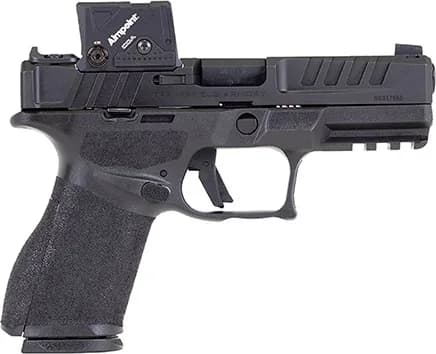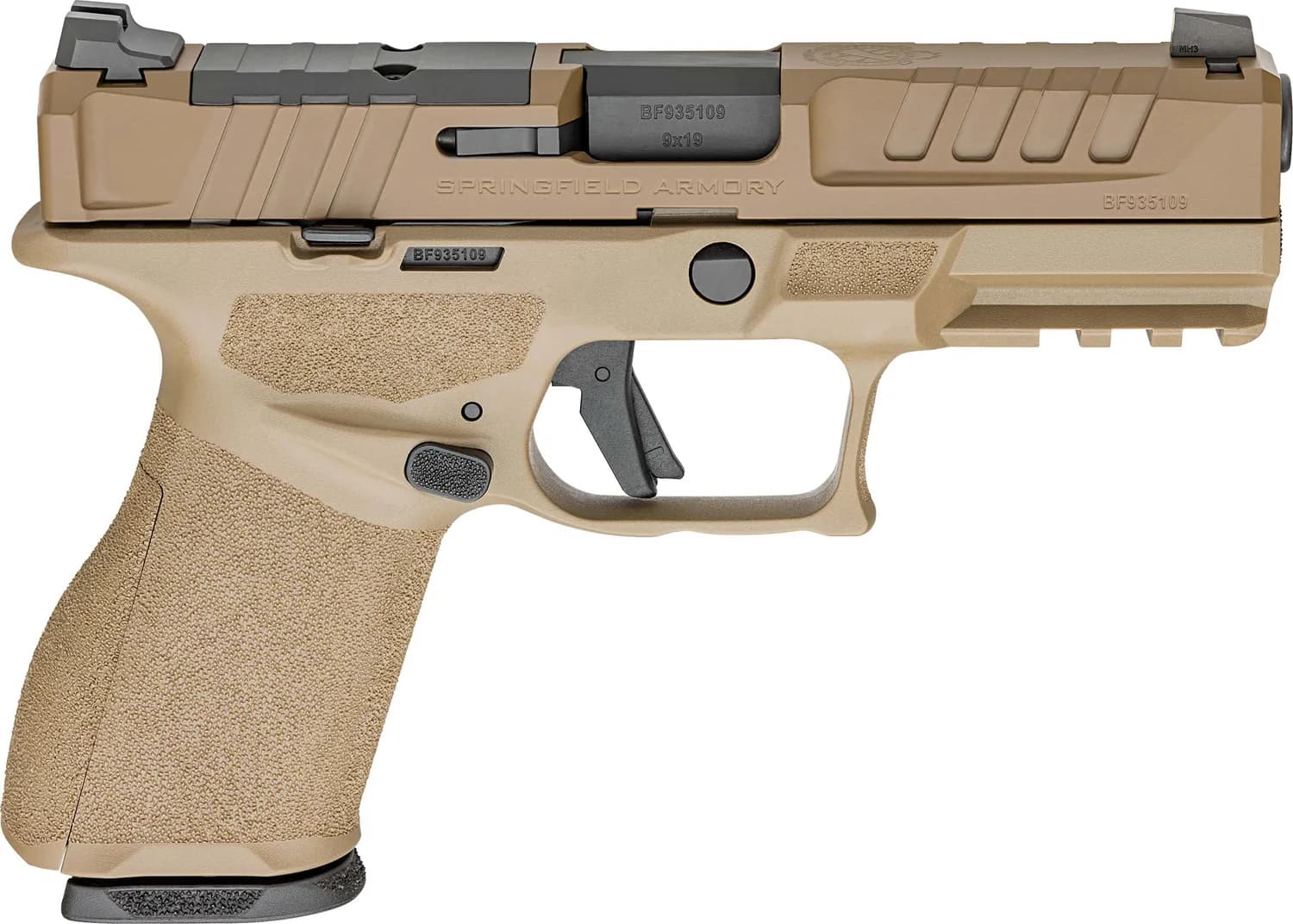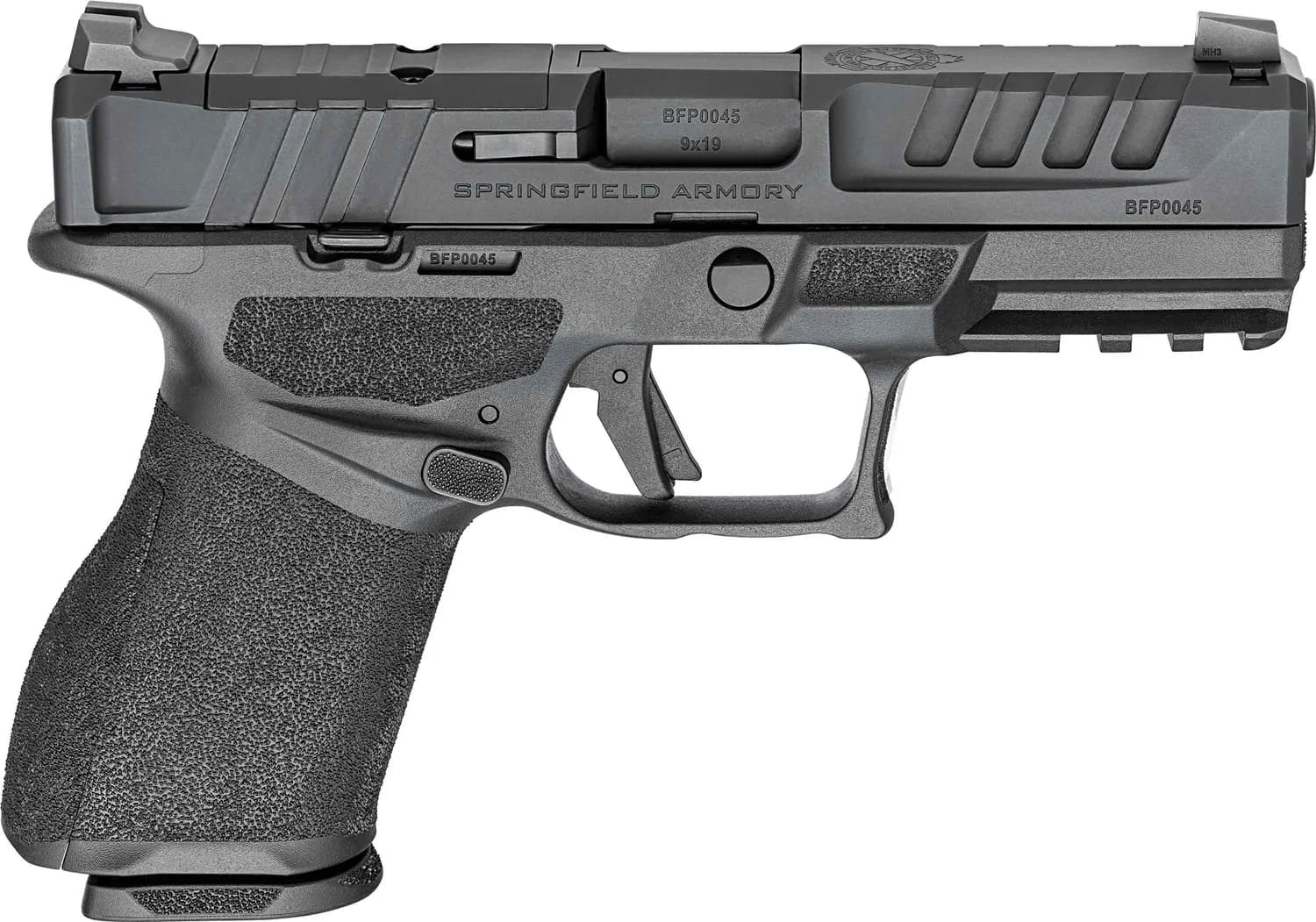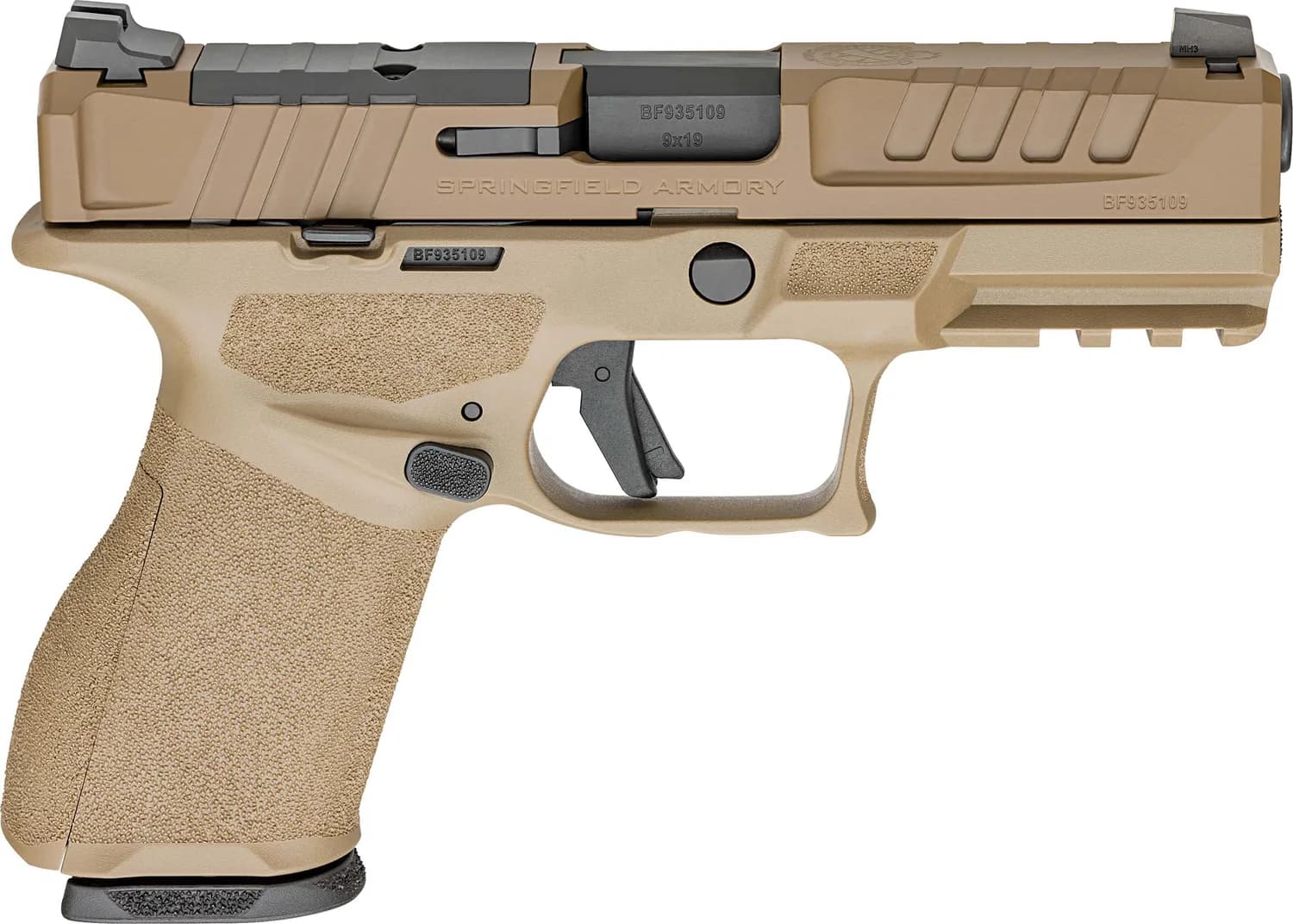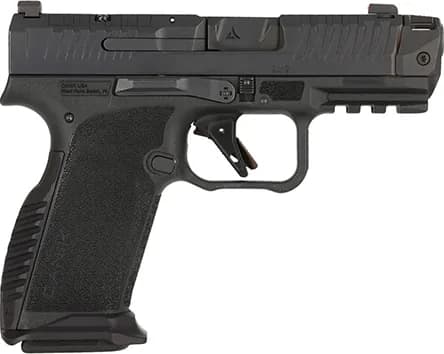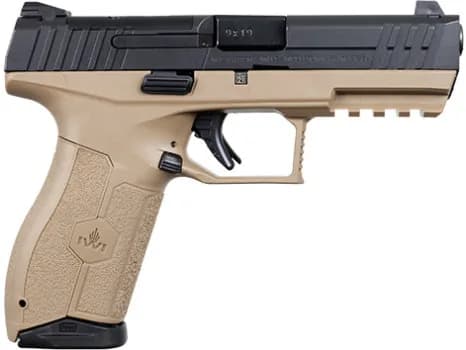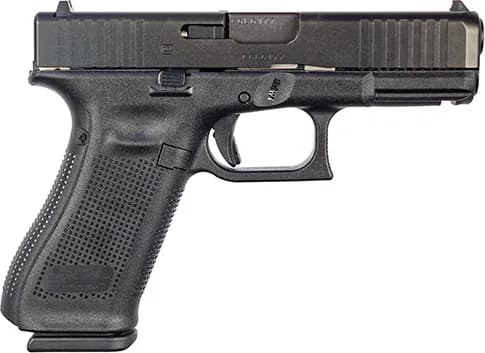
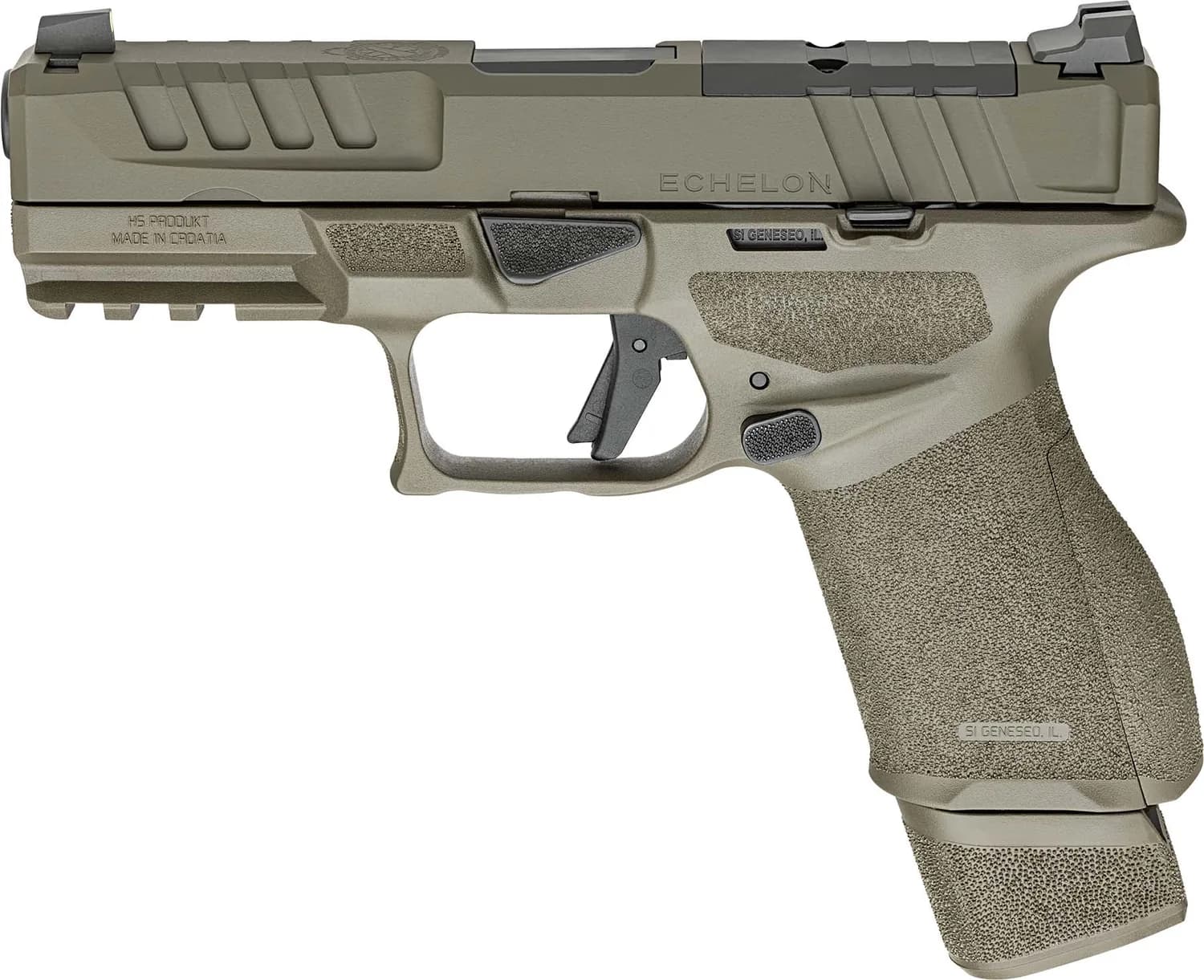
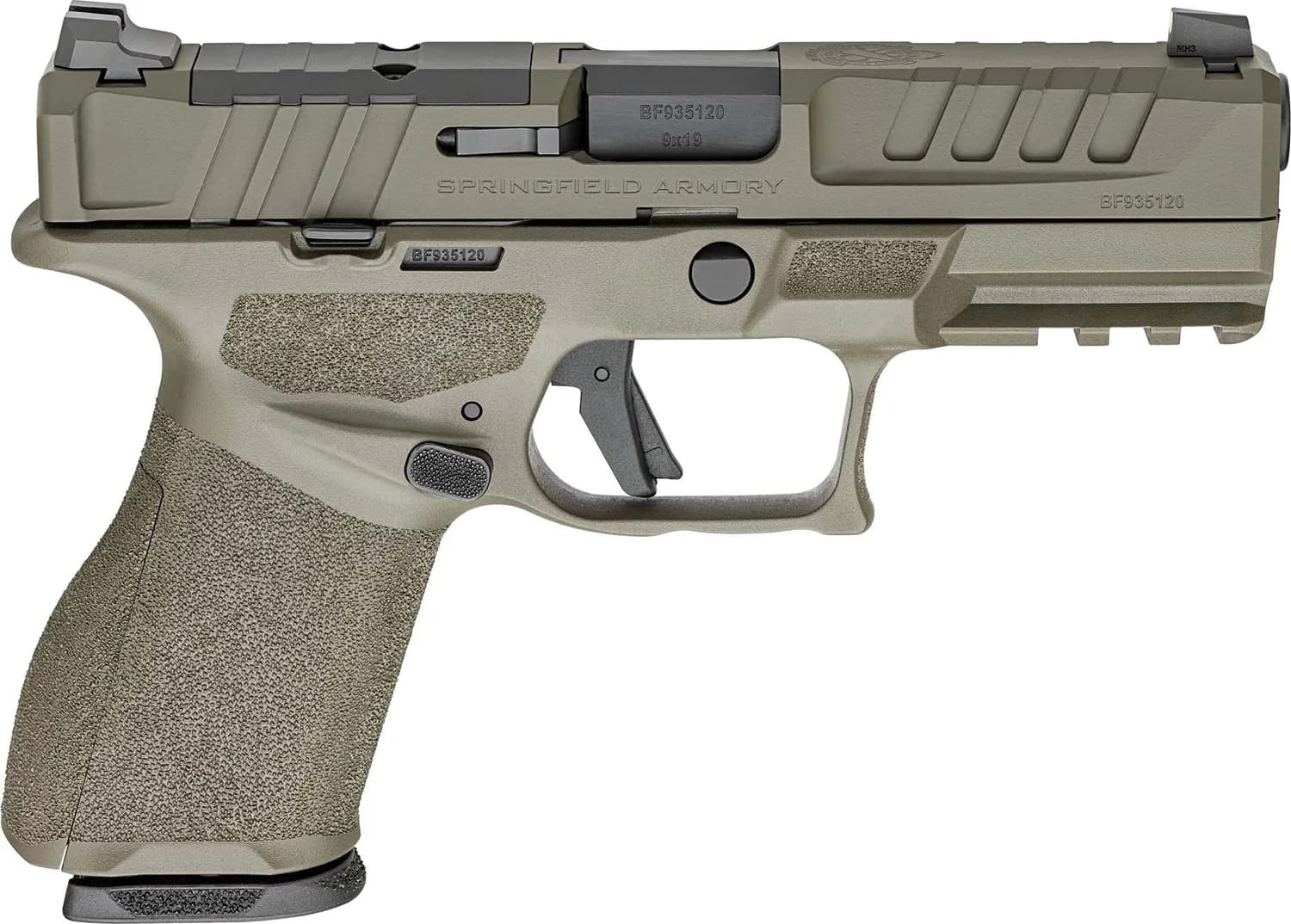
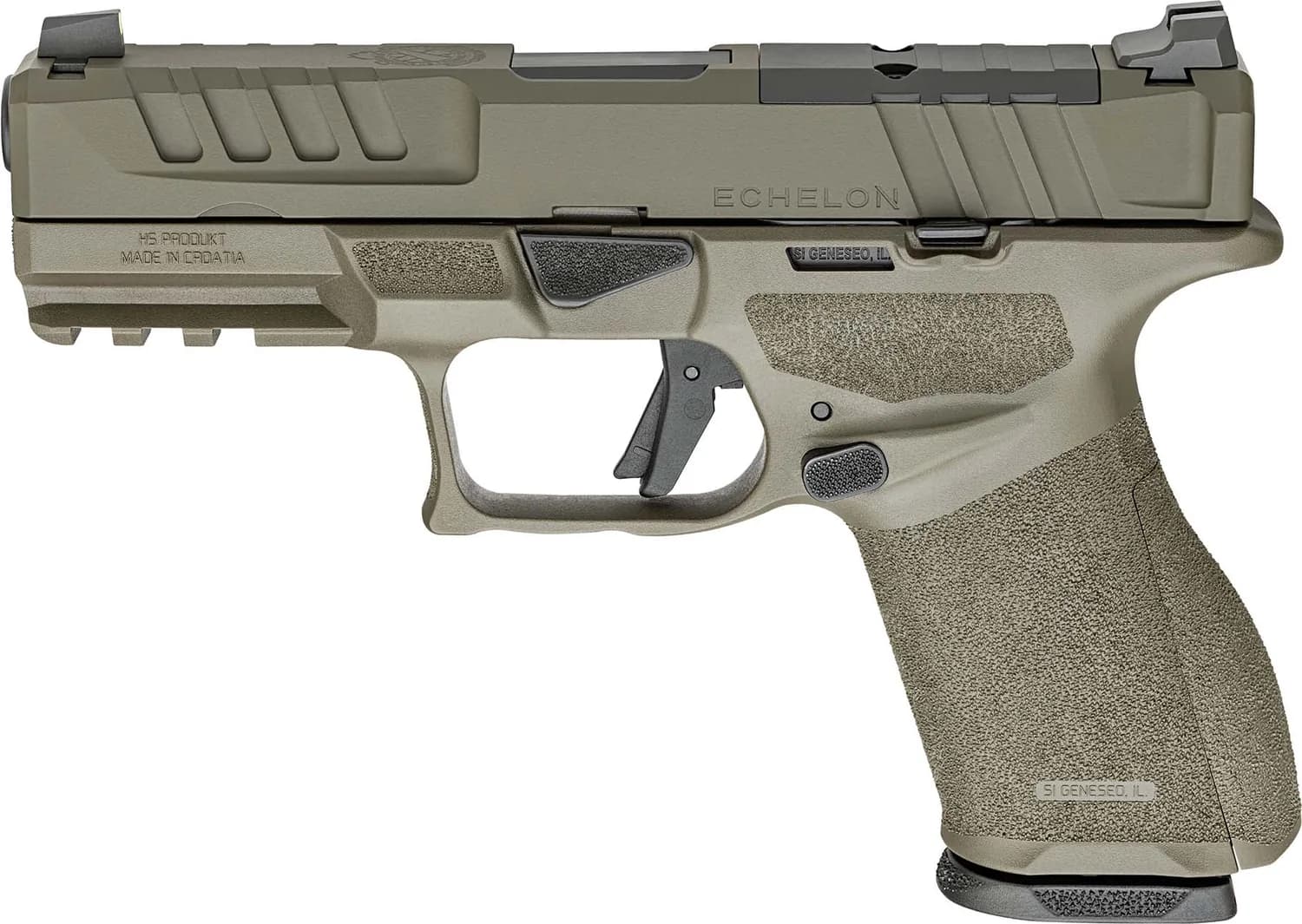
Variable Interface Systems, Optic Ready, Striker Status Indicator
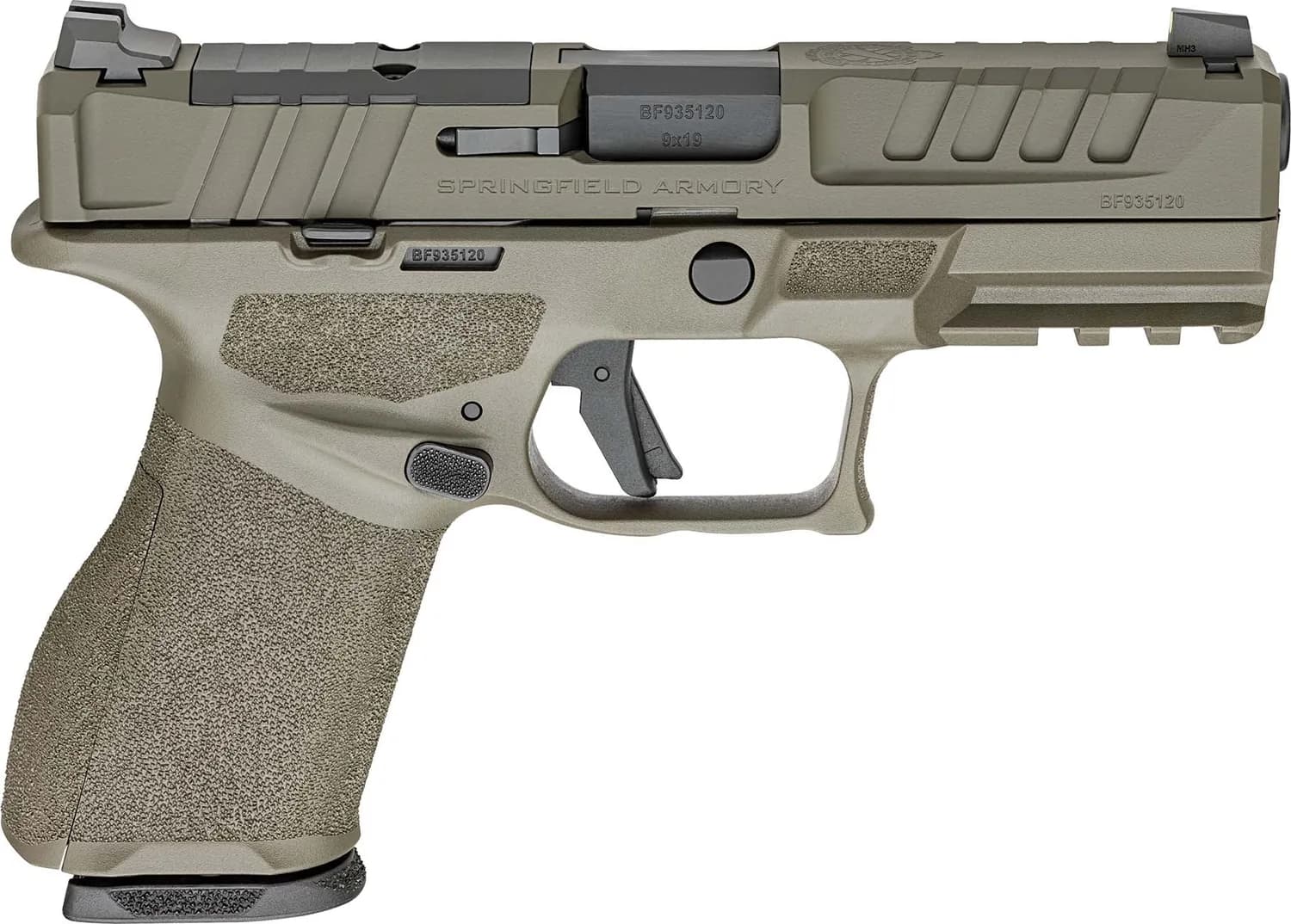
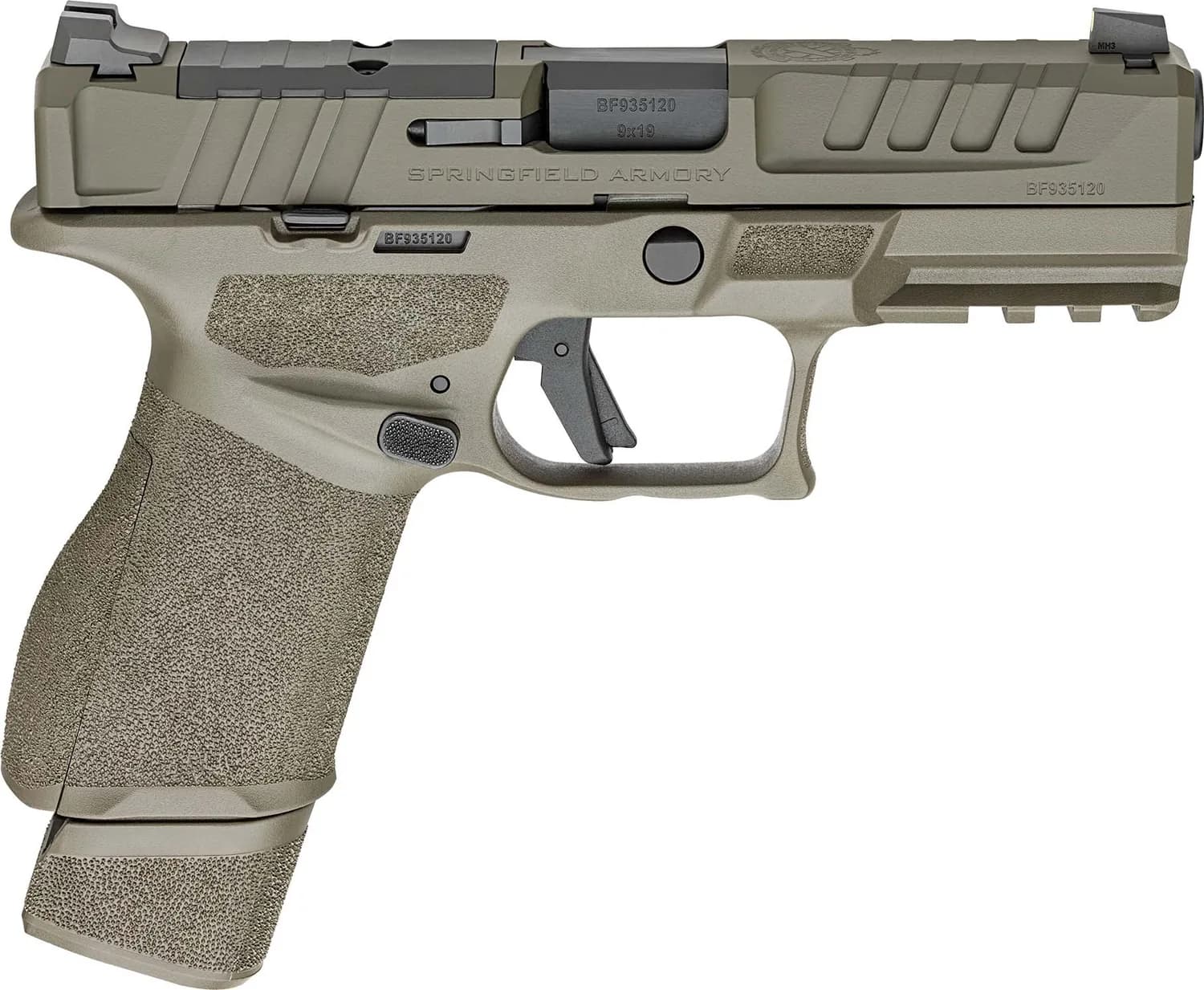
Springfield Armory®’s Echelon™ line arrived as the company’s clean-sheet entry into the modern, optics-first duty-pistol market. The full‑size Echelon™ debuted in 2023 and quickly drew attention for two headline features that distinguish it from Springfield’s legacy XD®/XD-M® family: a serialized stainless‑steel trigger chassis Springfield calls the Central Operating Group (COG), and the Variable Interface System (VIS) — a direct‑mount optics strategy intended to accept a wide range of mini‑red‑dots without adapter plates. The Echelon™ earned industry recognition soon after its introduction. Springfield expanded the family with a compact model, the Echelon™ 4.0C (often marketed as the Echelon™ Compact); the OD Green 4.0C with factory code EC9409G‑U and UPC 706397982645 was announced by Springfield in January 2025 as one of the colorway variants of the compact offering.
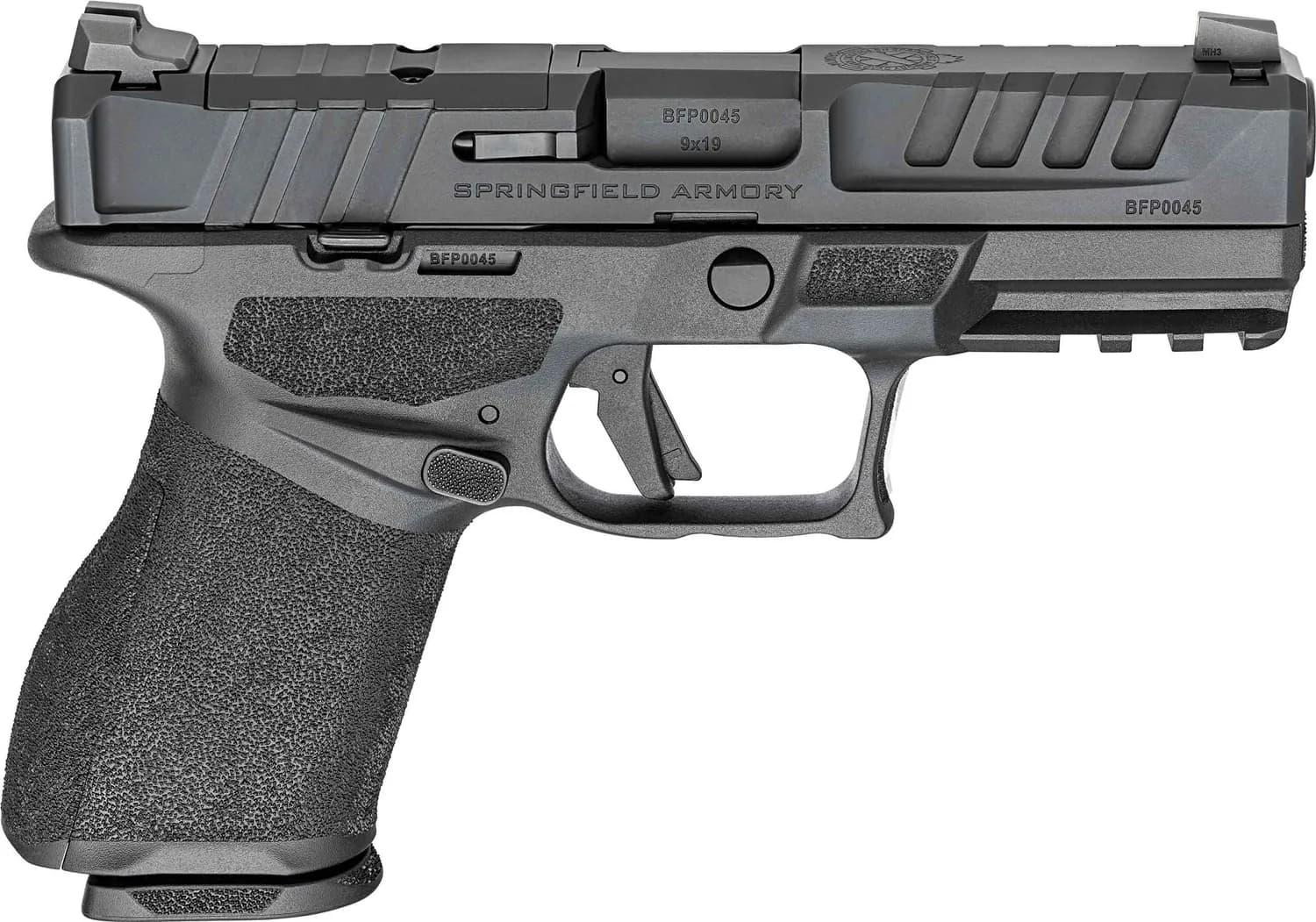
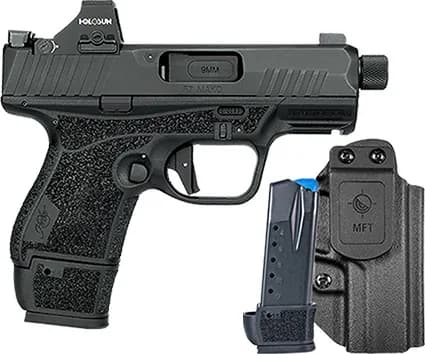
Mechanically the Echelon™ Compact is a striker‑fired, chassis‑style pistol built around the COG: a serialized stainless insert that houses the trigger group and functions as the firearm’s legal core. That approach lets Springfield offer multiple grip modules and interchangeable backstraps while keeping the serialized component constant, simplifying modularity without re‑serializing parts. The VIS employs self‑locking pins and multiple mounting footprints in the slide for low‑profile, direct optic fitment across many popular MRDS designs. The compact shares the same engineering philosophy as the full‑size Echelon™ but in a smaller package: a 4.0" hammer‑forged barrel, billet‑machined optics‑ready slide, and Melonite/cerakote surface treatments on various finishes. The compact’s footprint (roughly 7.25" overall length and an unloaded weight in the mid‑20 ounce range) puts it squarely in the “carryable but controllable” category.
Ergonomics are a deliberate part of the design. The grip modules and three included backstraps let shooters tune hand circumference, and the frame features aggressive but progressive texturing and index points intended to promote a consistent high grip. Controls are fully ambidextrous, and the slide is cut with deep front and rear serrations and a pronounced rear ledge to aid rapid manipulations. Unlike some Springfield pistols of the past, the Echelon™’s safety architecture relies on internal striker safeties and a trigger safety rather than an external thumb or palm grip lever; reviewers and owner threads note the platform does not include a traditional grip‑safety or the XD®‑style visible striker tail on the slide.
In practical terms the compact’s mass and grip geometry tame 9mm recoil better than many micro‑compacts while remaining far more concealable than full‑size service pistols. Reviewers consistently describe the factory trigger as a flat‑faced, crisp‑breaking unit measured roughly in the mid‑4 to 5 pound range on the compact test guns; the reset is short and distinct in most published range tests. With optics mounted via VIS the sight picture is low and intuitive, and many testers praised the ability to co‑witness irons through the optic window in several popular dot models. Accuracy testing from multiple outlets puts the compact well within expected service‑pistol performance, with respectable 15–25 yard groups for quality defensive loads.
That said, like most major new platform launches, the Echelon™ family produced a mix of early adopter commentary. Industry aggregation and forum analysis identified scattered user reports in 2023–2025 of magazine‑related failures, inadvertent slide‑locking issues during reloads with particular magazine combinations, and a handful of other intermittent malfunctions reported by owners online. These reports appear concentrated in early production runs and discussion threads; at the same time, many independent reviewers and long‑term testers published extended‑use pieces that found the platform reliable after a break‑in period and praised its durability. The available evidence therefore points to generally good accuracy and controllable recoil with a small minority of users reporting reliability anomalies tied to specific magazines, handling technique, or early production tolerances. Prospective buyers should consider corroborating sample size and production date when evaluating anecdotal reports.
Measured accuracy from several independent reviewers and range tests places the Echelon™ Compact within the upper range of modern duty‑oriented compacts: consistent defensive‑distance groups and repeatable point‑of‑aim/point‑of‑impact when properly zeroed with an optic. The trigger pull is commonly described as clean and serviceable out of the box — not a competition‑level trigger but competitive with many factory striker systems — and follow‑up shots are aided by the pistol’s geometry and the slightly heavier frame mass compared with pocket‑sized designs. Reviewers who performed endurance testing report the platform takes hard use well; finish treatments, hammer‑forged barrels, and the billet slide construction all contribute to perceived long‑term robustness. Still, long‑term durability conclusions should be weighted by independent high‑round‑count tests from multiple production batches.
Where the Echelon™ Compact excels is obvious: everyday carry for shooters who want a full‑featured, optics‑forward pistol that doesn’t feel like a compromise at the range. Its balance of barrel length, grip ergonomics, and capacity (factory configurations include flush 15‑round magazines plus extended 18‑rounds) make it useful for defensive carry, duty use where a slightly smaller slide is desired, and general range fun where accuracy and optic compatibility matter. The compact trades a small amount of holsterability and absolute concealability versus the smallest micro‑compacts in exchange for better recoil control and sight radius.
Limitations include weight and size compared with true sub‑compacts for deep concealment scenarios, and the fact that early owner thread noise means cautious buyers should confirm serial‑batch experience or test a sample before committing for high‑demand roles. For competition shooters seeking the absolute fastest reset and the lightest trigger pull, a competition‑tuned platform may still offer an edge without aftermarket work.
The Echelon™ Compact positions Springfield competitively against compact service pistols like the Glock 19 family, SIG P320 variants, and other optics‑ready compacts. Its selling points are a modern optics‑first architecture, a serialized stainless chassis for modularity, and generally excellent ergonomics for a carry pistol — features that won the Echelon™ the attention of industry press and an award cycle for the full‑size model. Value‑conscious buyers get a high feature count out of the box (interchangeable backstraps, multiple magazines, and optics‑ready slides), while users who prioritize platform longevity and accessory support will appreciate the VIS and the modular COG approach. Reputation among reviewers is broadly positive for handling and innovation, tempered by the reality that early adopters reported some reliability noise; over time that balance will likely tilt as more production batches and long‑term test data accumulate.
If you’re choosing a compact for carry and want a modern, optics‑centric firearm with a modular upgrade path, the Echelon™ Compact is worth a close look — just buy with the usual due diligence: inspect the specific lot, shoot a sample if possible, and account for holster fit and magazine options when planning a purchase.
Start with a practical guide if you want a faster way to narrow the field before comparing specific models.
Learn how to choose the right 9mm handgun based on size, budget, and how you plan to use it.
Read guideCarry-focused shoppersLearn how to choose the right concealed carry handgun based on size, comfort, safety, and everyday usability.
Read guideHome-focused buyersLearn how to choose the right handgun for home defense based on safety, ease of use, and practical everyday considerations.
Read guide