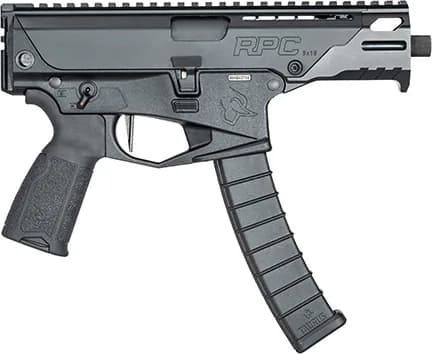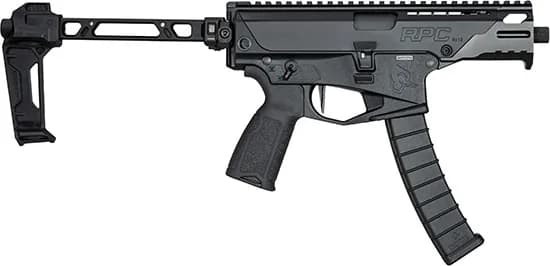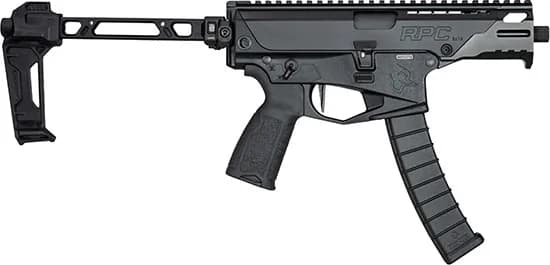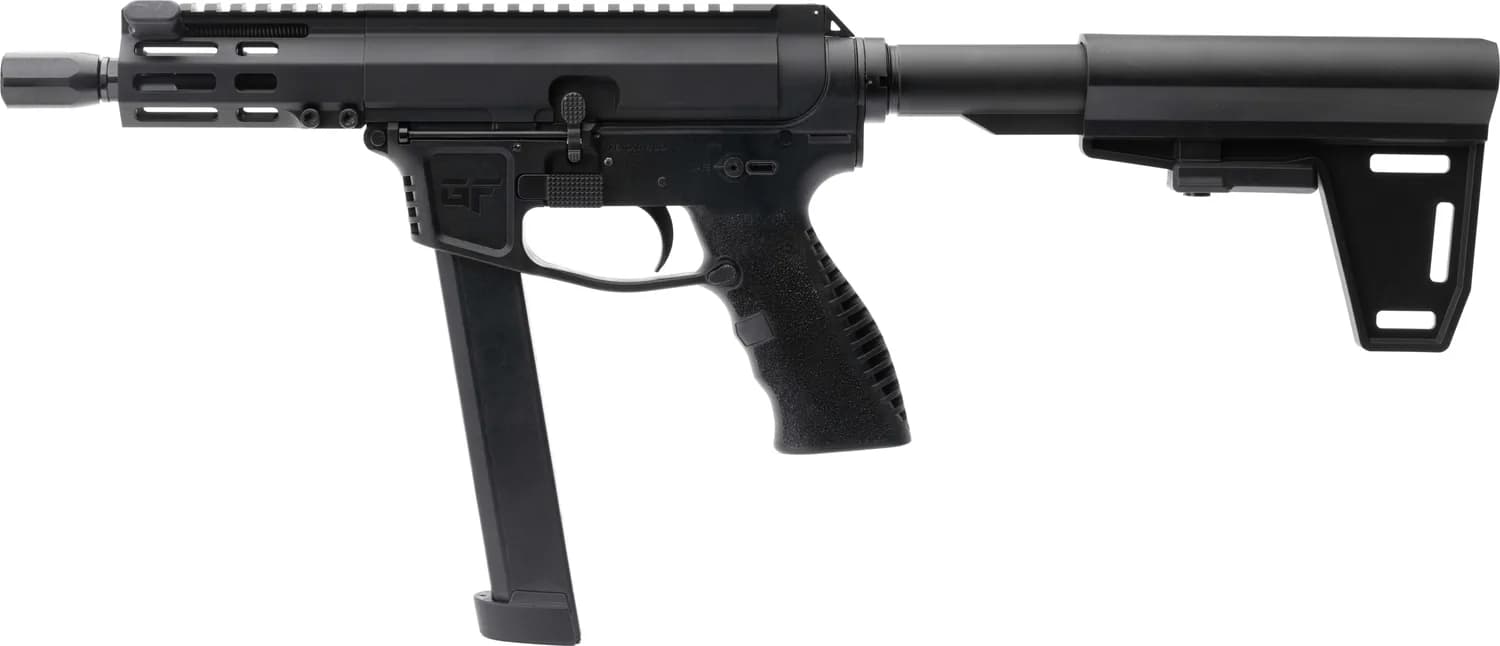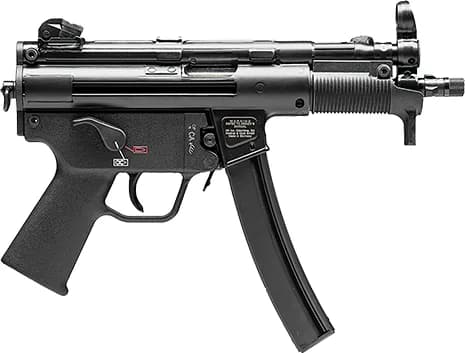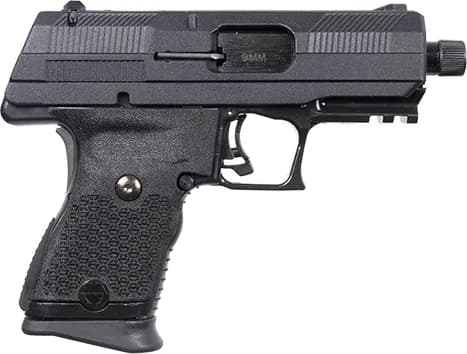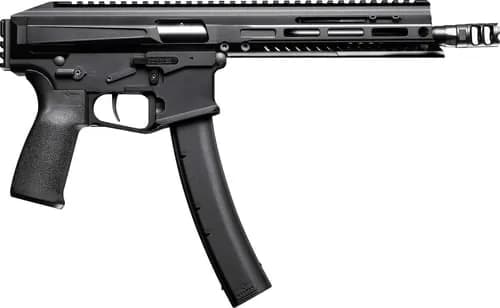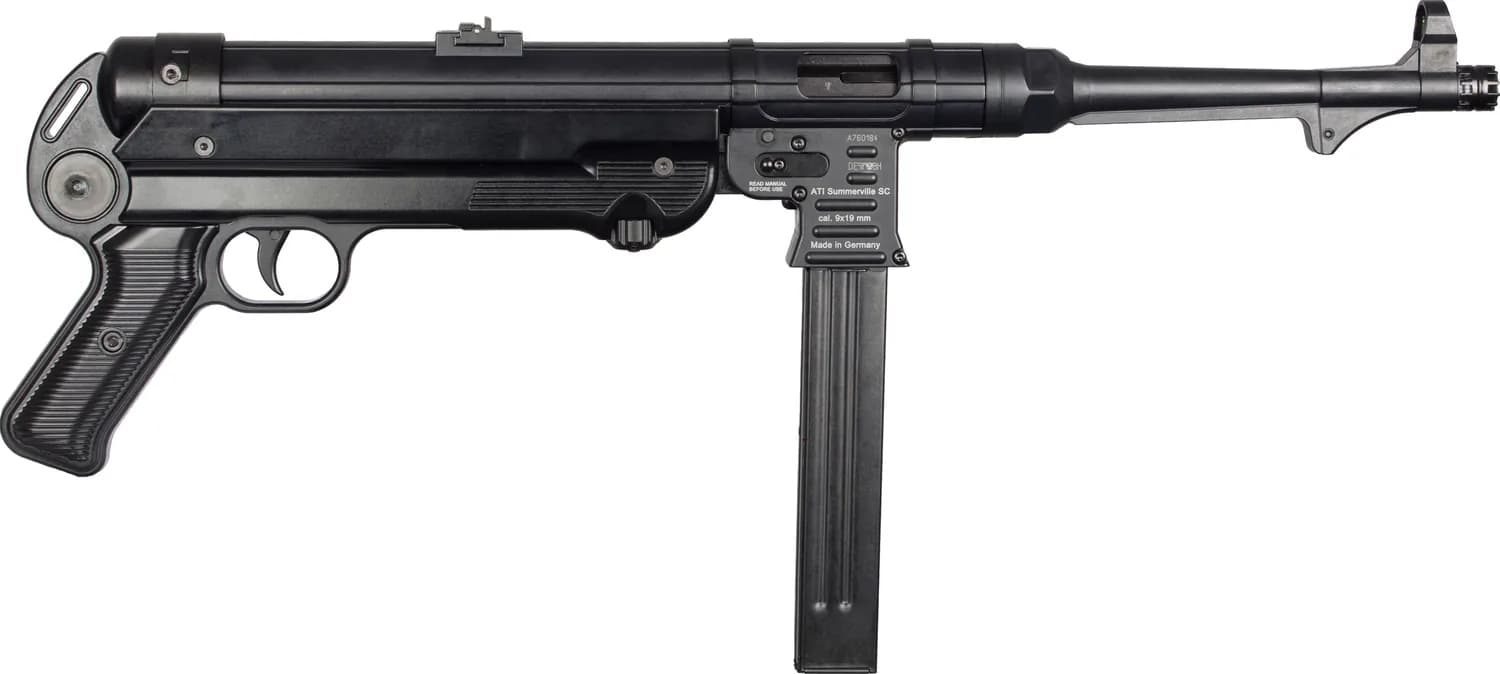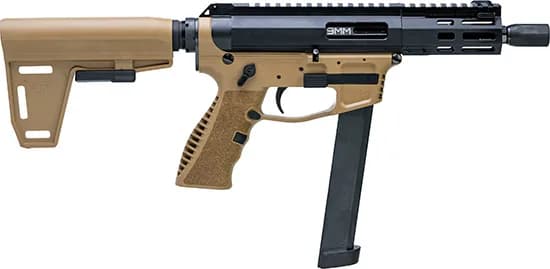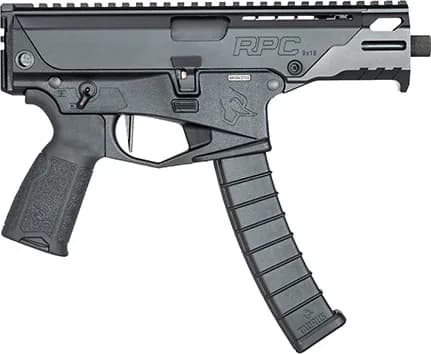
M-LOK Handguard, Ambi Safety, Quick Barrel Takedown, Reversible Charging Handle, Flat Face Trigger
Taurus’ RPC is the Brazilian manufacturer’s deliberate entry into the compact 9 mm PDW/pistol-caliber carbine space. Announced in mid‑April 2026, the RPC debuted as a short, chassis‑style pistol built around a roller‑delayed blowback action and a short (4.5") threaded barrel. The company positioned it as a configurable, duty‑grade 9 mm platform with modern ergonomics and ambidextrous controls — an offering meant to compete with a growing field of purpose‑built 9 mm PDWs and PCCs.
Taurus has historically been stronger in the handgun market than in the large‑format pistol caliber carbine segment; the RPC is framed as a step toward expanding that footprint with a design that borrows operational concepts long associated with higher‑end submachine guns (notably the roller‑delayed approach) while incorporating AR‑like controls and a modular upper/lower architecture. Early press materials and hands‑on coverage emphasized that Taurus intended the RPC to be both familiar to AR users and attractive to shooters who want a compact, suppressor‑friendly 9 mm package.
Mechanically the RPC is notable for using a roller‑delayed blowback/roller‑locked style of operation — a system historically associated with familiar designs such as the MP5 and various CETME/G3 derivatives. Taurus equips the RPC with a 4.5" threaded barrel and a quick‑change barrel interface, a full‑length Picatinny rail, and an M‑LOK handguard for accessories. Controls are ambidextrous: a mirrored safety, magazine release and bolt/slide release, plus a reversible, non‑reciprocating charging handle. The platform is built around an aluminum upper and a serialized internal chassis set into a polymer lower with AR‑style ergonomics, including an interchangeable modular grip.
Two user‑serviceable locking pieces ship with the gun to tune the timing of the roller system — one intended for conventional supersonic 9 mm loads and a second, slower locking piece intended to improve function with subsonic/suppressed ammunition. The ability to swap locking pieces without tools is a practical engineering touch that directly supports the RPC’s suppressed and multi‑ammunition use cases. The short, threaded barrel and the roller system together are designed to reduce felt reciprocating impulse compared with straightforward direct‑blowback PCCs, producing a flatter, more controllable shooting experience on paper and in early hands‑on testing.
Reported weights and configuration details vary slightly by review copy and whether the brace/stock option is included, but published hands‑on reports place the unloaded weight of the pistol‑format chassis in a compact range that keeps it handy for close‑quarters and personal‑defense roles. Construction and finish choices (nitride‑type finishes on key internals, aluminum receivers and steel chassis parts) were repeatedly highlighted in early coverage as more substantial than some might expect from a contemporary value‑brand offering.
First looks and early reviews emphasize that the RPC shoots more like a short PDW than a conventional blowback PCC. Reporters who fired the gun noted the roller‑delayed action produces a perceptibly flatter recoil impulse and rapid follow‑up shot capability; with the included flat‑face single‑stage trigger the platform encouraged fast, repeatable splits. Several hands‑on reviewers praised the fit and finish of internals and the overall quality of machining, calling the RPC a surprisingly refined product for its segment.
Accuracy at common defensive ranges was described as more than adequate: the combination of a 4.5" barrel, stable ergonomics, and a consistent trigger allowed for tight groups at typical PDW engagement distances. Durability impressions from early testers were positive overall, with notes that the alloy/steel chassis arrangement and robust internals should hold up under routine shooting. That said, as with any new product the breadth of long‑term reliability data is limited — early testing and reviewer impressions are encouraging, but they are not a substitute for extended, independent service life evaluations.
The RPC’s design leans toward close‑in defensive use, suppressed personal‑defense roles, and hobbyist PCC/PDW shooting. The short overall length and threaded barrel make it a natural fit for a suppressed bedside or close‑quarters carbine where compactness and controllability matter. Its full‑length optics rail and M‑LOK handguard also allow the RPC to be outfitted for range use, competition in PCC classes, or dedicated home‑defense setups. The reversible charging handle and fully ambidextrous controls make it suitable for left‑handed users and for duty applications where handing the weapon to another shooter may be necessary.
Limitations center on the ecosystem: the RPC uses 32‑round magazines that, while included with the pistol, are proprietary to the platform. That creates a dependence on Taurus for spares and aftermarket support until broader magazine options emerge. Buyers who prioritize widely adopted magazine standards or who already own large stocks of other 9 mm PCC magazines will need to factor that into the ownership equation. Additionally, while early impressions of build quality are strong, Taurus’ broader reputation among some shooters means this product will face extra scrutiny before it achieves the same unquestioned trust enjoyed by long‑established PDW/PCC manufacturers.
The RPC arrives into an increasingly crowded market of compact 9 mm platforms — from long‑standing premium offerings to newer value alternatives. Where it can stand out is in offering a roller‑delayed action (a departure from the majority of straight‑blowback PCCs), a compact threaded barrel intended for suppression, and a relatively comprehensive feature set straight from the factory (ambidextrous controls, M‑LOK, quick‑change barrel architecture). Early reviews suggest Taurus is aiming to undercut some premium rivals on price while delivering an experience that, in many respects, competes with higher‑priced designs.
How the RPC ultimately measures up will depend on two key factors: how well the platform performs across extended, varied ammunition and environmental testing, and how the magazine ecosystem and aftermarket develop. If Taurus’ early manufacturing consistency and the unique choice of a roller‑delayed system hold up in the field, the RPC could be one of the most interesting value‑oriented PDWs to enter the market in recent years. For now, early hands‑on impressions and first‑look testing mark it as a noteworthy and technically ambitious entry that merits attention from anyone interested in compact 9 mm defensive and recreational platforms.
Start with a practical guide if you want a faster way to narrow the field before comparing specific models.
Learn how to choose the right 9mm handgun based on size, budget, and how you plan to use it.
Read guideHome-focused buyersLearn how to choose the right handgun for home defense based on safety, ease of use, and practical everyday considerations.
Read guideComparison-focused shoppersA practical guide to comparing handguns the right way: what actually matters, what to ignore, and how to use comparison tools effectively.
Read guide