Affiliate disclosure: HandgunCloud may earn a commission if you continue to the retailer and complete a purchase.
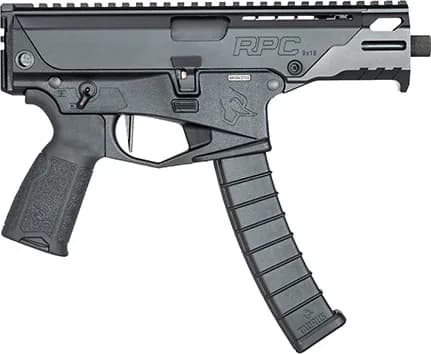
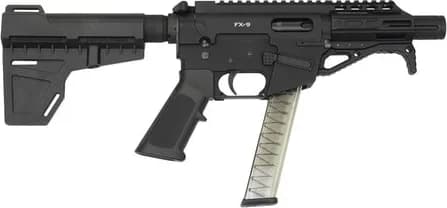
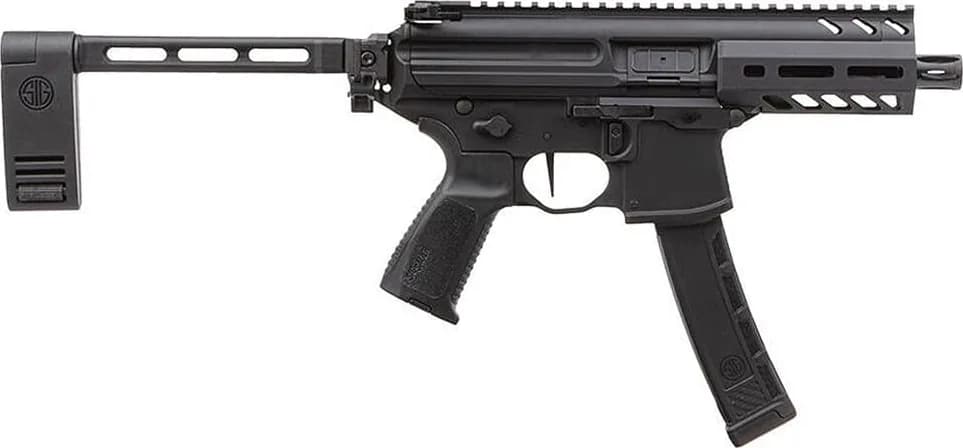
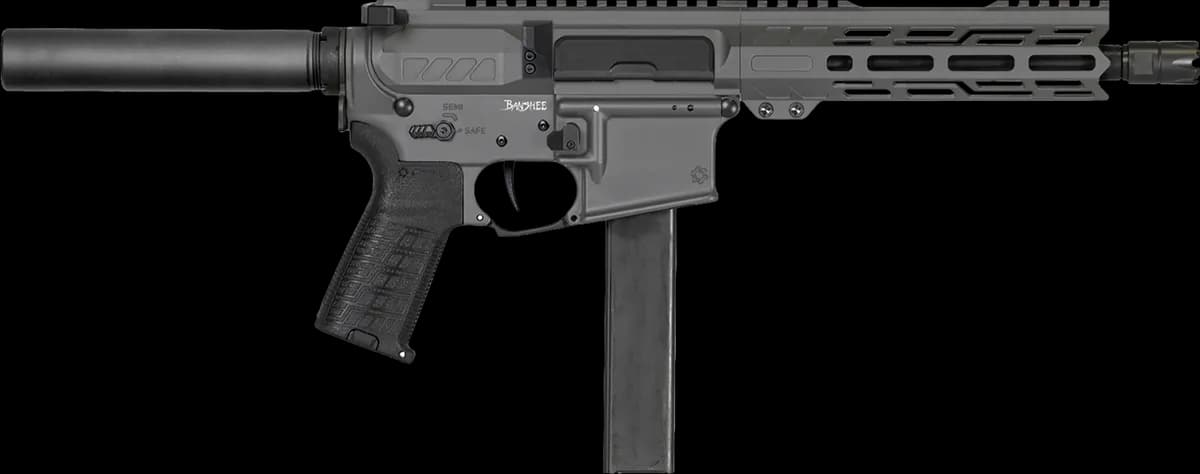
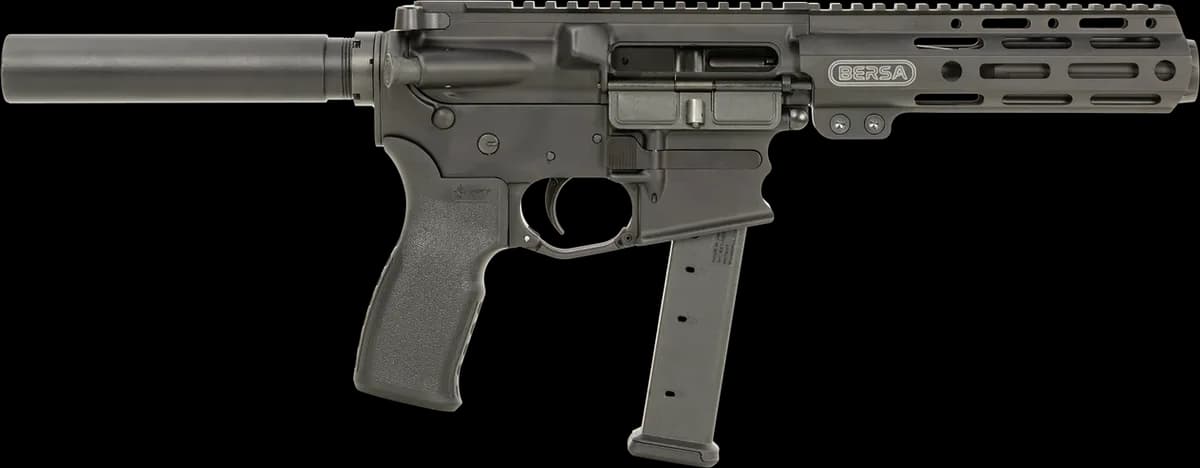
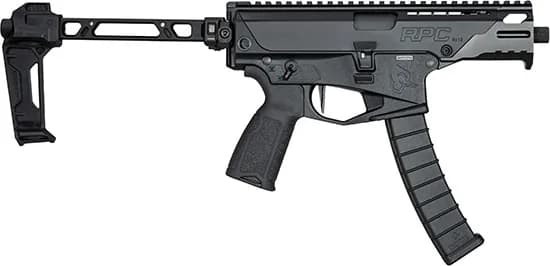
Buy from Impact GunsTaurus’s RPC arrived in the public eye in April 2026 as the company’s first purpose-built 9mm personal defense weapon (PDW) offering. Announced at trade coverage around NRAAM, the platform was presented as a compact, ambidextrous pistol-caliber carbine designed to give shooters a more controllable alternative to typical direct-blowback PCCs. Taurus positioned the RPC as a modern, accessory-friendly chassis that bridges pistol ergonomics and carbine capability, and it was offered in both a base configuration and a version equipped with a factory folding brace.
Taurus has a history of producing economical handguns and service pistols; with the RPC the company made an explicit move into the PDW/PCC segment, targeting users who want a highly portable, magazine-fed 9mm that can be easily accessorized for optics, lights, or suppression. Early marketing emphasized ambidextrous controls, modularity, and an operating system intended to tame recoil—features that signal Taurus’s intent to compete beyond the budget end of the market.
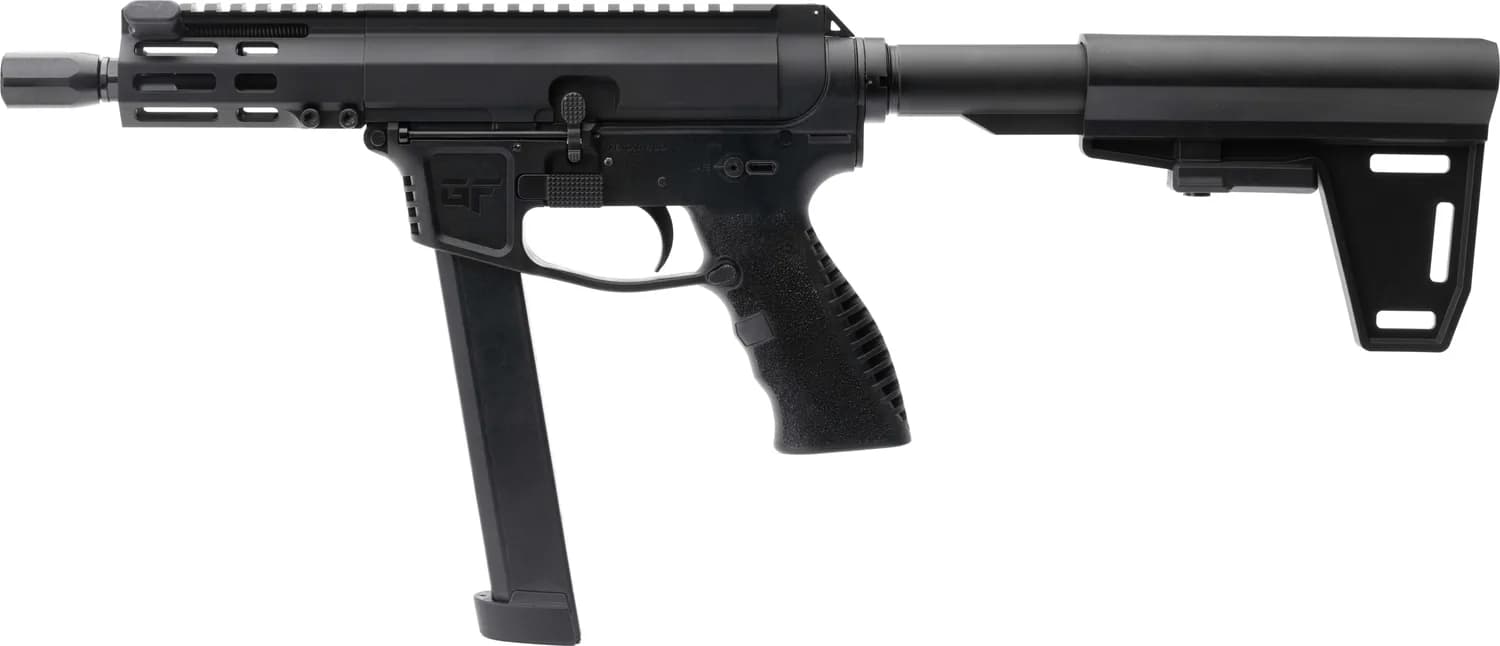
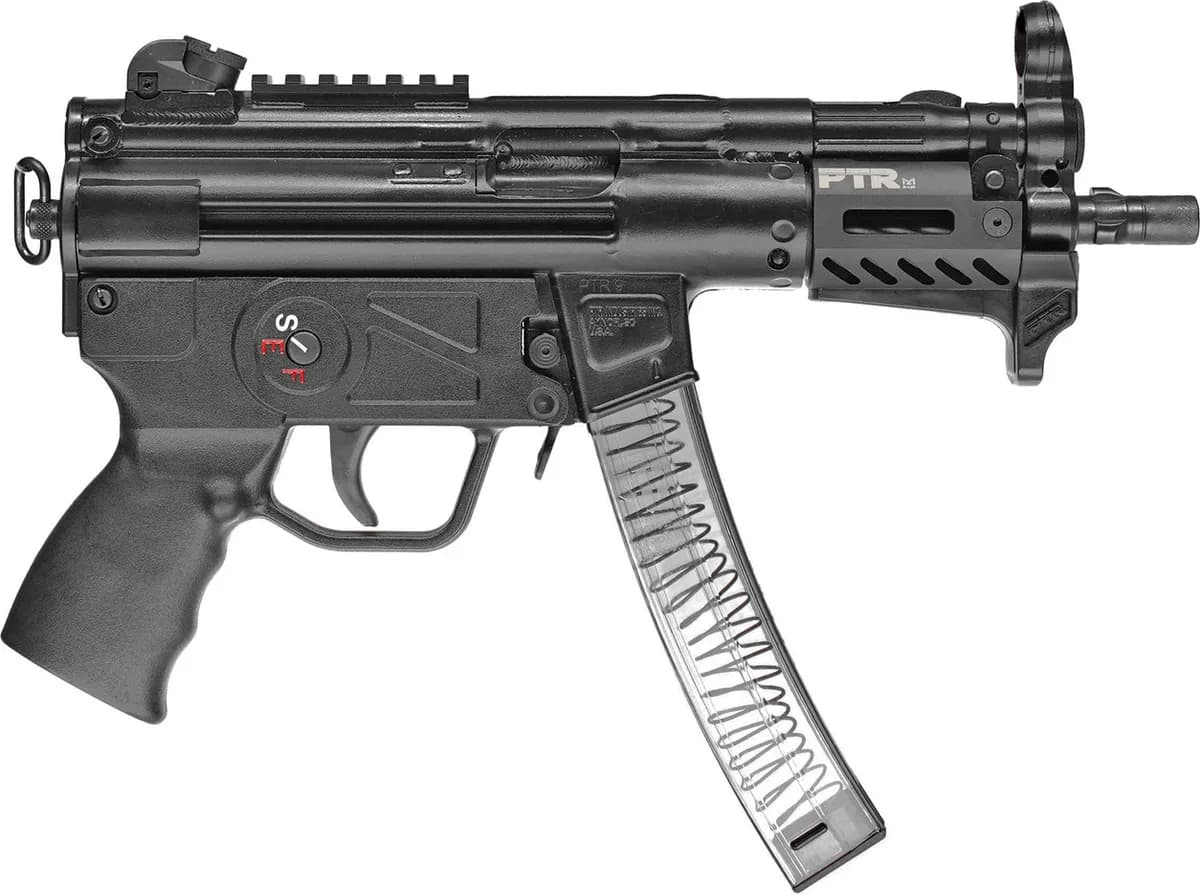
Mechanically the RPC is notable for adopting a roller-delayed blowback operating system rather than the heavier direct-blowback used in most 9mm PCCs. Roller delay, long associated with the MP5 family, mechanically delays bolt opening to smooth and flatten the recoil impulse; Taurus and early reviewers argue this choice produces a softer, more controllable shooting experience in a compact package. The platform pairs that system with a 4.5-inch threaded, quick-change barrel and a short M-LOK handguard, giving users room for a compact optic and an off-hand support accessory while keeping overall length minimal.
Ergonomically the RPC uses an AR-compatible grip interface, an overmolded rubber grip surface, and a full-length top Picatinny rail. Controls are fully ambidextrous: bilateral safety selectors, bolt release/lock, a reversible non-reciprocating charging handle, and mirrored magazine release. The brace-equipped retail examples ship with a folding Strike Industries-style brace, which reduces overall footprint for transport while providing a stable cheek/brace point when deployed. The receiver design reportedly includes a serialized internal steel chassis running inside a polymer lower, a construction approach aimed at combining rigidity with lighter exterior weight.
These engineering choices translate into a compact—but not ultralight—package. Published dimensions for the brace-equipped gun place overall length in a PDW-friendly window and list capacity with factory-supplied high-capacity magazines. The quick-barrel takedown system and captured front pivot make field stripping and accessory swaps straightforward, which will appeal to shooters who plan to configure the RPC for multiple roles.
Hands-on reports from press reviewers who spent range time with the RPC were generally positive. Testers repeatedly praised the roller-delayed operation for producing a noticeably softer, flatter impulse compared with direct-blowback PCCs; one reviewer described suppressed and unsuppressed firing as quiet and pleasant for rapid strings, and several noted that the gun tracked well during follow-up shots. Trigger geometry—reported as a single-stage flat-faced shoe—drew favorable comments for reset and consistency, though reviewers characterized the pull as similar to a service-style AR trigger rather than a match-grade trigger.
Reliability in early samples looked promising: range tests in initial reviews ran full magazines with no stoppages, and the rifle-style controls functioned as intended during drills. A recurring caveat involved the lengthy, curved 32-round magazines: while they feed reliably and give impressive on-board capacity, their size can complicate pocketing or carriage in small compartments, and some testers remarked that the supplied magazines have a polymer feel that doesn’t match the otherwise high-quality fit and finish of the receiver and internals. Durability observations from preview articles were positive but necessarily limited to short-term evaluation; long-term service life and spare-parts/accessory availability remain open questions until broader owner feedback accumulates.
The RPC’s strengths make it well suited to home defense, truck or vehicle carry, and as a compact range gun that supports suppressed shooting. The short, threaded barrel combined with a roller-delayed action yields easier muzzle control and lower felt recoil—attributes that matter in close-quarters defensive scenarios and for rapid, accurate work on the range. Its full-length rail and M-LOK handguard let users mount micro optics and lights without major changes to the platform.
For competition use the RPC could be adapted to PCC divisions that allow braced pistols or short-barreled rifles, particularly where controllability and rapid follow-up shots are advantageous. However, the long curved magazines may not be optimal for all competition reloading positions, and shooters wanting the lightest possible carry setup may prefer shorter-barreled or lighter direct-blowback alternatives. Likewise, the RPC’s compactness trades off some maneuvering room for a larger magazine profile—an important consideration for concealed carry applications where the overall holster or bagability matters.
By introducing a roller-delayed PCC at a price point lower than many existing roller-locked options, Taurus aims to undercut competitors and expand the number of buyers able to access a subgun-style shooting experience. In the small but growing niche of roller-delayed 9mm platforms, the RPC competes most directly with offerings such as the Springfield Kuna and a limited range of legacy HK-pattern guns and clones. Early commentary frames the RPC as a value-forward entry that pairs modern ergonomics and modularity with operating characteristics more commonly associated with higher-priced subguns.
Where Taurus will be judged in the months ahead is on long-term reliability, magazine sourcing, and aftermarket support. The initial reviews are encouraging on fit, feel, and the advantages of roller delay in a compact 9mm, but sustained success will depend on consistent production quality and whether third-party accessories and spare mags become widely available. For buyers seeking a modern, factory-equipped PDW-style 9mm that emphasizes controllability and modularity, the RPC presents a notable new option—one that shifts the competitive baseline for what a sub-$1,200 (street) roller-delayed PCC can offer.
Start with a practical guide if you want a faster way to narrow the field before comparing specific models.
Learn how to choose the right 9mm handgun based on size, budget, and how you plan to use it.
Read guideHome-focused buyersLearn how to choose the right handgun for home defense based on safety, ease of use, and practical everyday considerations.
Read guideComparison-focused shoppersA practical guide to comparing handguns the right way: what actually matters, what to ignore, and how to use comparison tools effectively.
Read guide