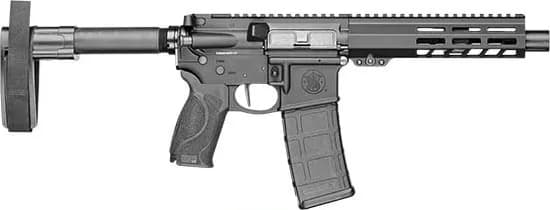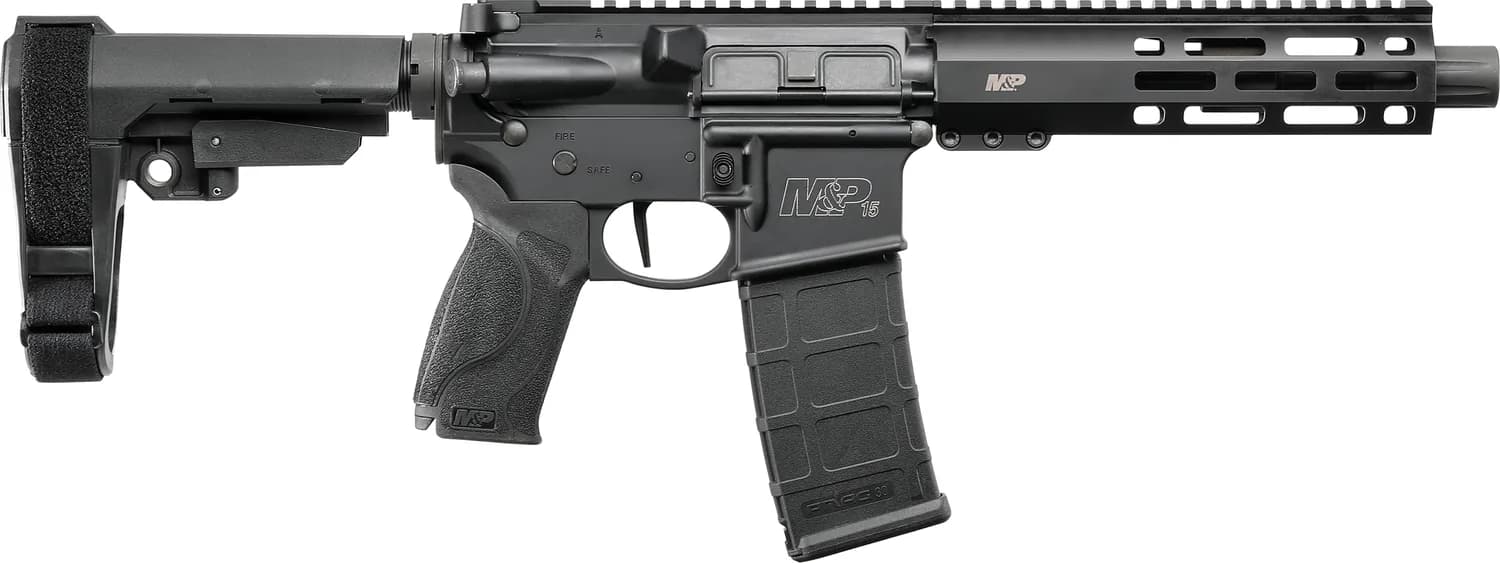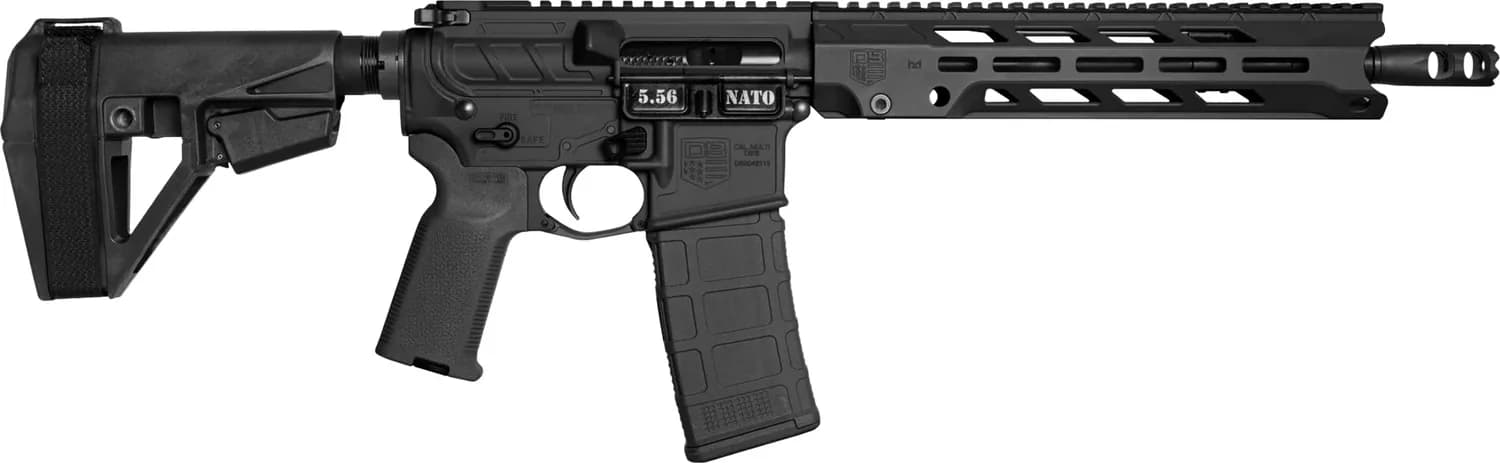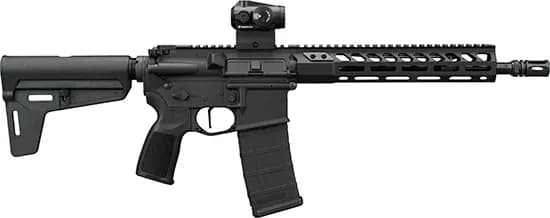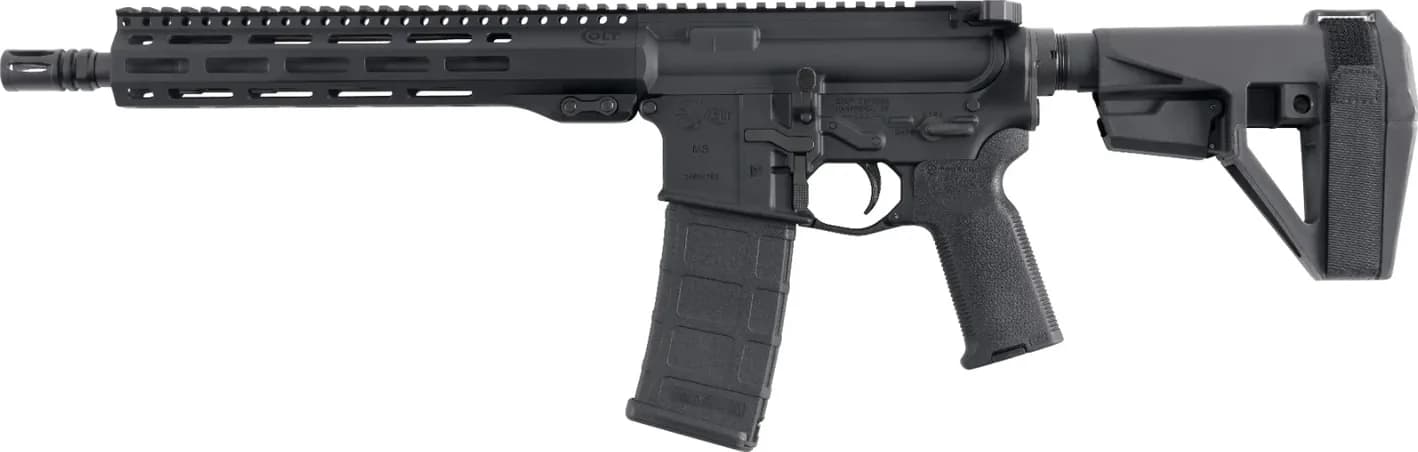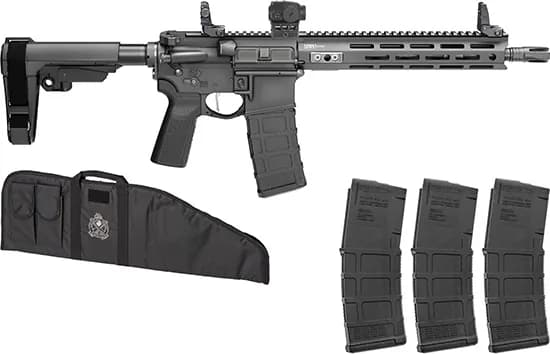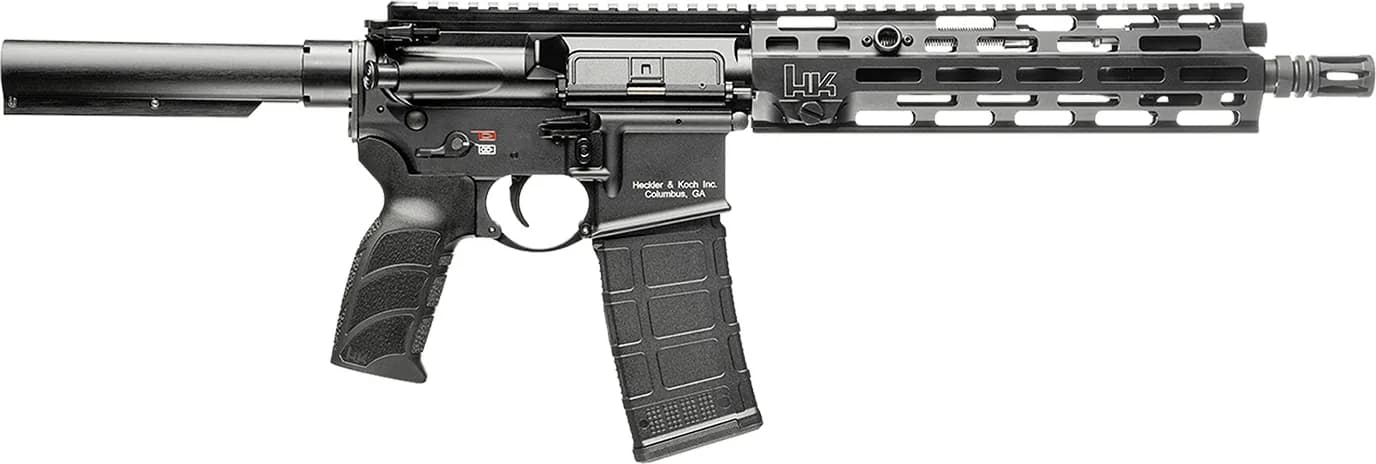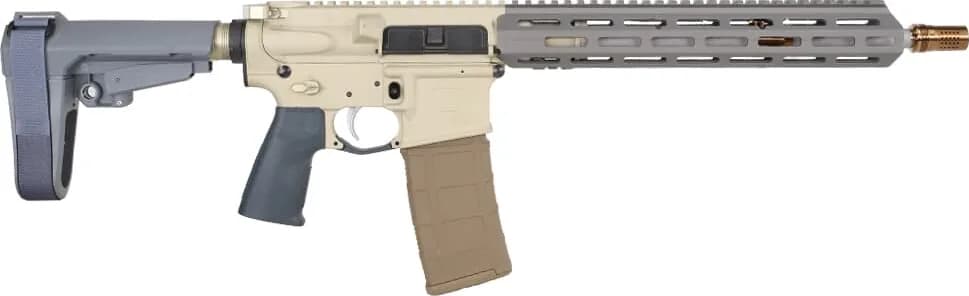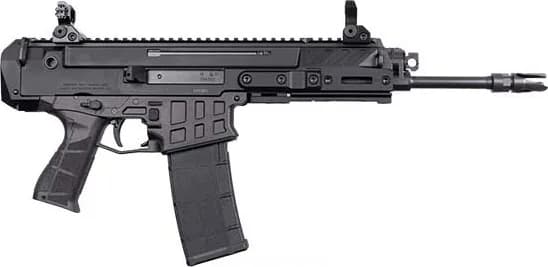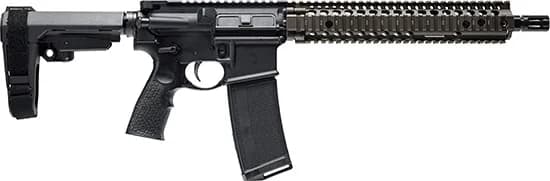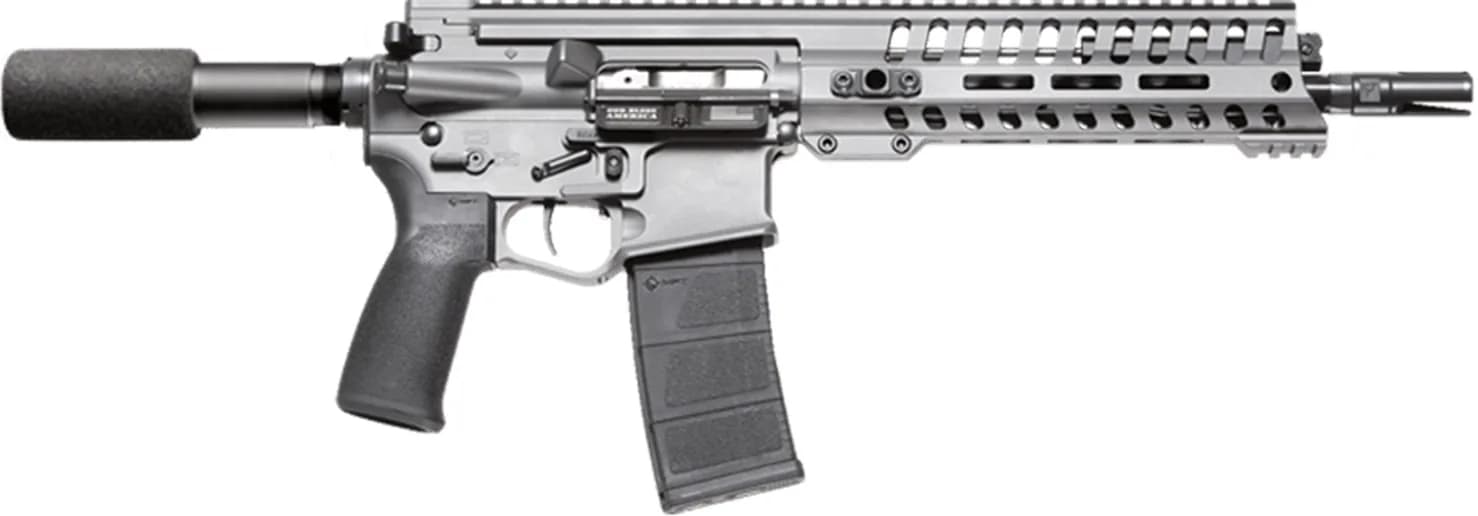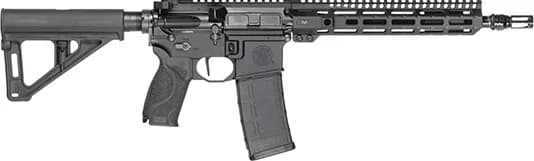
Threaded Barrel, Interchangeable Backstraps, Free Float Handgaurd, Gvac System, Ambi Controls
The M&P15 AXE pistol is the compact, brace-equipped member of Smith & Wesson’s recent AXE family of M&P15-pattern firearms introduced in 2025 as a higher-end, suppressor-friendly evolution of the company’s long-running M&P15 line. The AXE series was launched as a group of platform variants—16‑inch carbines, factory short‑barreled rifles and the shorter 11.5‑inch offerings—engineered around Gemtech’s GVAC gas‑mitigation architecture and a Gemtech ETM muzzle interface intended to simplify mounting of modern suppressors. The series represents Smith & Wesson’s effort to move beyond entry-level Sport models and offer a factory-built AR platform aimed at users who want a turnkey, suppressor‑ready package with more premium components and fully ambidextrous controls.
The pistol variant keeps that AXE DNA in a compact, braced configuration: an 11.5‑inch, 5.56 NATO/.223 Remington chamber with the same upper‑receiver features as its longer siblings, packaged for purchasers who want maximum maneuverability without NFA registration when shipped with a pistol brace. Early coverage and catalog listings for the braced AXE pistol confirm the factory configuration includes the Gemtech interface, ambidextrous controls, and Magpul brace furniture.
Where the AXE series differs from earlier M&P15 models is in its upper‑receiver engineering and parts selection. The AXE upper uses a GVAC (Gas Evacuator) arrangement developed in conjunction with Gemtech that places an expansion chamber forward of a low‑profile gas block to mitigate back‑pressure and gas blowback when shooting suppressed. In practice that means the AXE is designed from the start to be used with modern cans without the tuning work—adjustable blocks or user changes—often required on conventional DI ARs. The line also ships with a Gemtech ETM flash hider/suppressor interface and an improved bolt‑carrier/bolt package described by Smith & Wesson and reviewers as beefier than mil‑spec in finish and testing.
The pistol uses a free‑float M‑LOK handguard, a flat‑face single‑stage trigger, a Radian Raptor ambidextrous charging handle, and fully ambidextrous lower‑receiver controls—features that impact ergonomics more than raw ballistics. The Magpul BTR (brace) fitted on the pistol variant gives a stable cheek weld and an adjustable length of pull while staying within the braced‑pistol form factor. Receivers are machined aluminum, and barrels across the AXE family are described as Armornite‑finished 4150 chrome‑moly with 5R, 1:8‑inch twist rifling—specifications that favor durability and a broad range of bullet weights.
Those engineering choices translate to a compact gun that balances toward the center of the receiver group. The short 11.5‑inch barrel concentrates mass forward and, combined with the free‑float handguard and brace, produces a handling package that is quick to present but requires conscious follow‑through for precision work past typical pistol‑range distances. The GVAC and ETM elements add a layer of systems engineering intended to preserve shooter comfort and component life when the AXE is used with modern low‑backpressure suppressors.
Independent early hands‑on reports and reviewer tests of AXE examples emphasize practical accuracy, trustworthy function, and the suppressor‑focused gas system behavior. Testers who ran the AXE configuration reported consistent, serviceable accuracy: with quality ammunition and a precision optic some AXE examples flirted with sub‑MOA groups at the rifle‑length platforms and produced two‑MOA class results with typical 55‑ to 77‑grain factory loads in real‑world conditions. Trigger feel is generally described as a flat‑face, single‑stage unit noticeably better than mil‑spec but not a match or replacement for boutique two‑stage or match triggers—serviceable for defensive and general‑purpose shooting.
When suppressed, reviewers found the GVAC arrangement reduced face and receiver blowback with low‑backpressure cans and made suppressed shooting more pleasant without the need to tune an adjustable gas block. That advantage has limits: in side‑by‑side tests the AXE showed increased gas intrusion when paired with higher‑backpressure suppressors, meaning suppressor selection still matters. Reliability and component finish were praised in initial hands‑on reporting; testers noted robust BCG materials, chrome‑lined carrier features to resist fouling, and consistent feeding and extraction through extended strings of fire.
The AXE pistol’s primary strengths sit at the intersection of compact maneuverability and suppressor readiness. Its short overall length and brace make it well suited for vehicle/“truck gun” roles, close‑quarters home defense where rapid presentation is essential, and general range use for shooters who prefer a short‑barrel AR in 5.56/.223. The factory‑integrated suppressor mounting interface and GVAC system make the AXE an attractive option for owners who plan to run the gun suppressed with low‑backpressure hosts.
Notable limitations are inherent to the form factor and intended mission. The 11.5‑inch barrel reduces muzzle velocity relative to a 16‑inch rifle, which can affect terminal performance and long‑range energy; shooters who prioritize maximum ballistic performance or precision at distance will prefer longer barrels. The GVAC arrangement improves suppressed behavior with many cans but is not a universal cure—some high‑backpressure suppressors still produce increased gas in the face and faster cyclic rates. Finally, as with any factory braced pistol, users who later convert to an SBR or change furniture for a stock must be mindful of NFA rules and state‑level legal regimes.
The AXE family is positioned above Smith & Wesson’s value‑oriented Sport models and competes with other premium, factory‑built ARs that sell themselves on suppressor‑friendliness and turnkey feature sets. Coverage from industry outlets frames AXE as a “premium” M&P15 offering—an attempt by S&W to capture buyers who want a more finished, out‑of‑the‑box suppressor host without building from parts. That places the AXE in direct comparison with higher‑end offerings from other manufacturers (and with boutique builders), where reviewers weigh feature completeness and user experience against aftermarket alternatives that sometimes offer similar parts at lower price points.
Value for buyers will depend on priorities: those who want an assembled, factory‑warrantied platform with built‑in suppressor compatibility, ambidextrous controls, and upgraded internals will find the AXE’s package compelling; buyers focused solely on parts quality per dollar may still achieve comparable performance by building or selectively upgrading components from specialist vendors. Reputation in early reporting skews positive on fit, finish and the practical suppression ergonomics of the GVAC/ETM tandem, while skeptical voices remind readers that “premium” branding must be backed by long‑term durability data and user experience over many thousands of rounds.
Overall, the M&P15 AXE pistol is a logical extension of Smith & Wesson’s M&P15 family into the short‑barrel, suppressor‑oriented market segment—offering a compact, feature‑rich package that blends modern ergonomics with engineering aimed at addressing the particular challenges of suppressed direct‑impingement rifles.
Start with a practical guide if you want a faster way to narrow the field before comparing specific models.
Learn how to choose the right handgun for home defense based on safety, ease of use, and practical everyday considerations.
Read guideComparison-focused shoppersA practical guide to comparing handguns the right way: what actually matters, what to ignore, and how to use comparison tools effectively.
Read guideFirst-time buyersLearn how to choose your first handgun by focusing on size, comfort, ease of use, and budget instead of getting lost in unnecessary details.
Read guide